Scientists document suckerfish entering manta rays' cloacas for hitchhiking transport in unprecedented underwater footage.
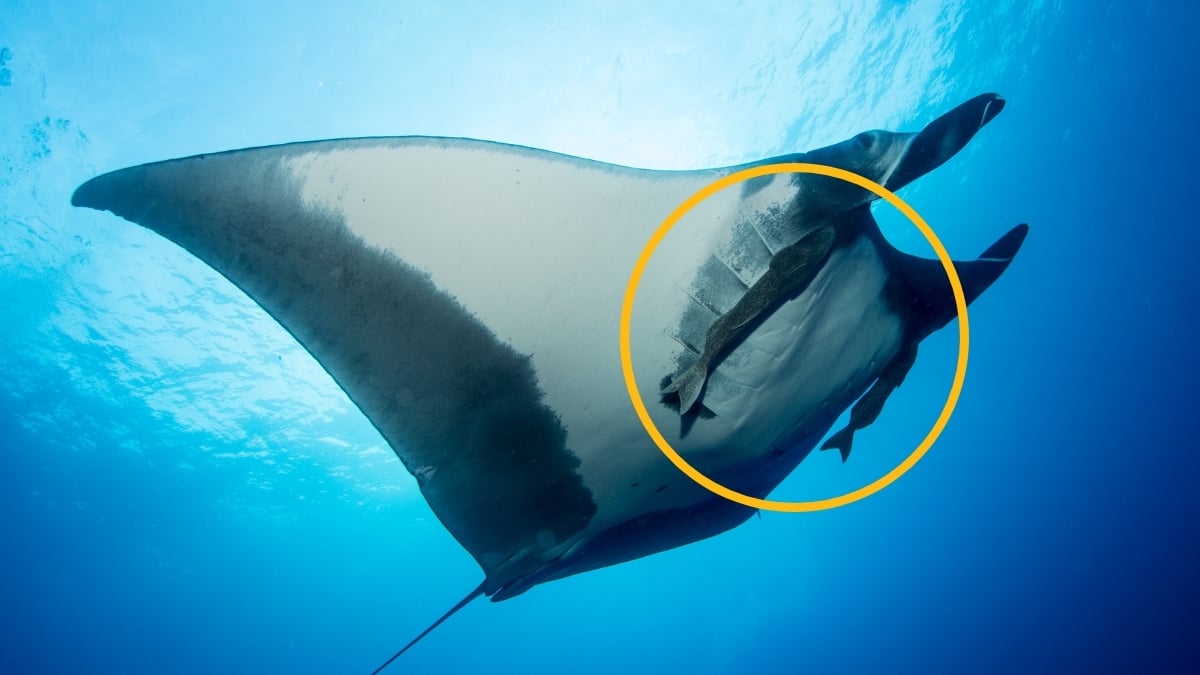
- Marine biologists film suckerfish entering manta rays' cloacas
- Study documents fish using rays' digestive systems for transport
- Researchers publish findings in *Environmental Biology of Fishes*
Marine biologists have documented an unusual behavior in the ocean: suckerfish diving into the cloacas of manta rays to hitchhike on ocean currents. The rare footage, captured during a recent study, shows the fish entering the rays’ digestive openings for transport, a behavior previously only theorized but never observed in the wild.
The discovery was made by researchers studying the interactions between suckerfish (Echeneis naucrates) and manta rays (Mobula tarapacana) in the Atlantic Ocean. The fish, known for their adhesive dorsal fins, typically attach to larger marine animals for mobility. This new footage, however, reveals a more invasive strategy—directly entering the rays’ cloacas to take advantage of their waste expulsion for rapid movement.
Why suckerfish target manta rays’ cloacas
The study, published in Environmental Biology of Fishes, suggests that suckerfish may use this behavior to conserve energy while traveling long distances. Manta rays, with their powerful swimming and frequent vertical movements, create strong currents that propel water—and anything inside them—through their digestive systems. By entering the cloaca, the suckerfish can ride these currents without expending energy on swimming.
Lead researcher Dr. Simon Thorrold of Woods Hole Oceanographic Institution noted that this behavior could explain how suckerfish distribute across vast ocean regions. “The suckerfish are essentially using the manta rays as a free ride,” Thorrold said. “It’s a remarkable example of how marine animals exploit each other’s biology for survival.”
Rare footage captures behavior in action
The researchers used underwater cameras to document the suckerfish entering and exiting the manta rays’ cloacas. The footage, taken at depths of up to 100 meters, shows the fish maneuvering into the openings with precision. Some suckerfish were observed staying inside for up to 90 seconds before emerging unharmed.
This behavior challenges previous assumptions about suckerfish interactions with their hosts. While they are known to attach externally, this study is the first to confirm internal hitchhiking. The researchers believe this could be a more common practice than previously thought, especially for suckerfish traveling between distant ocean regions.
Implications for marine biology and conservation
The discovery raises new questions about the ecological relationships between suckerfish and manta rays. If this behavior is widespread, it could impact how scientists understand the distribution of suckerfish populations. Manta rays, which are already threatened by overfishing and habitat loss, may unknowingly play a role in transporting other species.
The researchers plan to conduct further studies to determine the prevalence of this behavior. They also aim to investigate whether suckerfish gain additional benefits, such as feeding opportunities, while inside the manta rays’ digestive systems. The findings could reshape our understanding of marine symbiosis and the interconnectedness of ocean ecosystems.
What You Need to Know
- Source: ScienceAlert
- Published: May 15, 2026 at 18:00 UTC
- Category: Science
- Topics: #science · #biology · #chemistry · #genetics · #scientists-caught-suckerfish · #diving-into-manta
Read the Full Story
This is a curated summary. For the complete article, original data, quotes and full analysis:
All reporting rights belong to the respective author(s) at ScienceAlert. GlobalBR News summarizes publicly available content to help readers discover the most relevant global news.
Curated by GlobalBR News · May 15, 2026
Related Articles
🇧🇷 Resumo em Português
Cientistas registram pela primeira vez peixes-ventosa mergulhando nas cloacas de raias-manta, um comportamento nunca antes documentado na natureza.
A descoberta, publicada em estudo recente, revela uma relação simbiótica ainda mais íntima do que se imaginava entre essas espécies marinhas. No Brasil, onde as raias-manta são vistas em águas costeiras do Nordeste e do Sudeste, o achado reforça a importância da conservação desses ecossistemas, ameaçados pela pesca predatória e pela poluição. Além disso, o fenômeno pode ajudar a desvendar segredos sobre a adaptação de espécies e a dinâmica de ambientes oceânicos cada vez mais afetados pelas mudanças climáticas.
Agora, os pesquisadores planejam estudar se esse comportamento é comum em outras regiões ou se é exclusivo de determinadas populações de raias e peixes-ventosa.
🇪🇸 Resumen en Español
Una colaboración científica ha logrado capturar en imágenes por primera vez cómo los peces rémora se introducen en las cloacas de las mantarrayas para aprovechar sus corrientes oceánicas. Este insólito comportamiento, registrado en aguas de Indonesia, desafía las teorías conocidas sobre la relación entre estas especies y abre nuevas preguntas sobre la evolución de las interacciones en los ecosistemas marinos.
El estudio, publicado en la revista Journal of Ethology, no solo documenta este hallazgo excepcional, sino que también sugiere que podría tratarse de una estrategia de ahorro energético para los rémoras, que normalmente se adhieren al cuerpo de otros animales. Para los lectores hispanohablantes, especialmente aquellos interesados en la biodiversidad marina o la conservación de especies, este descubrimiento subraya la necesidad de seguir explorando los océanos, aún en sus rincones más desconocidos. Además, plantea interrogantes sobre cómo el cambio climático o la actividad humana podrían alterar estas alianzas poco convencionales entre criaturas del mar.
ScienceAlert
Read full article at ScienceAlert →This post is a curated summary. All rights belong to the original author(s) and ScienceAlert.
Was this article helpful?


Discussion