SNAPPY cubesat is now hunting neutrinos near the sun to reveal secrets of solar fusion and cosmic explosions.
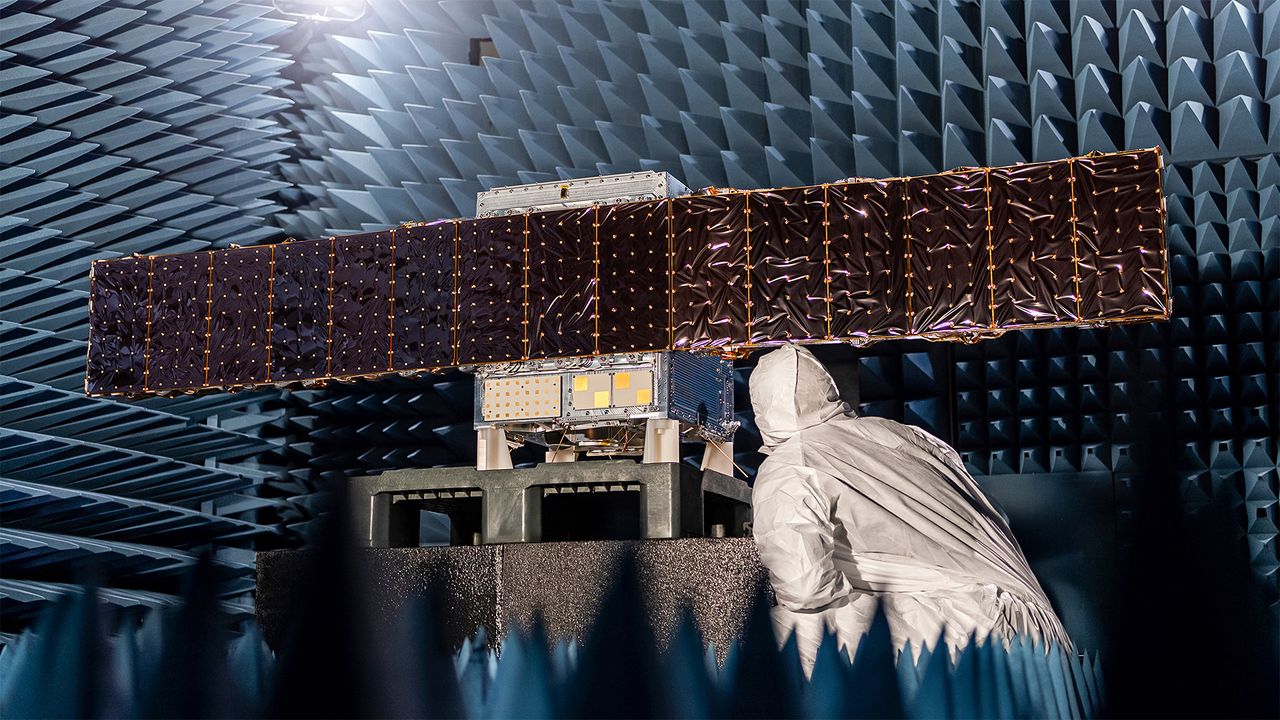
- SNAPPY cubesat launched May 3 on SpaceX's CAS500-2 mission
- It's the first space-based neutrino detector ever sent to orbit
- Neutrinos are the most abundant particles in the universe but rarely interact with matter
A tiny satellite no larger than a shoebox just became the first space-based neutrino detector in history. The SNAPPY cubesat, deployed by SpaceX during the CAS500-2 rideshare mission on May 3, is now circling Earth on a mission to spot neutrinos—ghostly particles that zip through everything without a trace. Scientists compare the feat to “putting a microscope into the core of the sun,” except this microscope is small enough to fit on your desk and orbits 300 miles above your head. Neutrinos are the most abundant particles in the universe, streaming out of supernovae, black holes, and our sun’s fiery heart. Yet they almost never interact with anything, making them nearly impossible to detect on Earth. SNAPPY could change that by catching neutrinos before they vanish into the cosmic background noise. The detector is part of a growing push to study the universe’s most elusive messengers. Unlike light or radio waves, neutrinos carry untouched information from deep space, offering a direct line to events like dying stars and solar flares that happened millions of years ago. Scientists hope SNAPPY will help answer long-standing questions: How exactly does the sun’s core fuse hydrogen into helium? What triggers the most powerful explosions in the cosmos? And why do neutrinos have mass when theory says they shouldn’t? The cubesat was built by a team at the University of California, Irvine and NASA’s Jet Propulsion Laboratory, two groups that already collaborate on cutting-edge space science. Irvine’s neutrino physicists have spent years chasing these particles in underground labs like SNOLAB in Canada, where they detect neutrinos that occasionally bump into atoms in giant tanks of pure water. But those detections are rare—like hearing a single drumbeat in a stadium of screaming fans. SNAPPY flips the script by going to space, where neutrinos are more plentiful and less diluted by Earth’s atmosphere. The mission’s leaders say the cubesat will test a new kind of detector that uses a silicon sensor no thicker than a credit card. When a neutrino does interact with matter inside the sensor, it sparks a tiny electrical signal that SNAPPY can beam back to Earth. The first data isn’t expected for months, but if it works, SNAPPY could pave the way for bigger detectors that watch the sun and stars in real time. ## Why neutrinos are the universe’s most frustrating particles Neutrinos barely exist in the sense we understand matter. They have almost no mass, no electric charge, and they sail through planets, stars, and you—right now—as if nothing’s there. Every second, trillions of them pass through your body. Yet in all of recorded science history, humans have detected only a handful of high-energy neutrinos from outside our solar system. The rest are lost in the noise. That’s why space-based neutrino detectors like SNAPPY are a game-changer. Ground detectors like IceCube in Antarctica have caught neutrinos from distant galaxies, but they’re expensive, slow, and limited by Earth’s interference. A cubesat in orbit can scan the sky without that baggage. It also offers a new view of the sun, which blasts out neutrinos at a rate of 60 billion per square centimeter every second. By mapping those neutrinos, scientists could finally see how the sun’s core really works, without relying on indirect measurements like solar seismology or neutrino telescopes buried underground. ## What happens next for SNAPPY and space neutrino science The SNAPPY team will spend the next few weeks checking if the cubesat’s systems are alive and talking to ground stations. If all goes well, they’ll power up the neutrino sensor and start collecting data. The first goal is just to prove it can detect neutrinos at all. After that, the team wants to compare SNAPPY’s readings with data from Earth-based detectors to see if the space-based approach gives clearer signals. Longer-term, the plan is to launch a fleet of similar cubesats, each tuned to different energy ranges of neutrinos. That could turn neutrino astronomy into a real-time science, like switching from dial-up to broadband. If SNAPPY succeeds, it won’t just be a first—it’ll be a preview of a new way to study the universe. No more waiting for supernovae to explode. No more guessing what’s happening inside dying stars. Just a steady stream of neutrinos telling us exactly what’s going on, one particle at a time.
What You Need to Know
- Source: Space.com
- Published: May 13, 2026 at 12:00 UTC
- Category: Science
- Topics: #space · #astronomy · #nasa · #science · #despite · #space-neutrino-detector
Read the Full Story
This is a curated summary. For the complete article, original data, quotes and full analysis:
All reporting rights belong to the respective author(s) at Space.com. GlobalBR News summarizes publicly available content to help readers discover the most relevant global news.
Curated by GlobalBR News · May 13, 2026
Related Articles
- 5 Ways to Vet Social Media Health Advice Before Trying It
- Your Body Clock May Enhance The Benefits of Exercise, Study Finds
- Study finds yawns contagious before birth, even more than thought
🇧🇷 Resumo em Português
Um pequeno satélite brasileiro acaba de ser lançado ao espaço e promete revolucionar a forma como entendemos o cosmos: o SNAPPY, um cubesat de apenas alguns quilos, já está em órbita e passará a rastrear neutrinos — as partículas mais esquivas e misteriosas do universo — em uma missão inédita próxima ao Sol. Enquanto cientistas do mundo inteiro ainda buscam decifrar os segredos dessas partículas que atravessam tudo sem deixar rastro, o Brasil entra na corrida espacial com uma tecnologia compacta e inovadora, abrindo caminho para descobertas que podem redefinir a física moderna.
Neutrinos são partículas subatômicas produzidas em eventos extremos do universo, como explosões de supernovas ou no coração do Sol, mas sua detecção é tão rara que exige instrumentos de altíssima sensibilidade. Até hoje, apenas um observatório terrestre, o IceCube na Antártida, conseguiu registrar algumas dezenas dessas partículas, mas o SNAPPY, desenvolvido por pesquisadores brasileiros em parceria com instituições internacionais, será o primeiro a monitorá-las diretamente no espaço, longe das interferências da atmosfera terrestre. Para o Brasil, isso significa não apenas um salto tecnológico, mas também a chance de se consolidar como um polo de inovação em física de partículas, atraindo investimentos e colaborações globais em um campo dominado por países como os Estados Unidos e a Europa.
O sucesso da missão poderá abrir portas para novas formas de estudar fenômenos cósmicos e até mesmo desvendar mistérios como a origem dos raios cósmicos, que há mais de um século intrigam os cientistas.
🇪🇸 Resumen en Español
La humanidad da un paso histórico al lanzar el primer detector de neutrinos en el espacio, una hazaña que promete desentrañar algunos de los mayores misterios del cosmos. El satélite SNAPPY, un pequeño cubesat del tamaño de una caja de zapatos, ya orbita la Tierra y se prepara para estudiar estas partículas fantasma cerca del Sol, un avance que podría revolucionar nuestra comprensión del universo.
Los neutrinos, partículas subatómicas casi indetectables que atraviesan la materia sin dejar rastro, son clave para entender fenómenos como las explosiones de supernovas o el comportamiento del Sol. Este experimento, liderado por científicos internacionales, busca captar estas partículas en su estado puro, lejos de las interferencias terrestres. Para el público hispanohablante, no solo representa un hito científico de alcance global, sino también una oportunidad para que la ciencia en español tenga un papel protagonista en descubrimientos que trascienden fronteras. Además, abre la puerta a futuras colaboraciones en tecnología espacial y física de partículas desde nuestra región.
Space.com
Read full article at Space.com →This post is a curated summary. All rights belong to the original author(s) and Space.com.
Was this article helpful?

Discussion