Canadian whalers found a bizarre 1937 carcass—was it a sea monster or a shark?
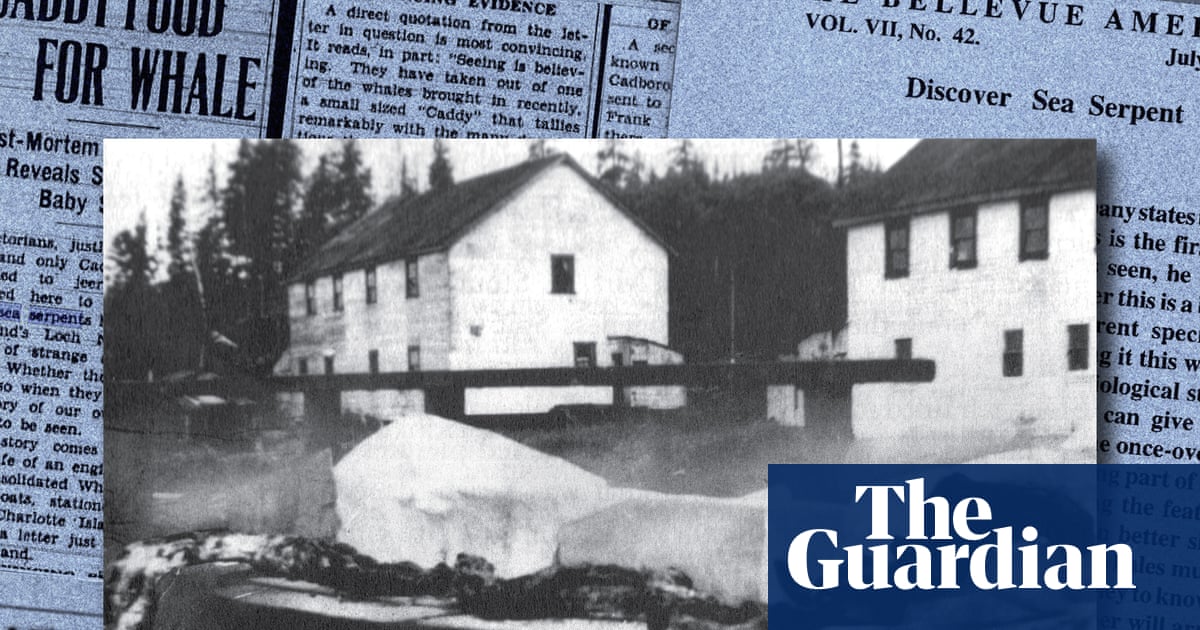
- Canadian whalers found a 3-meter carcass in 1937
- Witnesses described it as a sea monster or unknown species
- Scientists later identified it as likely a basking shark
On a rainy afternoon in 1937, crews at a whaling station in Haida Gwaii, Canada, hauled in a sperm whale—only to find something stranger inside its gut. They pulled out a 3-meter carcass that didn’t match any known animal. Its head looked like a dog’s, its nose like a camel’s, and it had a reptilian body ending in a horse-like tail. The creature was covered in a thin white film, and the whalers were stunned. Most assumed they’d found a sea monster. What they didn’t know was this mystery would outlast their careers and still puzzle experts 90 years later.
The whalers’ tale
The carcass was laid out on a platform of wooden boxes at the whaling station, draped in a white sheet like a macabre exhibit. Veteran whalers, who’d seen their share of odd catches, were stumped. The creature’s bizarre mix of features defied classification. Some thought it might be a new species. Others suspected a basking shark, whose bodies can deform after death. But no one could be sure. The only thing clear was this: the ocean still held secrets even experts couldn’t explain.
The science catches up
Decades later, scientists revisited the case using modern techniques. In 2023, a team of marine biologists published a study in the journal Zootaxa arguing the carcass was most likely a basking shark. Their reasoning? The creature’s remains showed signs of decomposition typical for sharks pulled from a whale’s stomach. Basking sharks, the world’s second-largest fish, often lose their lower jaws and fins when they die, which could explain the odd shape. The team also noted that the carcass’s size and features aligned with known basking shark anatomy.
Why the confusion lasted so long
The mystery endured because no one photographed the carcass in detail, and the original notes were vague. Whalers described it in broad strokes—dog-like head, camel nose—but lacked precise measurements or clear images. Even today, deep-sea creatures often stump experts. The ocean’s twilight zone, where sunlight barely reaches, is home to countless unknown species. This case highlights how little we know about marine life, even in relatively shallow coastal waters.
Lessons from the sea monster
The 1937 carcass wasn’t a sea monster, but it wasn’t ordinary either. It forced scientists to confront gaps in their knowledge and reminded the public that the ocean is still full of surprises. Cases like this push researchers to improve their methods, from better specimen preservation to advanced DNA analysis. And while modern tools can solve old mysteries, they also uncover new ones—like the recent discovery of a giant squid in Canadian waters, proving the sea’s mysteries are far from over.
The sperm whale that coughed up this mystery died in 1937. The debate over its last meal may never fully end, but the lesson is clear: the ocean keeps its secrets close, and we’re only beginning to uncover them.
What You Need to Know
- Source: The Guardian
- Published: May 07, 2026 at 11:00 UTC
- Category: Environment
- Topics: #guardian · #climate · #environment · #entertainment · #movies · #shark
Read the Full Story
This is a curated summary. For the complete article, original data, quotes and full analysis:
All reporting rights belong to the respective author(s) at The Guardian. GlobalBR News summarizes publicly available content to help readers discover the most relevant global news.
Curated by GlobalBR News · May 07, 2026
Related Articles
🇧🇷 Resumo em Português
Um monstro marinho ou um tubarão deformado? Em 1937, o que parecia um enigma digno de lendas virou manchete quando uma carcaça misteriosa deu à costa em Newfoundland, no Canadá, alimentando especulações sobre criaturas desconhecidas dos oceanos. A descoberta, repleta de espinhos e uma forma bizarra, dividiu opiniões entre cientistas e moradores locais: seria um tubarão decomposto ou um sinal de que criaturas como o lendário “Caddy”, um suposto monstro canadense, realmente existiam?
O caso ganhou proporções internacionais e, ao longo de décadas, virou objeto de estudo para biólogos e caçadores de mistérios. Para o Brasil, onde a cultura popular mistura lendas como a do “Boto-cor-de-rosa” com avistamentos de criaturas marinhas, a história ressoa como um lembrete de que os oceanos ainda escondem segredos. Especialistas em fauna marinha, como o doutor em zoologia Paulo Márcio Costa, da UFRJ, destacam que deformações em tubarões são comuns — seja por doenças, parasitas ou até mesmo circulação em águas frias — e que casos como esse reforçam a importância de analisar evidências com rigor científico antes de cair em teorias sensacionalistas.
Agora, com tecnologias avançadas de DNA e imagens 3D, a ciência tem ferramentas para desvendar mistérios que antes pareciam impossíveis — e esse caso pode ser o próximo.
The Guardian
Read full article at The Guardian →This post is a curated summary. All rights belong to the original author(s) and The Guardian.
Was this article helpful?



Discussion