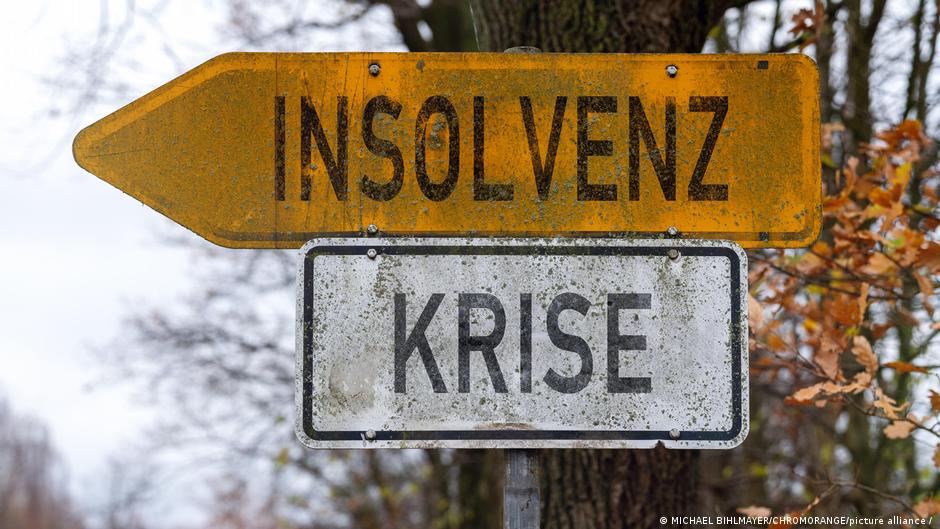
German businesses say Friedrich Merz's economic promises collapsed within a year of his chancellorship.
- Merz promised economic revival as Germany's chancellor in May 2025
- Businesses now report rising insolvency risks and stalled growth
- Industry leaders say Merz's policies failed to deliver promised competitiveness
Friedrich Merz [https://en.wikipedia.org/wiki/Friedrich_Merz] walked into the chancellorship last May with a reputation as the business world’s favorite politician. As head of Germany’s conservative Christian Democratic Union (CDU) [https://en.wikipedia.org/wiki/Christian_Democratic_Union_(Germany)], he spent years in the corporate sphere—including a stint as chairman of BlackRock Germany’s supervisory board—and even wrote a book called Dare to Embrace More Capitalism. His election platform hinged on one core idea: every government decision would be measured by its effect on Germany’s economic competitiveness. The slogan was simple: Germany needs a ‘turning point.’ But one year later, the country’s business community isn’t just disappointed—it’s worried about survival.
The shift in tone is stark. In the spring of 2025, Merz’s words about efficiency and rejecting the ‘left-wing politics’ of work-life balance drew cheers in corporate boardrooms. ‘We will not be able to maintain the prosperity of this country by relying solely on a four-day workweek and work-life balance,’ he told managers just months into his term. Yet by early 2026, that same crowd is questioning whether Merz understands the difference between economic confidence and economic fragility. Insolvency filings are climbing, and mid-sized manufacturers—the backbone of Germany’s economy—report orders drying up and cash flow drying faster.
The promises and the reality gap
Merz’s leadership style has been anything but subtle. He framed himself as the antidote to what he called Germany’s ‘decline narrative,’ pushing deregulation and tax cuts as the cure. His government slashed energy levies and sped up permitting for new factories, hoping to lure investment. But the results haven’t matched the rhetoric. Industrial production fell 1.8% in the first quarter of 2026 compared to the same period a year earlier, according to Germany’s statistics office. Exports, the engine of German prosperity, are down 3% over the same stretch. Even service sectors that thrived during the pandemic are now shedding jobs.
The frustration isn’t just about numbers. It’s about timing. Many small and medium-sized companies took on debt during the energy crisis of 2022-2023, betting on a recovery that never came. Now, with interest rates still high and demand weak, they’re trapped. ‘We were promised a lifeline,’ said one mid-sized machinery maker in Baden-Württemberg who asked not to be named. ‘Instead, we’re watching our margins vanish and our backlog shrink.’ The German Chamber of Commerce and Industry (DIHK) [https://en.wikipedia.org/wiki/German_Chamber_of_Commerce_and_Industry] now estimates that 40% of its members see insolvency as a real risk within the next 12 months if conditions don’t improve.
Why the business elite feel betrayed
Merz’s background was supposed to be his secret weapon. Before politics, he spent four years on BlackRock’s German supervisory board, rubbing shoulders with global investors and CEOs. His book argued that Germany had lost its edge by over-regulating and over-taxing business. Yet his government’s actions have often felt like a continuation—or even a deepening—of the policies he once criticized. Energy taxes fell, but so did subsidies for green tech. Corporate tax cuts were proposed, but then watered down under coalition pressure. Meanwhile, labor reforms that were supposed to make hiring easier got bogged down in parliamentary gridlock.
The disconnect between rhetoric and results has left even his allies questioning his judgment. The Free Democratic Party (FDP) [https://en.wikipedia.org/wiki/Free_Democratic_Party_(Germany)], Merz’s junior coalition partner, has quietly pushed back on several of his initiatives, arguing they risk making Germany less attractive to foreign investment. ‘We’re not seeing the boldness we were promised,’ said an FDP insider. ‘It feels like we’re stuck in neutral while the rest of Europe surges ahead.’
What happens next?
The pressure on Merz is intensifying. The CDU faces state elections in 2026 that could further erode its support, and the business lobby is starting to flex its political muscles. The Federation of German Industries (BDI) [https://en.wikipedia.org/wiki/Federation_of_German_Industries] has called for an emergency package of measures, including accelerated depreciation for capital investments and a freeze on new environmental regulations until 2027. Whether Merz can deliver remains an open question. His government has already backtracked on some promises, and his approval ratings have slumped to 32%—the lowest of any chancellor in modern German history at this point in a term.
The broader implication is clear: Germany’s economic model is straining under the weight of high costs, slow productivity growth, and global competition. Merz’s failure to deliver isn’t just a personal setback—it’s a stress test for the country’s ability to adapt. If Germany’s business community can’t trust its own chancellor to turn things around, who can they trust?
What You Need to Know
- Source: Deutsche Welle
- Published: May 11, 2026 at 08:37 UTC
- Category: World
- Topics: #europe · #world-news · #germany · #friedrich-merz · #german
Read the Full Story
This is a curated summary. For the complete article, original data, quotes and full analysis:
All reporting rights belong to the respective author(s) at Deutsche Welle. GlobalBR News summarizes publicly available content to help readers discover the most relevant global news.
Curated by GlobalBR News · May 11, 2026
Related Articles
- Zimbabwe’s diaspora reshapes real estate and farming investment trends
- 🎉 250 Articles in World!
- Eurovision 2024 faces scrutiny over Israel’s participation amid war
🇧🇷 Resumo em Português
A Alemanha, que já foi sinônimo de robustez econômica na Europa, agora enfrenta um cenário de frustração generalizada entre suas empresas, com um número crescente de falências e estagnação do crescimento, mesmo após um ano da posse do chanceler Friedrich Merz, da CDU. O que prometia ser um novo ciclo de prosperidade se transformou em um pesadelo para empreendedores e investidores, que veem as esperanças de recuperação minguarem diante de uma economia cada vez mais fragilizada.
O drama alemão tem implicações diretas para o Brasil, especialmente em um momento em que os dois países buscam fortalecer seus laços comerciais. A Alemanha é um dos principais parceiros econômicos do Brasil na Europa, e a fragilidade de sua economia pode reduzir investimentos, afetar acordos comerciais e até mesmo impactar as exportações brasileiras de commodities e manufaturados. Além disso, a crise alemã reforça a necessidade de diversificação de mercados para o Brasil, que não pode depender apenas de uma potência em declínio para sustentar sua balança comercial.
Para os próximos meses, o desafio será acompanhar se Merz conseguirá reverter o quadro ou se a Alemanha mergulhará ainda mais em uma recessão prolongada, com efeitos em cadeia para a economia global.
🇪🇸 Resumen en Español
La promesa de recuperación económica de Friedrich Merz, al frente de la cancillería alemana como líder de la CDU, se desvanece ante el aumento de quiebras empresariales, que refleja la frustración de un sector productivo ahogado por la falta de dinamismo. Un año después de su llegada al poder, el estancamiento del crecimiento alemán evidencia el fracaso de sus recetas, dejando a las empresas en una encrucijada de incertidumbre y recortes.
El retroceso económico en Alemania, motor industrial de Europa, no solo amenaza su tradicional solidez exportadora, sino que también resuena como un aviso para el resto del continente, donde el modelo alemán ha servido durante décadas como referencia. Para los hispanohablantes, especialmente en países con economías interdependientes como España, este declive subraya los riesgos de una desaceleración prolongada en el corazón de la UE, con posibles efectos en el comercio, la inversión y hasta en las políticas monetarias del Banco Central Europeo. La lección es clara: cuando el gigante alemán tose, Europa —y sus socios comerciales— resienten la gripe.
Deutsche Welle
Read full article at Deutsche Welle →This post is a curated summary. All rights belong to the original author(s) and Deutsche Welle.
Was this article helpful?
Discussion