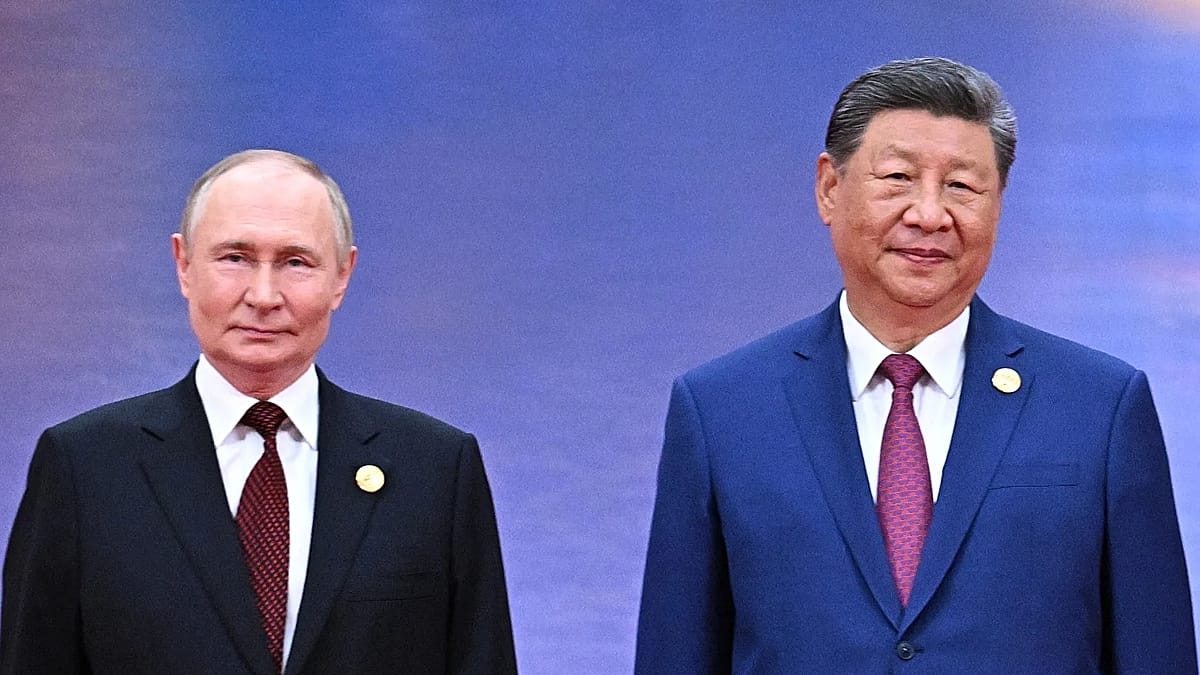
Putin plans China visit next week to meet Xi Jinping and strengthen bilateral ties amid shifting global alliances.
- Kremlin confirms Putin to visit China next week
- Talks to focus on deepening Russia-China partnership
- Putin’s trip follows Trump’s recent Beijing visit
Russian President Vladimir Putin will travel to Beijing next week for high-level talks with Chinese President Xi Jinping, the Kremlin announced Tuesday. The visit is scheduled shortly after former U.S. President Donald Trump’s trip to China, underscoring the timing as significant in global diplomacy. According to the Kremlin, the leaders will discuss ways to deepen their countries’ “comprehensive partnership and strategic cooperation,” signaling Moscow and Beijing’s intent to strengthen economic, military, and political ties.
The announcement comes as both Russia and China seek to counter Western influence amid ongoing geopolitical tensions. Putin’s visit reflects efforts to solidify alliances with key global players following Russia’s 2022 invasion of Ukraine, which has strained relations with the West. China, while not endorsing the invasion, has maintained close economic and diplomatic ties with Moscow, aligning on issues such as energy trade and opposition to U.S. global dominance.
Putin’s visit follows Trump’s Beijing trip
Former U.S. President Donald Trump concluded a three-day state visit to Beijing last week, where he met with Chinese officials and discussed trade, technology, and regional security. Trump’s trip, his first since leaving office, included meetings with Xi Jinping and other top Chinese leaders. The timing of Putin’s visit, just days after Trump’s departure, suggests a coordinated effort by Beijing to balance relations with both Moscow and Washington.
Analysts note that China has been carefully navigating its relationships with the U.S. and Russia, avoiding direct alignment with either side while pursuing its own strategic interests. Putin’s visit is expected to focus on energy deals, infrastructure projects, and military cooperation, areas where Russia and China have increasingly collaborated in recent years.
Global implications of Russia-China ties
The strengthening of Russia-China relations carries broader implications for global power dynamics. Both countries have condemned U.S. influence in international affairs and have sought to promote alternative frameworks for global governance. Recent joint military exercises and economic agreements highlight their growing alignment, particularly as Western sanctions on Russia and trade restrictions on China intensify.
The Kremlin did not specify the exact dates of Putin’s visit, but diplomatic sources indicate it will take place next week. Observers will closely watch whether the meeting produces tangible agreements on trade, security, or technology, which could further reshape the geopolitical landscape. For now, the visit underscores the enduring nature of Russia-China ties amid a rapidly evolving international order.
The outcome of these talks may influence how other nations perceive and engage with both Moscow and Beijing, particularly as they navigate their relationships with Washington. As global powers recalibrate their alliances, the Putin-Xi meeting will be a key moment to watch in the coming days.
What You Need to Know
- Source: Euronews
- Published: May 16, 2026 at 10:19 UTC
- Category: World
- Topics: #euronews · #europe · #world-news · #politics · #government · #putin
Read the Full Story
This is a curated summary. For the complete article, original data, quotes and full analysis:
All reporting rights belong to the respective author(s) at Euronews. GlobalBR News summarizes publicly available content to help readers discover the most relevant global news.
Curated by GlobalBR News · May 16, 2026
Related Articles
- Eurovision 2024 faces scrutiny over Israel’s participation amid war
- US Justice Department preparing indictment against Raúl Castro
- US planning to criminally indict ex-Cuban leader Raúl Castro
🇧🇷 Resumo em Português
O presidente russo, Vladimir Putin, deve desembarcar em Pequim na próxima semana para uma visita de Estado, pouco depois da viagem do ex-presidente dos EUA, Donald Trump, à capital chinesa. A confirmação veio do Kremlin nesta terça-feira, sinalizando mais um passo na crescente aliança entre Moscou e Pequim, que avança mesmo após a tensão global causada pela guerra na Ucrânia.
A viagem de Putin ocorre em um momento crucial para as relações sino-russas, que têm se aprofundado tanto no campo econômico quanto no militar. Para o Brasil, que mantém laços comerciais significativos com ambos os países, a aproximação entre Rússia e China pode influenciar as dinâmicas de poder na Ásia e no mundo, além de impactar diretamente no preço de commodities como petróleo e grãos. A visita também reacende discussões sobre o realinhamento das forças geopolíticas, especialmente diante do enfraquecimento da influência ocidental na região.
O encontro entre Putin e Xi Jinping deve resultar em novos acordos comerciais e possíveis anúncios de cooperação militar, reforçando o eixo alternativo às potências ocidentais.
🇪🇸 Resumen en Español
El presidente ruso, Vladímir Putin, viajará a Pekín la próxima semana para reunirse con su homólogo chino, Xi Jinping, en un encuentro que refuerza la alianza estratégica entre ambos países en un momento de creciente tensión geopolítica.
La visita, confirmada por el Kremlin, llega apenas días después de que el expresidente estadounidense Donald Trump realizara un viaje a China, lo que subraya la relevancia de esta alianza en el tablero internacional. Con el mundo dividido en bloques rivales, Moscú y Pekín buscan profundizar su cooperación económica y militar, un movimiento que podría redefinir el equilibrio de poder global. Para los hispanohablantes, este acercamiento entre dos de las mayores potencias autoritarias del mundo plantea interrogantes sobre el futuro de las relaciones internacionales y el papel de Occidente en este nuevo orden multipolar.
Euronews
Read full article at Euronews →This post is a curated summary. All rights belong to the original author(s) and Euronews.
Was this article helpful?

Discussion