Ron Howard’s new doc claims Richard Avedon best captured the American spirit through his iconic portraits.
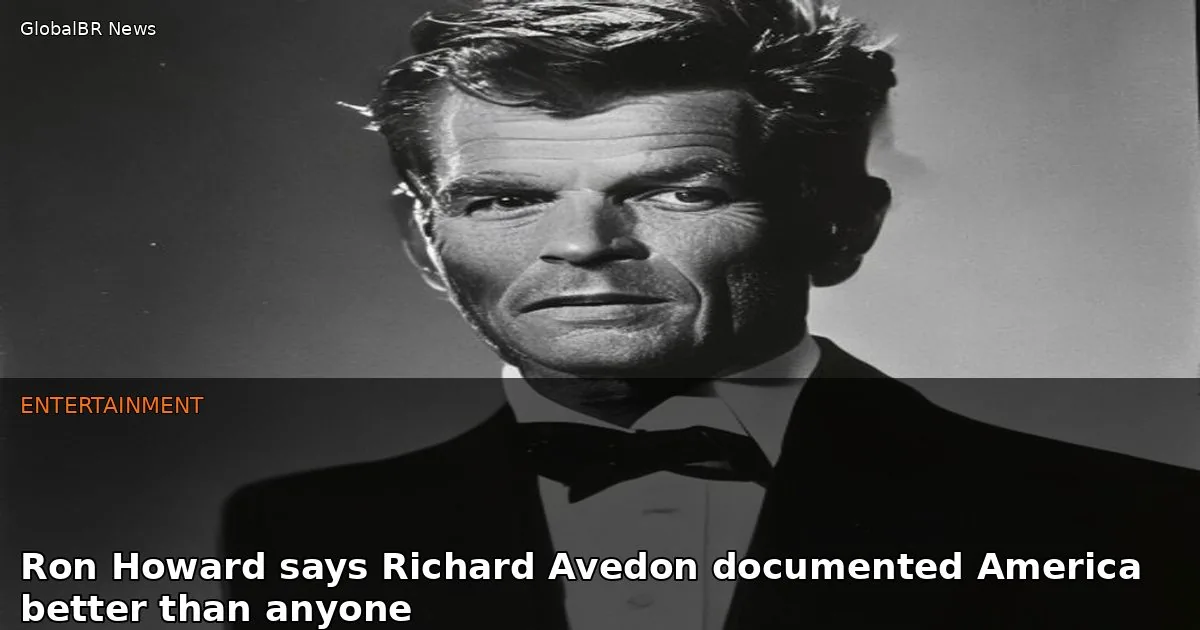
- Film shows Avedon’s 50-year obsession with photographing America
- Howard argues Avedon’s work feels more complete than any single artist’s
- Documentary includes never-before-seen footage of Avedon at work
Ron Howard’s new documentary, The Avedon Sessions, makes a bold claim: no single artist documented American life more completely than Richard Avedon. The legendary photographer spent half a century chasing the idea of America through his lens, shooting everyone from factory workers to movie stars. Howard, who directed the film that premiered at the Telluride Film Festival this weekend, says Avedon wasn’t just taking pictures—he was on a mission to understand the country through his work.
Avedon’s 50-year American experiment
Avedon’s most famous project, In the American West, spanned a decade and 175 portraits of everyday Americans. But the film shows how his obsession stretched far beyond that series. He photographed civil rights marches, rode with biker gangs, and spent months in psychiatric hospitals. Howard’s documentary mixes archival footage with new interviews to argue that Avedon’s work feels more comprehensive than any single artist’s attempt to capture a nation.
Howard isn’t just another filmmaker singing Avedon’s praises. He’s spent years studying the photographer’s process. The documentary includes never-before-seen footage of Avedon setting up shoots, coaching subjects, and reviewing contact sheets. One clip shows Avedon working with a Texas oil rig worker, coaxing out a quiet dignity in a man used to being ignored. Another sequence captures the photographer pushing a model to the edge of exhaustion during a fashion shoot—partly to reveal something raw, partly to see what she’d do when pushed.
The magic of Avedon’s portraits
What made Avedon different was his refusal to flatter. His portraits feel brutally honest, whether he’s photographing the Kennedys or a 12-year-old boy with Down syndrome. The documentary digs into how he achieved that effect. Avedon often shot his subjects against a stark white backdrop, stripping away context to force viewers to confront the person, not the setting. The film argues this technique changed how America saw itself in the 20th century.
Howard also explores Avedon’s influence on his own career. The two men worked together in the 1980s on a commercial campaign, and Howard says he’s long admired Avedon’s ability to make even advertising feel like art. In one interview clip, Howard admits he once tried to mimic Avedon’s style in his early film work—only to realize it didn’t suit him. The lesson stuck: great art comes from authenticity, not imitation.
Why this documentary matters now
America’s identity feels more fractured than ever, with debates raging over who belongs in the national story. Avedon’s work is suddenly relevant again—not just as art, but as a record of who we thought we were. The film arrives when political divisions are deepest, offering a reminder that even in chaos, one person’s vision can shape how we see each other.
The documentary also raises questions about how we document our time today. Avedon worked in an analog world, with bulky cameras and slow film. Social media feeds millions of photos daily, yet few artists achieve his level of depth. Howard’s film asks: are we documenting less, or just documenting differently?
What happens next
The Avedon Sessions will screen at a handful of festivals this fall before streaming on a major platform early next year. Howard’s team is already negotiating distribution deals, and the documentary has caught the attention of museums eager to host related exhibitions. Avedon’s archives remain a goldmine, so expect more projects mining his work for years to come.
For Howard, the film is personal. He grew up watching Avedon’s images in magazines, long before he knew the photographer’s name. Now he’s spent years trying to understand why those pictures still feel so essential. The answer, he says, isn’t just about the art—it’s about how Avedon made us all feel seen.
What You Need to Know
- Source: Hollywood Reporter
- Published: May 17, 2026 at 15:00 UTC
- Category: Entertainment
- Topics: #hollywood · #movies · #war · #conflict · #ron-howard
Read the Full Story
This is a curated summary. For the complete article, original data, quotes and full analysis:
All reporting rights belong to the respective author(s) at Hollywood Reporter. GlobalBR News summarizes publicly available content to help readers discover the most relevant global news.
Curated by GlobalBR News · May 17, 2026
Related Articles
- Why Scarlett Johansson Dodged James Grey’s Cannes FaceTime Call
- How to Stream the 2024 ACM Awards Live Online This Weekend
🇧🇷 Resumo em Português
A lenda da fotografia Richard Avedon acaba de ganhar um novo capítulo em sua já imensa influência, depois que o diretor Ron Howard declarou em seu novo documentário que o artista foi o maior cronista visual da alma americana. Em uma homenagem póstuma, Howard reforça que Avedon não apenas registrou imagens, mas capturou a essência da sociedade norte-americana como ninguém antes ou depois dele, transformando seus retratos em espelhos da história do país.
O impacto de Avedon no Brasil não é menos significativo, especialmente porque sua obra transcendeu fronteiras e influenciou gerações de fotógrafos e artistas brasileiros. Desde os anos 1950, suas imagens em preto e branco, marcadas pela intensidade emocional e pela busca pela verdade humana, dialogaram diretamente com o trabalho de nomes como Alberto Korda e até mesmo com a estética do cinema nacional. Para o público brasileiro, entender essa trajetória é também revisitar como a fotografia pode ser uma ferramenta poderosa de reflexão social, algo que Avedon dominou como poucos.
O documentário de Ron Howard promete não só reacender discussões sobre o legado de Avedon, mas também inspirar novos olhares sobre a arte de retratar pessoas e culturas — uma lição valiosa em tempos de transformação digital.
Hollywood Reporter
Read full article at Hollywood Reporter →This post is a curated summary. All rights belong to the original author(s) and Hollywood Reporter.
Was this article helpful?


Discussion