Danish officials confirm Timmy the humpback whale died after a rescue attempt that critics called cruel and unnecessary.
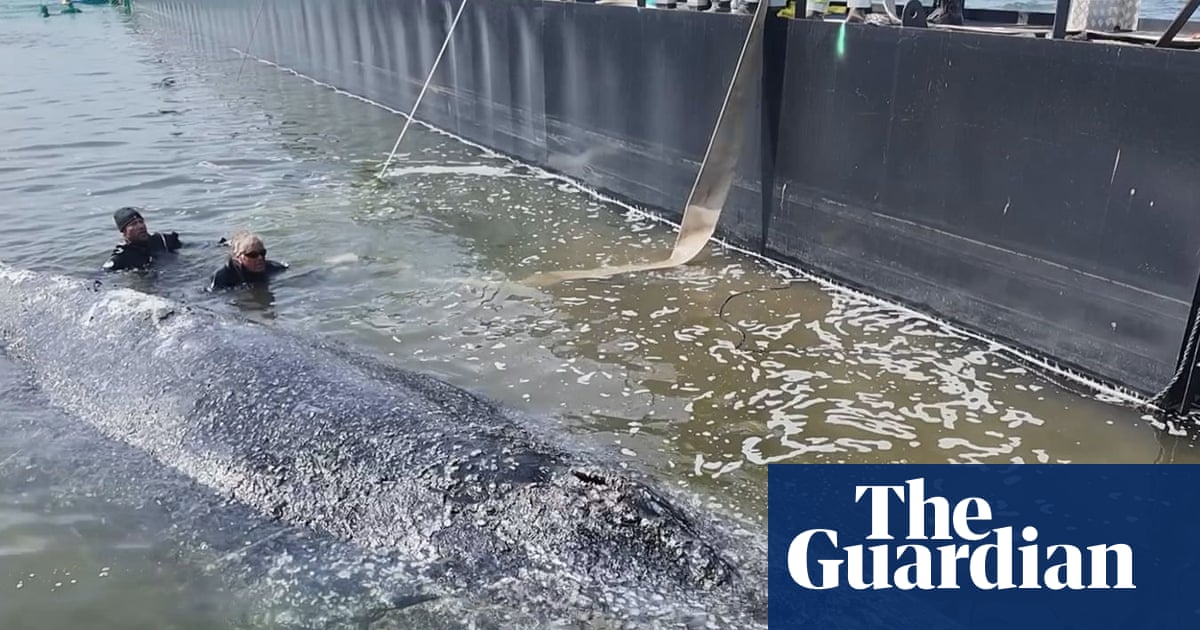
- Danish authorities confirmed Timmy the humpback whale's death near Anholt island Friday
- The whale was moved to the North Sea two weeks before dying
- Critics called the rescue attempt 'pure animal cruelty' when it happened
Danish authorities confirmed on Saturday that Timmy the humpback whale had died Friday near Anholt, a small island in the Kattegat, a strait between Denmark and Sweden. The whale, which had been beached for days, was transported to the North Sea as part of a rescue attempt that drew immediate backlash from animal welfare groups and the public. What started as a well-intentioned effort to save the whale ended in tragedy, leaving experts and officials scrambling to explain what went wrong and whether the move itself may have contributed to the animal’s death. The Danish Environmental Protection Agency released a brief statement Saturday confirming the death and identifying the whale as Timmy based on records from the rescue effort. The agency said no further details would be released until an investigation is completed. The news has reignited debates about the ethics and effectiveness of relocating large, stressed marine mammals, especially when the risks to the animal’s survival are so high. The incident has also put Denmark’s wildlife response protocols under intense scrutiny, with calls for stricter guidelines on when and how such rescues should be attempted. Timmy was first spotted beached on the coast of eastern Denmark on a Monday, drawing crowds of onlookers and emergency responders. Despite multiple attempts to refloat the whale, officials said the animal was too weak to swim on its own. The decision to move Timmy to deeper waters was made by the Danish Nature Agency, which argued that the whale’s long-term survival was unlikely in its current state. But critics weren’t convinced. Within hours of the move, social media erupted with accusations of animal cruelty. Activists pointed out that humpback whales can weigh up to 40 tons and are not built for shallow beaches, but moving them to open water doesn’t guarantee survival either. The Danish Society for the Prevention of Cruelty to Animals (DSPCA) was among the most vocal critics. “This wasn’t a rescue—it was a gamble with an animal’s life,” said a DSPCA spokesperson. “We warned at the time that relocating a beached whale this size could cause fatal stress, and it looks like we were right.” ## How the rescue unfolded and why it failed The rescue attempt began at dawn on the Tuesday after Timmy’s stranding, when a team of veterinarians and marine biologists arrived with specialized equipment. They used slings and inflatable pontoons to lift the whale, which was estimated to be around 10 meters long, and place it on a barge. The barge then transported Timmy about 20 nautical miles offshore, where officials hoped the whale would recover enough to swim away. But the move went poorly from the start. Witnesses described the whale thrashing violently during the transfer, a sign of extreme stress. Once in the North Sea, Timmy didn’t move for hours. By Wednesday, reports emerged that the whale was struggling to breathe and appeared disoriented. Videos shared online showed the animal floating listlessly, its blowhole barely clearing the water. Fishermen in the area reported seeing the whale still in the same spot days later, barely alive. The Danish government defended the decision, saying Timmy’s condition was already critical when found and that the move was the best chance to save him. “We followed protocol at every step,” said a spokesperson for the Danish Nature Agency. “But wildlife rescues don’t always go as planned. We’re reviewing what happened and will adjust our approach moving forward.” The Danish Environmental Protection Agency has not released an official cause of death, but veterinarians who examined the carcass Friday reported signs of severe dehydration, muscle damage, and possible internal bleeding consistent with extreme stress and physical trauma. ## What happens next and who’s to blame The death of Timmy has triggered a wave of reactions, from outrage to grief. Animal rights groups are demanding a full inquiry into the rescue attempt and the decision-making process behind it. Some are calling for an outright ban on relocating large whales, arguing that the risks far outweigh the potential benefits. Others are questioning whether Denmark’s wildlife response teams have the expertise to handle such complex rescues. The Danish Nature Agency has promised a review of its protocols, but it’s unclear if changes will come in time to prevent similar incidents in the future. Meanwhile, the carcass of Timmy will be examined further to determine the exact cause of death. Danish authorities say they’ll release a preliminary report in the coming weeks, but a full investigation could take months. For now, the debate over how to handle stranded marine mammals has never been louder. Experts say the case highlights a growing problem: more whales are washing up on beaches as climate change alters ocean currents and ship traffic increases. But the tools and training to deal with these strandings aren’t keeping up. The death of Timmy may force Denmark—and other countries—to rethink how they respond when a whale gets into trouble.
What You Need to Know
- Source: The Guardian
- Published: May 16, 2026 at 17:22 UTC
- Category: World
- Topics: #guardian · #world-news · #international · #timmy · #danish · #humpback
Read the Full Story
This is a curated summary. For the complete article, original data, quotes and full analysis:
All reporting rights belong to the respective author(s) at The Guardian. GlobalBR News summarizes publicly available content to help readers discover the most relevant global news.
Curated by GlobalBR News · May 16, 2026
Related Articles
- 🎉 250 Articles in World!
- WHO declares Ebola emergency as Congo outbreak spreads to Uganda
- WHO declares Ebola outbreak in DR Congo a global emergency
🇧🇷 Resumo em Português
O mundo assistiu perplexo enquanto uma emocionante — e polêmica — operação de resgate de um gigante dos mares terminou em tragédia. Na Dinamarca, as autoridades confirmaram a morte de Timmy, uma baleia-jubarte de 13 metros, duas semanas após uma controversa tentativa de salvamento que deixou especialistas e ativistas em choque. O que começou como um ato de solidariedade humana rapidamente se transformou em um debate sobre ética, limites da intervenção humana na natureza e os riscos de se subestimar a força e a complexidade da vida marinha.
A história de Timmy ganhou proporções internacionais não apenas pela dramaticidade do ocorrido, mas porque expôs fragilidades críticas nos protocolos de resgate de cetáceos encalhados. Especialistas brasileiros, que já enfrentaram casos semelhantes — como o do golfinho Toninho, resgatado em 2021 na costa do Rio de Janeiro —, destacaram o caso dinamarquês como um alerta urgente. A operação, marcada por imagens de dezenas de voluntários tentando empurrar o animal de volta ao mar com cordas e barcos, foi amplamente criticada por biólogos marinhos, que argumentam que intervenções mal planejadas podem causar mais danos do que benefícios. Para o Brasil, onde a costa extensa e a rica biodiversidade marinha tornam tais situações relativamente comuns, o episódio reforça a necessidade de treinamentos especializados e protocolos claros para evitar tragédias semelhantes.
Agora, autoridades dinamarquesas prometem revisar os métodos de resgate, enquanto ambientalistas cobram transparência total sobre as causas da morte de Timmy. No Brasil, a discussão já acende um sinal de alerta: será que estamos preparados para lidar com os próximos encalhes sem repetir os mesmos erros?
🇪🇸 Resumen en Español
Las autoridades danesas confirmaron que Timmy, la ballena jorobada que se convirtió en símbolo de la polémica entre conservación y bienestar animal, falleció dos semanas después de que se intentara su rescate en un controvertido operativo que muchos calificaron como un acto de crueldad innecesaria.
El caso ha reavivado el debate en Europa sobre los límites éticos de las intervenciones humanas en la vida salvaje, especialmente cuando estas involucran a especies en peligro o en situaciones de estrés extremo. Para los hispanohablantes, el episodio recuerda a recientes polémicas similares en aguas de España o Latinoamérica, donde rescates mal planificados han terminado en tragedia, subrayando la necesidad de protocolos más rigurosos. Además, plantea preguntas sobre el papel de los ciudadanos y las redes sociales en la viralización de estos casos, a menudo con consecuencias irreversibles.
The Guardian
Read full article at The Guardian →This post is a curated summary. All rights belong to the original author(s) and The Guardian.
Was this article helpful?



Discussion