45,000 Samsung workers strike halts DRAM and HBM chip production, risking AI industry supply chains.
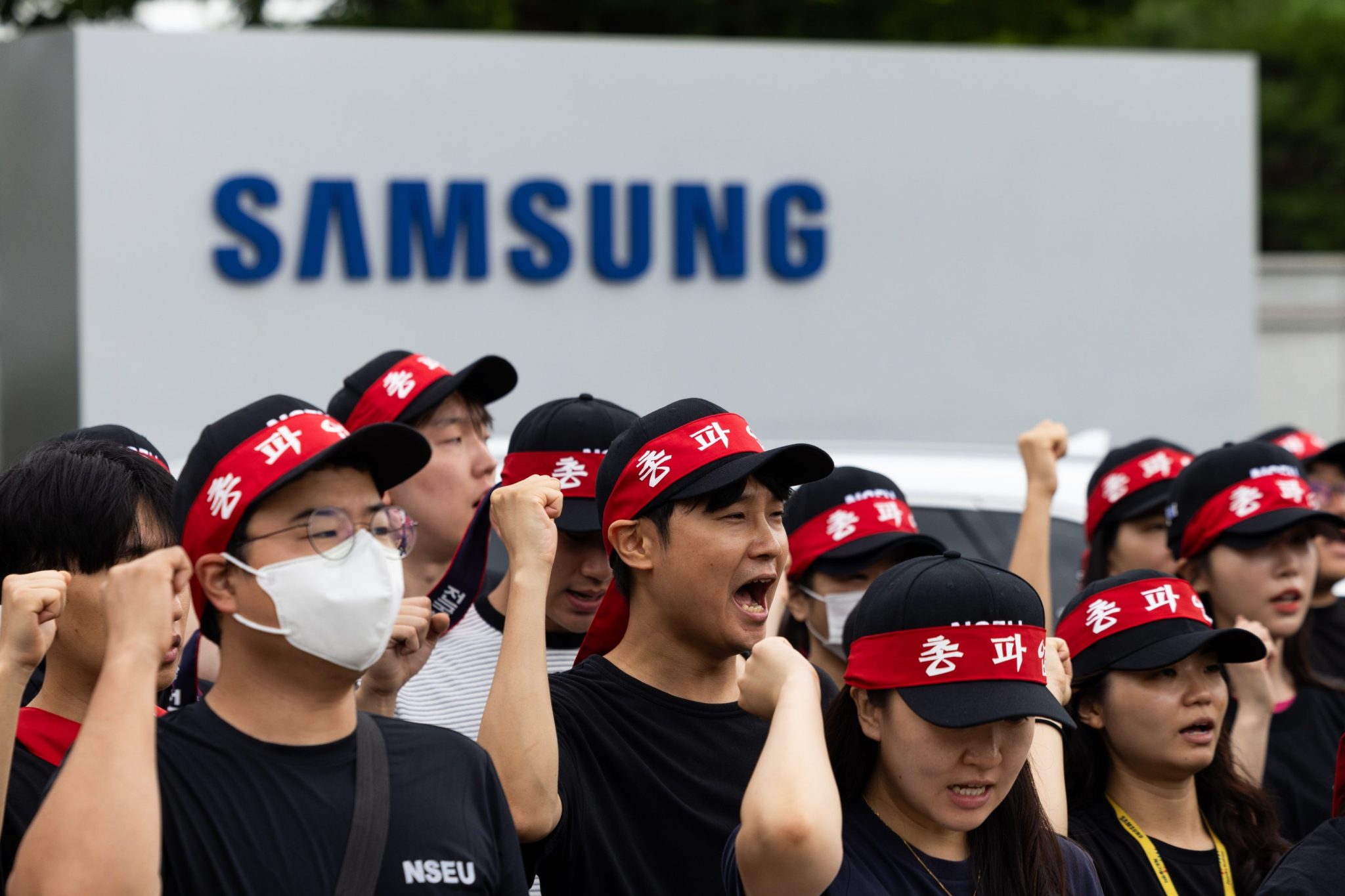
- 45,000 Samsung workers strike starts Tuesday at South Korean chip plants
- Strike hits DRAM and HBM chip production, critical for AI systems
- Samsung makes one-third of global DRAM chips, half of HBM chips
A labor strike involving 45,000 workers at Samsung’s semiconductor plants in South Korea is about to shut down memory chip production, putting the global AI industry at risk. The strike, which starts Tuesday, targets Samsung’s three fabrication complexes in Pyeongtaek and Hwaseong. These plants produce DRAM and high-bandwidth memory (HBM) chips—critical components for AI systems, smartphones, laptops, and data centers. Samsung operates 12 fabrication lines and employs over 30,000 workers directly, with thousands more in support roles. The company is the world’s largest memory chip maker, supplying about a third of global DRAM and half of the HBM chips used in AI infrastructure. Without these chips, AI servers and data centers can’t function properly, even if they have the latest GPUs from companies like Nvidia or AMD. The timing couldn’t be worse. AI demand is exploding, with companies racing to build data centers for generative AI tools. Samsung’s HBM chips, in particular, are in short supply because only three companies—South Korea’s Samsung and SK Hynix, plus America’s Micron—can make them at scale. The strike could delay chip deliveries by weeks or even months, squeezing an already tight supply chain. Samsung and the labor union, the Korean Metal Workers’ Union, have been negotiating for weeks over pay raises and working conditions. The union is demanding a 10% wage increase and better benefits, while Samsung has offered around 6%. The gap is wide, and talks have stalled. South Korea’s government is reportedly pressuring both sides to reach a deal before the strike starts. If the strike lasts more than a few days, it could ripple through tech supply chains worldwide. Tech giants like Apple, Microsoft, and Amazon rely on Samsung for memory chips used in their servers and devices. Even companies building AI infrastructure, like OpenAI and Anthropic, depend on these chips. A prolonged shutdown would force them to look for alternative suppliers, but none can match Samsung’s volume or quality. Samsung’s rivals, SK Hynix and Micron, are already running near full capacity and can’t absorb the lost production. The strike also comes as the U.S. and China are in a race to control semiconductor supply chains. The U.S. has been pushing to bring more chip manufacturing back home, but South Korea remains a critical player. If Samsung’s production drops, it could give China’s YMTC or other rivals a chance to gain market share, even if their chips aren’t as advanced. For now, the tech industry is watching closely. Samsung’s chips are the backbone of modern computing, and the strike could force companies to rethink their reliance on a single supplier. If the strike drags on, we could see delays in new AI deployments, higher chip prices, or even a shift in where tech giants source their components. The broader impact would be felt in everything from cloud services to consumer electronics. The question now is whether Samsung and the union can reach a deal before the strike causes real damage. If they can’t, the AI boom might hit a speed bump it can’t afford.
What You Need to Know
- Source: Fortune
- Published: May 17, 2026 at 09:03 UTC
- Category: Business
- Topics: #fortune · #business · #economy · #gadgets · #laptop · #samsung
Read the Full Story
This is a curated summary. For the complete article, original data, quotes and full analysis:
All reporting rights belong to the respective author(s) at Fortune. GlobalBR News summarizes publicly available content to help readers discover the most relevant global news.
Curated by GlobalBR News · May 17, 2026
Related Articles
- Why working-class voices matter for UK culture and media
- Kevin Warsh’s Fed takeover: 5 things Wall Street is really watching
- UK traders hit by 200% food price surge forcing closures
🇧🇷 Resumo em Português
Uma greve de 45 mil funcionários das fábricas de chips da Samsung na Coreia do Sul acendeu o alerta vermelho para o mercado global de semicondutores, justamente quando a demanda por chips de memória para IA dispara. O movimento, que começou após a recusa da empresa em atender reivindicações salariais e de condições de trabalho, pode paralisar um terço da produção mundial desses componentes essenciais para data centers, smartphones e sistemas avançados de inteligência artificial.
O Brasil, embora não seja um grande produtor de chips, sente os reflexos dessa crise na cadeia global de tecnologia, especialmente em setores dependentes de importações, como o automotivo e o de eletrônicos. Com a Samsung dominando cerca de 40% do mercado de memórias DRAM e 30% de flash NAND, qualquer interrupção afeta preços e prazos de entrega em todo o mundo, inclusive para empresas brasileiras que dependem desses insumos para manter suas linhas de produção. A situação coloca em xeque a resiliência das cadeias de suprimentos diante de choques trabalhistas em gigantes asiáticos, reforçando a discussão sobre a necessidade de diversificar fornecedores e investir em semicondutores nacionais.
Se a greve se prolongar, os impactos podem chegar ao bolso do consumidor brasileiro, com alta nos preços de aparelhos eletrônicos e atrasos na chegada de novos lançamentos tecnológicos.
🇪🇸 Resumen en Español
Una huelga de 45.000 trabajadores en las plantas surcoreanas de Samsung amenaza con paralizar el suministro global de chips de memoria para inteligencia artificial, justo cuando la demanda se dispara. La compañía, que controla un tercio del mercado mundial de estos componentes, podría verse obligada a reducir su producción si el conflicto laboral se prolonga.
El paro, liderado por el sindicato de trabajadores de Samsung, responde a descontentos salariales y condiciones laborales, pero sus efectos trascienden las fronteras de Corea del Sur. En un contexto donde la escasez de chips ya ha afectado a sectores como la automoción y la electrónica, una interrupción en la fabricación de memorias para IA —un mercado en auge— podría encarecer aún más los productos finales y ralentizar la innovación tecnológica. Para los consumidores hispanohablantes, esto se traduciría en precios más altos en dispositivos con IA integrada, desde smartphones hasta servidores, mientras las empresas tecnológicas buscan alternativas urgentes para evitar cuellos de botella.
Fortune
Read full article at Fortune →This post is a curated summary. All rights belong to the original author(s) and Fortune.
Was this article helpful?



Discussion