Fatah elects new leaders as polls reveal deepening public dissatisfaction with the party.
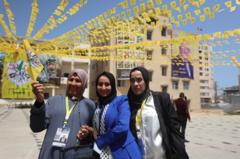
- Fatah holds rare meeting to elect top leaders amid rising discontent
- Polls show Palestinians feel party leadership is out of touch
- Party faces growing criticism over governance and policies
RAMALLAH, West Bank — The Fatah faction of the Palestine Liberation Organization (PLO) held a rare meeting Tuesday to elect its top decision-makers, a move seen as an attempt to address deepening public dissatisfaction revealed in recent polls. The gathering comes as surveys indicate declining trust in Fatah’s leadership among ordinary Palestinians, who criticize the party for perceived detachment from their daily struggles and political stagnation.
Analysts say the meeting reflects internal pressure within Fatah to revitalize its image and regain public support. Party officials framed the event as a step toward unity, but critics argue it may be too late to reverse growing skepticism about Fatah’s ability to address Palestinian demands for statehood and economic stability. The faction, led by Mahmoud Abbas, has faced mounting criticism over its failure to hold elections and its handling of the Gaza crisis.
Fatah’s leadership faces scrutiny as polls show disillusionment
Public opinion surveys, including those conducted by Palestinian research centers, reveal a sharp decline in support for Fatah. A recent poll by the Palestinian Center for Policy and Survey Research found that only 34% of Palestinians view Fatah favorably, down from 42% six months ago. The decline is particularly pronounced among younger voters, who increasingly favor alternative factions, including Hamas and smaller leftist groups.
Critics accuse Fatah’s leadership of prioritizing internal power struggles over addressing pressing issues like unemployment, corruption, and stalled peace negotiations with Israel. The party’s refusal to hold legislative elections since 2006 has further fueled public frustration, with many Palestinians viewing Fatah as an entrenched, unresponsive establishment.
Meeting aims to shore up legitimacy but faces skepticism
Fatah’s leadership has defended the meeting as a necessary step to strengthen the party’s structure and prepare for future challenges. Mahmoud Abbas, who has led Fatah and the Palestinian Authority since 2005, remains the dominant figure, but his advanced age and declining health have raised questions about the party’s future direction. The meeting is expected to solidify the influence of Abbas’s inner circle while sidelining potential rivals.
Yet the optics of the gathering are unlikely to mollify critics who argue that cosmetic changes will not address systemic issues. The West Bank-based Palestinian Authority, dominated by Fatah, continues to face accusations of authoritarianism and ineffectiveness, further eroding public confidence. Meanwhile, Hamas, which controls Gaza, has capitalized on Fatah’s perceived weaknesses by positioning itself as a more assertive alternative.
Broader implications for Palestinian politics
The outcome of Fatah’s meeting could have significant consequences for Palestinian politics, particularly as pressure mounts for reforms and accountability. The party’s ability to regain public trust may hinge on its willingness to address corruption allegations, improve governance, and engage in meaningful dialogue with rival factions. Failure to do so risks further fragmentation within Palestinian ranks and growing support for more militant groups.
For now, Fatah’s leadership appears intent on consolidating power internally rather than addressing external demands for change. But with polls showing discontent at record levels, the party’s legitimacy is increasingly at risk, raising questions about its long-term viability as a unifying force in Palestinian politics.
What You Need to Know
- Source: BBC News
- Published: May 15, 2026 at 23:05 UTC
- Category: World
- Topics: #bbc · #world-news · #international · #palestinian · #palestinians · #fatah-leadership-meeting
Read the Full Story
This is a curated summary. For the complete article, original data, quotes and full analysis:
All reporting rights belong to the respective author(s) at BBC News. GlobalBR News summarizes publicly available content to help readers discover the most relevant global news.
Curated by GlobalBR News · May 15, 2026
Related Articles
- Eurovision 2024 faces scrutiny over Israel’s participation amid war
- War in the Middle East: Israel targets top Hamas leader in Gaza
- US Justice Department preparing indictment against Raúl Castro
🇧🇷 Resumo em Português
No coração de uma Cisjordânia agitada pela insatisfação crescente, o Fatah, partido histórico que há décadas lidera a causa palestina, realizou uma rara convenção para eleger seus novos comandantes, em um sinal de que tenta se reinventar diante do desgosto popular. Pesquisas recentes apontam que a confiança dos palestinos comuns nas instituições do Fatah nunca esteve tão baixa, com uma parcela significativa da população questionando sua capacidade de representar os anseios nacionais em meio à ocupação israelense e à estagnação política. A eleição dos novos líderes, marcada por disputas internas e pressões por renovação, reflete não apenas a busca por legitimidade, mas também o temor de que a fragmentação do movimento possa enfraquecer ainda mais a já frágil unidade palestina.
O Brasil, que mantém laços históricos com a causa palestina e abriga uma das maiores diásporas árabes do mundo, observa com atenção os desdobramentos dessa crise. Para os leitores brasileiros, o caso do Fatah serve como um espelho das lutas por autodeterminação e representatividade em outros contextos, como as comunidades indígenas ou as periferias urbanas, onde a distância entre as lideranças e as bases sociais também gera tensões. Além disso, a instabilidade na Palestina tem reflexos diretos em acordos internacionais e na política externa brasileira, que tradicionalmente defende uma solução de dois Estados, mas vê sua posição cada vez mais desafiada por realidades como o avanço dos assentamentos israelenses e a falta de perspectivas concretas para a paz.
Enquanto o Fatah tenta se reerguer, a população palestina segue sem respostas claras para suas demandas por dignidade e justiça, e o Brasil, como ator global, pode vir a desempenhar um papel crucial na mediação ou no apoio a iniciativas que revitalizem o processo de paz.
🇪🇸 Resumen en Español
La facción Fatah de la Autoridad Palestina ha celebrado una reunión histórica para renovar su cúpula directiva en un momento clave, marcado por el aumento de la desconfianza ciudadana hacia sus líderes. Los sondeos revelan un malestar creciente entre los palestinos, que cuestionan la capacidad de Fatah para representar sus intereses.
El contexto de esta elección adquiere mayor relevancia al producirse en paralelo a un declive en el apoyo popular, según indican las encuestas, que reflejan el hartazgo de la población con la gestión política. Para los hispanohablantes, este escenario subraya los desafíos de la gobernanza palestina en un escenario de división interna y presión social, así como las posibles repercusiones en las negociaciones de paz con Israel y la estabilidad regional.
BBC News
Read full article at BBC News →This post is a curated summary. All rights belong to the original author(s) and BBC News.
Was this article helpful?


Discussion