British paratrooper lands by parachute on Tristan da Cunha with Hantavirus treatment and medical aid after five-year gap.
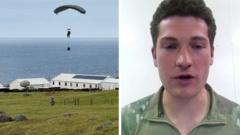
- Paratrooper completed first medical supply drop to Tristan da Cunha in five years
- Hantavirus treatment delivered to remote South Atlantic island community
- Supplies reached island via parachute after Royal Navy ship couldn’t dock
A specialist team from the British military parachuted critical medical supplies and the first Hantavirus treatment to Tristan da Cunha Tristan da Cunha, the world’s most remote inhabited archipelago, on Thursday.
The operation required a Royal Air Force C-130 Hercules to airdrop the aid 1,200 miles from the nearest landfall after severe weather prevented the Royal Navy’s support ship from docking at the island’s sole landing site. Weather conditions at the South Atlantic outpost remain volatile, with waves often exceeding 30 feet.
Why Tristan da Cunha needed this mission
Tristan da Cunha, a British Overseas Territory, has no airstrip and only one ship visits per year. The island’s 250 residents rely entirely on external supply chains for medicine, food, and fuel. The last medical supply drop occurred five years ago.
Hantavirus, transmitted through rodent urine and droppings, poses a serious health risk in crowded or unsanitary conditions. While the island has no confirmed recent cases, the territory’s Chief Medical Officer requested emergency supplies as a precaution after a suspected outbreak in nearby South America.
How the mission unfolded
The RAF team coordinated with the Royal Navy and local authorities to plan the high-risk parachute drop. The Hercules flew low at 300 feet to avoid radar and released the cargo pallets fitted with parachutes to land intact on the island’s narrow plateau.
The single paratrooper, part of the Parachute Regiment, secured the supplies upon landing and coordinated with island residents to transport them to the hospital. The mission took less than four hours from takeoff to completion.
Health risks and island life
Tristan da Cunha’s isolation makes routine healthcare difficult. The island has one small hospital with limited staff and no intensive care unit. Residents manage most health issues on site, with serious cases requiring medical evacuation—often delayed by weather.
The territory’s governor confirmed that the supplies will support the island’s fragile health system until the next ship arrives in October. The Hantavirus treatment and antibiotics will be stored under strict protocols to prevent contamination.
Broader implications for remote medical aid
This mission highlights the challenges of delivering urgent medical aid to ultra-remote communities. With climate change increasing storm frequency and sea levels, such operations may become more common. The RAF is reviewing the mission for future contingency plans.
For the 250 people of Tristan da Cunha, the arrival of aid brings relief and a reminder of their dependence on the outside world.
What You Need to Know
- Source: BBC News
- Published: May 11, 2026 at 12:39 UTC
- Category: World
- Topics: #bbc · #world-news · #international · #health · #virus · #disease
Read the Full Story
This is a curated summary. For the complete article, original data, quotes and full analysis:
All reporting rights belong to the respective author(s) at BBC News. GlobalBR News summarizes publicly available content to help readers discover the most relevant global news.
Curated by GlobalBR News · May 11, 2026
Related Articles
- Eurovision 2024 faces scrutiny over Israel’s participation amid war
- US Justice Department preparing indictment against Raúl Castro
- US planning to criminally indict ex-Cuban leader Raúl Castro
🇧🇷 Resumo em Português
Um paraquedista britânico realizou uma missão ousada ao saltar de paraquedas em uma das ilhas mais remotas do mundo, Tristan da Cunha, para levar o primeiro tratamento contra o hantavírus e suprimentos médicos essenciais. A ação, transmitida ao vivo, marcou a primeira missão de ajuda humanitária na ilha em cinco anos, destacando-se pela ousadia logística e pela urgência da situação.
Tristan da Cunha, território britânico no Atlântico Sul e habitado por cerca de 250 pessoas, enfrenta desafios únicos devido à sua localização isolada. A chegada do paraquedista e dos suprimentos médicos, que levaram dias para serem transportados por navio, evidencia a dificuldade de acesso a tratamentos em regiões tão distantes. Para o Brasil, a notícia reforça a importância da cooperação internacional em saúde pública, especialmente em territórios vulneráveis, e serve de alerta para a necessidade de planejamento logístico em casos de emergência sanitária.
A missão bem-sucedida deve servir de exemplo para futuras operações de auxílio em ilhas remotas, mas também levanta questionamentos sobre a sustentabilidade de recursos médicos em locais tão isolados.
🇪🇸 Resumen en Español
Un soldado británico desciende en paracaídas sobre la remota isla de Tristan da Cunha para llevar el primer tratamiento contra el hantavirus y suministros médicos, marcando la primera misión de auxilio en cinco años.
La hazaña, transmitida en directo, subraya la dificultad logística de alcanzar este archipiélago británico en medio del Atlántico Sur, donde la escasez de vuelos comerciales obliga a recurrir a métodos poco convencionales. Para los hispanohablantes, el suceso recuerda la vulnerabilidad de comunidades aisladas ante brotes epidemiológicos, al tiempo que resalta la capacidad de respuesta militar en emergencias sanitarias. La operación, además, reaviva el debate sobre la necesidad de infraestructuras médicas en territorios remotos, un tema con ecos en regiones de América Latina y el Caribe.
BBC News
Read full article at BBC News →This post is a curated summary. All rights belong to the original author(s) and BBC News.
Was this article helpful?


Discussion