Four robot monks marched in Seoul’s lantern parade to mark Buddha’s birthday, blending technology and tradition.
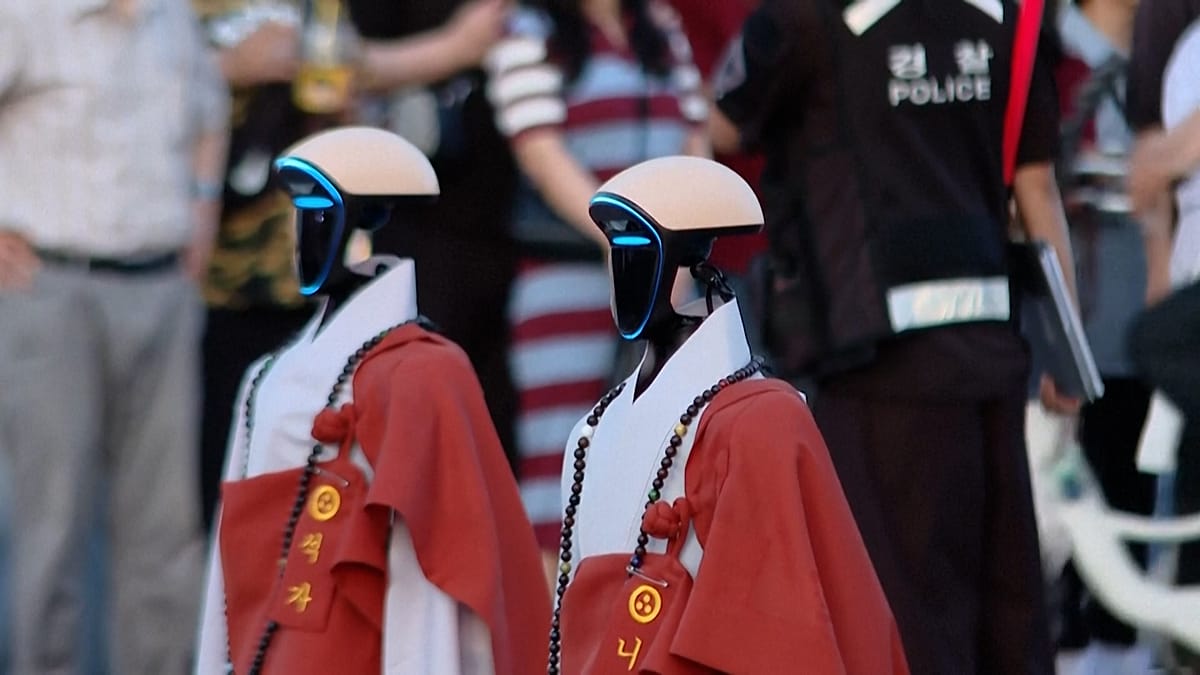
- Thousands watched robot monks lead Seoul’s lantern parade
- Four robot monks wore traditional Buddhist robes
- Parade marked Buddha’s birthday celebrations
Four robot monks in traditional robes led Seoul’s lantern parade Saturday, drawing thousands of spectators through the South Korean capital’s historic streets ahead of Buddha’s birthday. The mechanical monks, programmed to mimic human movements, marched alongside human participants in the annual event celebrating Vesak, the most sacred day in Buddhism.
Seoul’s lantern festival, a centuries-old tradition, transforms the city’s Jongno District into a vibrant display of light and color each year. This year’s edition featured the robot monks as a symbol of Buddhism’s evolving relationship with technology, organizers said. The robots, designed to resemble Buddhist monks, moved in unison, holding prayer beads in their hands as they processed past onlookers.
Buddha’s birthday, known locally as Seokka Tansinil, falls on the eighth day of the fourth lunar month in the Buddhist calendar, typically in May. South Korea, home to about 20% of the population identifying as Buddhist, observes the holiday with lantern parades, temple visits, and charitable acts. The inclusion of robot monks reflects a growing trend of integrating technology into religious and cultural ceremonies across Asia.
The robot monks were developed by South Korea’s Ministry of Culture, Sports and Tourism in partnership with local tech firms. Their design aimed to bridge generational gaps, attracting younger audiences while preserving traditional customs. Spectators of all ages lined the streets, many capturing the procession on smartphones and sharing images on social media.
Religious leaders in Seoul praised the initiative as a way to engage younger generations with Buddhist teachings. “Technology can be a tool to spread compassion and mindfulness,” said Ven. Jaseung, a senior monk at Jogyesa Temple. The temple, one of Seoul’s most prominent Buddhist sites, played a central role in organizing the parade.
The parade’s route wound past landmarks like Gwanghwamun Gate and Cheonggyecheon Stream, drawing crowds despite seasonal rains. Organizers reported record attendance this year, with over 100,000 people participating in the festivities. The robot monks, powered by lithium-ion batteries, operated for the full two-hour procession without interruption.
Next year’s lantern parade is expected to expand on this year’s technological innovations, with plans to incorporate augmented reality features for attendees. The event organizers hope to inspire similar integrations of tech and tradition in other cultural celebrations worldwide. For now, the robot monks stand as a testament to South Korea’s ability to blend its rich heritage with cutting-edge advancements.
What You Need to Know
- Source: Euronews
- Published: May 16, 2026 at 17:02 UTC
- Category: World
- Topics: #euronews · #europe · #world-news · #south-korea · #thousands · #seoul
Read the Full Story
This is a curated summary. For the complete article, original data, quotes and full analysis:
All reporting rights belong to the respective author(s) at Euronews. GlobalBR News summarizes publicly available content to help readers discover the most relevant global news.
Curated by GlobalBR News · May 16, 2026
Related Articles
- Zimbabwe’s diaspora reshapes real estate and farming investment trends
- 🎉 250 Articles in World!
- Eurovision 2024 faces scrutiny over Israel’s participation amid war
🇧🇷 Resumo em Português
Em uma fusão inovadora entre espiritualidade e tecnologia, quatro robôs trajando vestes monásticas lideraram a grandiosa procissão de lanternas em Seul, na Coreia do Sul, em comemoração ao aniversário de Buda, cativando milhares de espectadores. A cena, que parecia tirada de um futuro distópico, na verdade celebrou a harmonia entre a tradição budista e o avanço robótico, destacando como a Coreia do Sul vem integrando inovação à sua cultura milenar.
O evento, que antecedeu a data festiva, não passou despercebido no Brasil, onde a discussão sobre o papel da tecnologia na sociedade — especialmente em contextos religiosos e culturais — ganha cada vez mais força. Para o público brasileiro, acostumado a ver o sincretismo religioso e a criatividade tecnológica em manifestações como o Círio de Nazaré ou festas populares, a imagem dos robôs liderando a procissão soa como um símbolo do que há de vir: máquinas a serviço da fé e da tradição. Além disso, o feito reforça a Coreia do Sul como um polo de inovação, algo que interessa a um país como o Brasil, que busca modernizar sua própria infraestrutura sem perder suas raízes culturais.
A iniciativa levanta questões sobre até onde a robótica pode avançar na interação com crenças e rituais, abrindo caminho para um debate global sobre o limite entre o sagrado e o artificial.
🇪🇸 Resumen en Español
Cientos de curiosos se congregaron en Seúl para presenciar un espectáculo que fusionaba lo ancestral con lo futurista. Cuatro monjes robóticos, ataviados con túnicas tradicionales, encabezaron el desfile de farolillos que precede la celebración del cumpleaños de Buda, un guiño innovador que ha llamado la atención del mundo.
La iniciativa, organizada por el templo budista Bongeunsa, busca modernizar la tradición sin perder su esencia espiritual, atrayendo especialmente a las nuevas generaciones. Este gesto refleja cómo la tecnología puede servir como puente cultural, aunque también plantea debates sobre la autenticidad de las celebraciones religiosas en la era digital. Para los hispanohablantes, el caso invita a reflexionar sobre el equilibrio entre innovación y tradición, un tema recurrente en sociedades cada vez más tecnológicas.
Euronews
Read full article at Euronews →This post is a curated summary. All rights belong to the original author(s) and Euronews.
Was this article helpful?



Discussion