Poll shows 48% of Germans want the coalition government dissolved, as protests mark Nakba Day in Berlin.
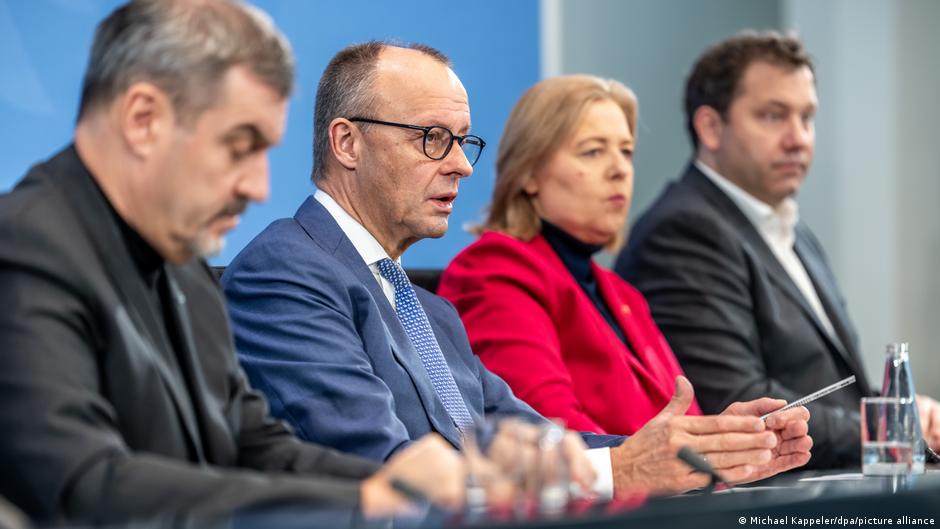
- 48% of Germans oppose coalition government in new poll
- 30% support keeping the current coalition in power
- Berlin protests planned to mark Nakba Day on May 17
A survey released Friday shows nearly half of Germans want the conservative-led coalition government dissolved, with only 30% backing its continuation. The poll, conducted amid growing public dissatisfaction, reflects widespread discontent with the government’s performance since taking office in 2025. Critics point to economic struggles and social tensions as key factors eroding support for the ruling coalition led by Friedrich Merz.
Meanwhile, pro-Palestinian groups have announced plans for a major march in Berlin on Saturday to mark Nakba Day, which commemorates the 1948 displacement of Palestinians during the establishment of Israel. Organizers expect thousands to participate in demonstrations focusing on Palestinian rights and the ongoing conflict in Gaza. The protests coincide with heightened international scrutiny of Germany’s stance on the Israeli-Palestinian issue, with critics accusing Berlin of insufficient support for Palestinian statehood.
Rising antisemitism concerns
The head of Germany’s Central Council of Jews, Josef Schuster, has called for stricter penalties for antisemitic crimes, including denial of Israel’s right to exist. Schuster, who has led the council since 2014, cited a sharp rise in anti-Jewish incidents over the past year, linking some to protests over the Gaza war. His remarks underscore growing fears within Germany’s Jewish community about rising intolerance and political violence.
German authorities have reported a 40% increase in antisemitic offenses in 2026 compared to last year, prompting calls for stronger legal measures. Schuster urged prosecutors to treat denial of Israel’s right to exist as a criminal offense, equating it with hate speech. The justice ministry has not yet responded to the proposal but has acknowledged concerns over rising antisemitism.
Political fallout and public sentiment
The poll results come as the coalition government faces mounting criticism over its handling of domestic and foreign policy. Opposition parties, including the Social Democrats and Greens, have seized on public discontent to push for early elections. Merz’s Christian Democratic Union has struggled to regain public trust after a series of scandals and policy missteps, further weakening the coalition’s stability.
Public sentiment has also been influenced by economic pressures, including high inflation and energy costs, which have fueled frustration across the country. Analysts warn that continued decline in government approval could lead to a political crisis, potentially forcing a reshuffle or early elections. The next federal election is not due until 2029, but political observers say the coalition’s survival may depend on rapid reforms and improved communication with voters.
International reactions and protests
Germany’s position on the Israeli-Palestinian conflict has drawn both support and criticism internationally. While the government has reiterated its commitment to Israel’s security, pro-Palestinian groups argue that Berlin’s policies have not gone far enough in addressing humanitarian crises in Gaza. The Berlin march, scheduled for Saturday afternoon near the Brandenburg Gate, is expected to draw a diverse crowd, including activists, students, and international observers.
Police have announced increased security measures for the protest, citing potential clashes with counter-demonstrators. Authorities have also warned against antisemitic or anti-Israeli rhetoric, emphasizing that public assemblies must remain peaceful. The event follows similar protests in other European cities, as global attention remains focused on the Middle East conflict.
As the coalition government faces its toughest challenge yet, political analysts say the coming weeks will be critical in determining its future. With public trust eroding and protests growing, the government’s ability to address both domestic and international concerns will likely shape its political survival. The outcome of the Berlin protests and the government’s response to rising antisemitism could further influence public opinion before the next major electoral test.
What You Need to Know
- Source: Deutsche Welle
- Published: May 16, 2026 at 08:57 UTC
- Category: World
- Topics: #europe · #world-news · #germany · #nearly · #palestinian
Read the Full Story
This is a curated summary. For the complete article, original data, quotes and full analysis:
All reporting rights belong to the respective author(s) at Deutsche Welle. GlobalBR News summarizes publicly available content to help readers discover the most relevant global news.
Curated by GlobalBR News · May 16, 2026
Related Articles
- Eurovision 2024 faces scrutiny over Israel’s participation amid war
- US Justice Department preparing indictment against Raúl Castro
- US planning to criminally indict ex-Cuban leader Raúl Castro
🇧🇷 Resumo em Português
Um em cada dois alemães quer que o governo de coalizão conservadora seja dissolvido, segundo pesquisa recente, revelando uma crise política sem precedentes no coração da Europa. O dado, que coloca a atual gestão em xeque, surge em um momento de tensão social crescente, com protestos pró-Palestina marcando o Dia da Nakba em Berlim, reacendendo debates sobre política externa e direitos humanos na Alemanha.
A notícia ganha relevância no Brasil porque reflete não apenas a instabilidade na maior economia europeia, mas também as repercussões globais de suas decisões políticas. Com a Alemanha sendo um parceiro estratégico para o Brasil em comércio e acordos climáticos, a queda da coalizão poderia redefinir alianças e prioridades em um cenário internacional cada vez mais polarizado. Além disso, as manifestações em Berlim ecoam no Brasil, onde a causa palestina mobiliza setores da sociedade, reforçando a necessidade de o governo brasileiro acompanhar de perto os desdobramentos.
Se confirmada, a dissolução do governo alemão pode acelerar eleições antecipadas e reconfigurar o mapa político europeu, com impactos que vão muito além das fronteiras do continente.
🇪🇸 Resumen en Español
Un sondeo reciente revela que casi la mitad de los alemanes apuestan por disolver la coalición conservadora que lidera el país, mientras Berlín se prepara para masivas movilizaciones pro palestinas por el Día de la Nakba. La encuesta, realizada por el instituto Infratest dimap, refleja un malestar social creciente que amenaza con desestabilizar el frágil equilibrio político de la cancillería.
El descontento con el gobierno de Scholz, agravado por la crisis económica y la gestión de conflictos internacionales como la guerra en Gaza, sitúa a la coalición en su peor momento. Para los hispanohablantes, este escenario subraya cómo la inestabilidad en Europa puede repercutir en políticas migratorias y comerciales clave para la región, mientras las protestas en Berlín recuerdan la creciente polarización social ante el conflicto israelopalestino, un tema que resuena en las comunidades árabes y latinoamericanas de España y Latinoamérica.
Deutsche Welle
Read full article at Deutsche Welle →This post is a curated summary. All rights belong to the original author(s) and Deutsche Welle.
Was this article helpful?


Discussion