Honda posts first annual loss in seven decades, drops 2040 plan for all-electric vehicle lineup.
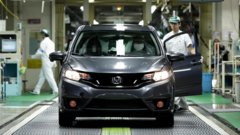
- Honda reports first annual loss in 70 years
- Company scraps 2040 target for all-electric vehicles
- Firm cites rising costs and weak demand as key drivers
Japanese carmaker Honda has posted its first annual net loss in seven decades, ending a streak of profitability that began in 1955. The company reported a ¥11.8 billion ($78 million) net loss for the fiscal year ending March 31, 2024, reversing a ¥678.8 billion profit the prior year. The rare financial setback forces Honda to abandon its long-standing target of making all its vehicles electric by 2040, a goal it had reaffirmed as recently as 2021.
Shift in strategy amid losses
Toshihiro Mibe, Honda’s CEO, announced the decision during a Tuesday earnings call, citing rising costs, weak demand in key markets and supply chain disruptions. The company now plans to extend its reliance on hybrid and internal combustion engine vehicles beyond 2040 while accelerating investments in battery technology. The move reflects broader challenges facing legacy automakers as they navigate the transition to electric vehicles (EVs).
The financial reversal comes after Honda reported a ¥1.1 trillion loss in its North American operations, its largest regional market, due to declining sales and higher expenses. The company also faced steep losses in Europe and Asia, offsetting gains in emerging markets like India and Brazil. Analysts attribute the downturn to persistent global supply chain issues, semiconductor shortages and a slowdown in EV adoption in major economies.
Market reactions and investor response
Shares of Honda dropped nearly 5% in Tokyo trading following the announcement, erasing gains from earlier in the week. Investors expressed concern over the company’s ability to balance short-term profitability with long-term electrification goals. Mibe acknowledged the shift but emphasized that Honda remains committed to reducing carbon emissions and developing advanced vehicle technologies.
The decision to drop the 2040 EV mandate aligns with similar moves by other Japanese automakers. Toyota has pushed back its full EV transition to 2030, while Nissan has scaled back its electrification targets. Industry observers note that European and American rivals are also recalibrating their strategies amid slowing EV sales growth and rising production costs.
Regional pressures and competitive landscape
Honda’s struggles are most pronounced in North America, where the company has lost market share to rivals like Tesla and Ford. The region’s shift toward EVs has outpaced consumer adoption in other markets, leaving legacy automakers grappling with unsold inventory and heavy discounting. In China, Honda faces intense competition from domestic EV makers like BYD, which have captured significant market share with lower-cost models.
Looking ahead, Honda plans to focus on hybrid vehicles as a bridge to electrification, with a goal of making 40% of its global sales electric or hybrid by 2030. The company also intends to launch 30 new EV models by 2030, though it has not provided a revised timeline for phasing out gasoline-powered vehicles entirely. Analysts warn that the revised strategy carries risks, including potential regulatory penalties for missing emissions targets in Europe and California.
What You Need to Know
- Source: BBC News
- Published: May 14, 2026 at 13:25 UTC
- Category: Business
- Topics: #bbc · #business · #economy · #honda · #honda-annual-loss-2024 · #honda-drops-2040-ev-target
Read the Full Story
This is a curated summary. For the complete article, original data, quotes and full analysis:
All reporting rights belong to the respective author(s) at BBC News. GlobalBR News summarizes publicly available content to help readers discover the most relevant global news.
Curated by GlobalBR News · May 14, 2026
Related Articles
- Kevin O’Leary: Gen Z founders working 18-hour days make ‘no sense’
- Lawyers sanctioned $110K for fake AI citations in landmark Oregon case
- Taiwan arms sales top Trump-Xi talks agenda as Xi meet ends
🇧🇷 Resumo em Português
A Honda, gigante japonesa do setor automotivo, anunciou seu primeiro prejuízo anual em sete décadas, encerrando uma trajetória ininterrupta de lucros que remonta à década de 1950. A notícia, que abala um dos setores mais tradicionais da economia global, chega em um momento de profunda transformação no mercado de veículos, com pressões por eletrificação e mudanças nos hábitos de consumo.
O anúncio não só expõe os desafios enfrentados pela montadora diante da transição energética, mas também lança luz sobre os riscos de uma estratégia agressiva de eletrificação em um cenário global ainda dominado por motores a combustão. No Brasil, maior mercado latino-americano da Honda, a decisão de abandonar a meta de 100% de veículos elétricos até 2040 pode soar como um recuo, mas reflete uma realidade mais ampla: a dificuldade de conciliar metas ambientais ambiciosas com a viabilidade comercial em um país onde a infraestrutura para EVs ainda é incipiente. Especialistas já alertavam para os riscos de uma transição acelerada sem planejamento adequado, e o caso da Honda serve como exemplo das pressões enfrentadas por toda a indústria.
Agora, a montadora japonesa terá de repensar seus investimentos e estratégias de longo prazo, enquanto o setor automotivo mundial observa os desdobramentos desse movimento — que pode acelerar ou atrasar a tão esperada revolução elétrica nos transportes.
🇪🇸 Resumen en Español
La histórica automotriz japonesa Honda registra su primera pérdida anual en siete décadas, rompiendo una racha de beneficios ininterrumpidos desde su fundación. La compañía, conocida por su fiabilidad y tradición industrial, ha sorprendido al mercado al anunciar no solo un ejercicio deficitario, sino también la retirada de su ambicioso plan de electrificación total para 2040.
El revés financiero de Honda refleja los desafíos globales del sector, desde la caída en la demanda de vehículos en mercados clave como China hasta la presión por adaptarse a una transición energética más acelerada de lo previsto. Para un público hispanohablante, especialmente en regiones donde la marca tiene fuerte presencia —como Latinoamérica—, este giro estratégico subraya la urgencia de replantear inversiones en movilidad sostenible y la necesidad de equilibrar innovación con rentabilidad. La decisión también plantea dudas sobre el ritmo de la industria, cuestionando si otros gigantes del sector seguirán ajustando sus metas ante un contexto económico incierto y regulaciones cada vez más exigentes.
BBC News
Read full article at BBC News →This post is a curated summary. All rights belong to the original author(s) and BBC News.
Was this article helpful?



Discussion