NASA astronaut photographs rare green and pink auroras over Australia from the ISS on May 15, 2026.
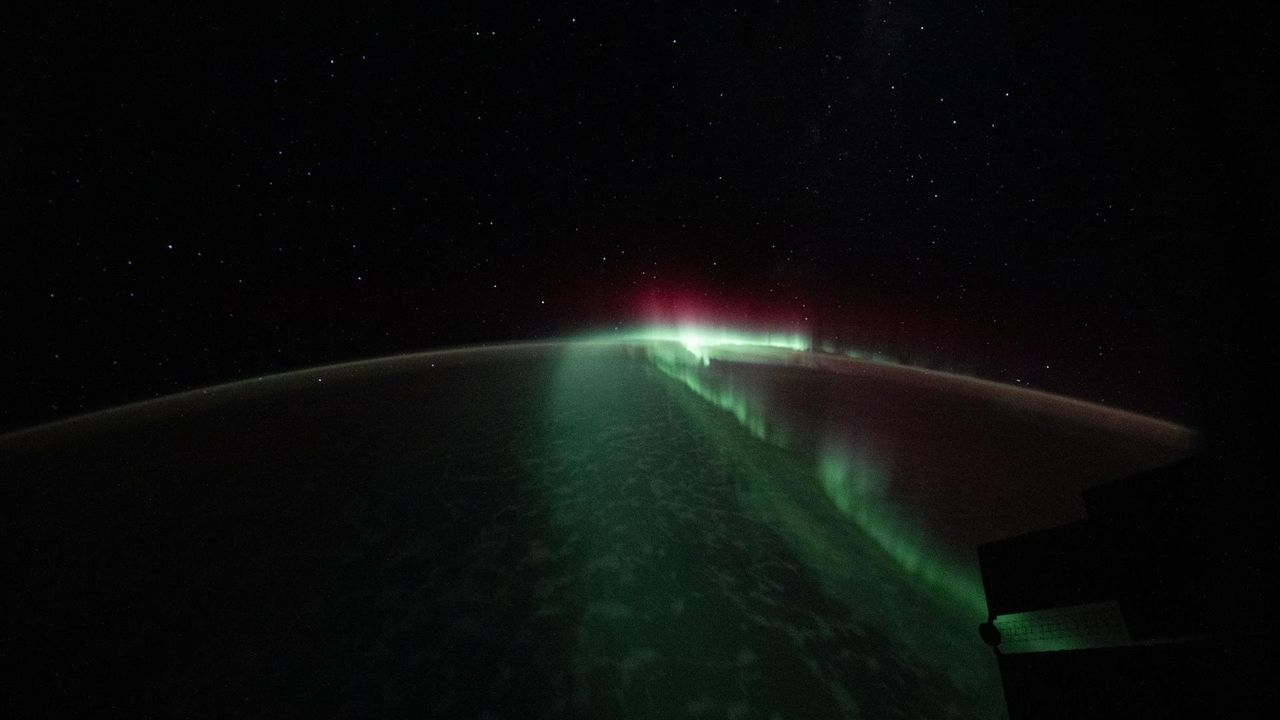
- Photograph shows auroras over Australia from the International Space Station
- Auroras feature bright green streak and pink glow near the top
- Image captured by NASA astronaut on May 15, 2026
A NASA astronaut aboard the International Space Station ISS captured a rare and vivid display of auroras over Australia on May 15, 2026. The photograph shows a bright green streak of light curving along Earth’s horizon, with a distinct pink glow near the top, highlighting the planet’s curvature against the blackness of space. The image, shared on social media and by space agencies, offers a unique perspective of the natural phenomenon typically seen from the ground.
Auroras occur when charged particles from the sun collide with Earth’s magnetic field, creating luminous displays in the sky. The green and pink hues in the photograph are caused by oxygen and nitrogen in the atmosphere reacting to solar particles. The ISS orbits about 250 miles above Earth, providing astronauts with unparalleled views of such events.
How auroras form and why they appear in different colors
Auroras, also known as the northern or southern lights, are most commonly seen near the polar regions. However, strong solar activity can push these displays closer to the equator, making them visible in unusual locations like Australia. The colors depend on the type of gas particles involved and the altitude at which the collisions occur. Oxygen at higher altitudes produces red or green light, while nitrogen tends to create blue or purple hues.
NASA and other space agencies frequently monitor solar activity to predict aurora visibility. The May 15 sighting aligns with heightened solar activity observed in recent weeks, including increased sunspot numbers and solar flares. Scientists note that such events can disrupt satellite communications and power grids on Earth, though this particular aurora posed no threat.
Astronauts capture stunning views of Earth’s natural light shows
This is not the first time astronauts have shared breathtaking images of auroras from space. The ISS serves as a critical platform for observing and studying these phenomena, as well as other atmospheric and space weather events. Previous photographs have shown auroras over the Arctic, Antarctica, and even the Southern Ocean, each offering a unique perspective of the planet’s dynamic interactions with solar radiation.
The May 15 image adds to a growing collection of astronaut photography that highlights Earth’s beauty and fragility. These images often go viral, sparking public interest in space exploration and the science behind natural phenomena. NASA regularly releases such images to engage audiences and promote its research missions.
Looking ahead, scientists anticipate more frequent and intense auroras as the sun approaches the peak of its 11-year solar cycle, expected in 2026. The increased solar activity could lead to more vivid displays visible from unusual locations, providing more opportunities for observation and study. Researchers will continue to analyze data from the ISS and other satellites to better understand the impacts of solar storms on Earth’s atmosphere and technology.
For now, the image of the auroras over Australia serves as a reminder of the planet’s connection to the sun and the dynamic forces shaping its environment. It also underscores the unique vantage point offered by human spaceflight, bridging the gap between scientific research and public fascination with the cosmos.
What You Need to Know
- Source: Space.com
- Published: May 15, 2026 at 14:00 UTC
- Category: Science
- Topics: #space · #astronomy · #nasa · #science · #auroras · #australia
Read the Full Story
This is a curated summary. For the complete article, original data, quotes and full analysis:
All reporting rights belong to the respective author(s) at Space.com. GlobalBR News summarizes publicly available content to help readers discover the most relevant global news.
Curated by GlobalBR News · May 15, 2026
Related Articles
- 5 Ways to Vet Social Media Health Advice Before Trying It
- Your Body Clock May Enhance The Benefits of Exercise, Study Finds
- Study finds yawns contagious before birth, even more than thought
🇧🇷 Resumo em Português
O Brasil, acostumado a espetáculos celestes como a Lua de Sangue ou o cometa Halley, agora tem um novo motivo para erguer os olhos ao céu — ainda que de forma indireta. Do alto da Estação Espacial Internacional, um astronauta da NASA registrou auroras boreais de tons vibrantes de verde e rosa sobre a Austrália, um fenômeno raro que tingiu a noite de cores intensas e foi compartilhado em maio de 2026. A imagem, que rapidamente viralizou nas redes, não apenas encanta pela beleza, mas também serve como lembrete de como os eventos cósmicos podem ser acessíveis — mesmo que a milhares de quilômetros de distância.
As auroras, normalmente associadas às regiões polares do Hemisfério Norte, ganharam um novo palco no extremo sul do planeta graças a uma forte tempestade solar. Embora o Brasil não esteja diretamente no caminho dessas luzes, a imagem capturada pela NASA reforça a importância de monitorar a atividade solar, que pode afetar desde comunicações via satélite até redes elétricas em todo o mundo. Para o público de língua portuguesa, especialmente aqueles interessados em ciência e astronomia, o registro é uma oportunidade de conectar-se a descobertas globais e refletir sobre o papel do Brasil em pesquisas espaciais, como a participação em missões internacionais ou o desenvolvimento de tecnologias de observação.
Enquanto a foto circula pelo mundo, cientistas já iniciam estudos para entender melhor os efeitos dessa tempestade geomagnética, que pode ter deixado rastros até mesmo em latitudes mais baixas. A próxima vez que um fenômeno semelhante ocorrer, a expectativa é que instrumentos cada vez mais avançados — e possivelmente até mesmo observadores no Brasil — consigam captar esses momentos efêmeros do cosmos.
🇪🇸 Resumen en Español
Una deslumbrante cortina de luces verdes y rosadas tiñe el cielo australiano en una imagen captada por un astronauta de la NASA desde la Estación Espacial Internacional, ofreciendo un espectáculo cósmico que ha cautivado al mundo.
Este fenómeno, registrado el pasado 15 de mayo, no solo es un regalo visual para los amantes de la astronomía, sino que también subraya la intensidad de las tormentas geomagnéticas que estos días azotan la Tierra. Para los hispanohablantes, más allá de su belleza, estas auroras recuerdan la importancia de la exploración espacial en la comprensión de los fenómenos naturales que afectan nuestro planeta, desde las comunicaciones hasta el clima. Además, imágenes como esta fortalecen el interés por la ciencia espacial en nuestra región, donde países como España y México ya participan en misiones clave de la ESA y la NASA.
Space.com
Read full article at Space.com →This post is a curated summary. All rights belong to the original author(s) and Space.com.
Was this article helpful?



Discussion