UK politics this week became a spectacle of leadership shifts and controversies, leaving the public divided and exhausted.
- Public grows exhausted amid rapid UK political shifts
- Keir Starmer warns of battle for nation's soul
- Nigel Farage and other figures dominate headlines
📰 Continuing coverage: Starmer ally admits prime minister is ‘unpopular’ but warns of ‘chaos’ if leadership contest triggered – UK politics live
The past seven days in British politics have felt like a marathon rather than a sprint, leaving voters weary and divided. The warning from Keir Starmer that the nation faces a “battle for the soul of our nation” did little to reassure an already fatigued electorate. Instead, it amplified concerns that political battles are being waged over fundamental values rather than practical solutions.
The arrival of Nigel Farage in Westminster as an MP has intensified the political theatrics. His presence, alongside other divisive figures, has turned the House of Commons into a stage for ideological clashes. The public’s reaction has been one of confusion and disengagement, with many questioning the direction of the country under such polarizing leadership.
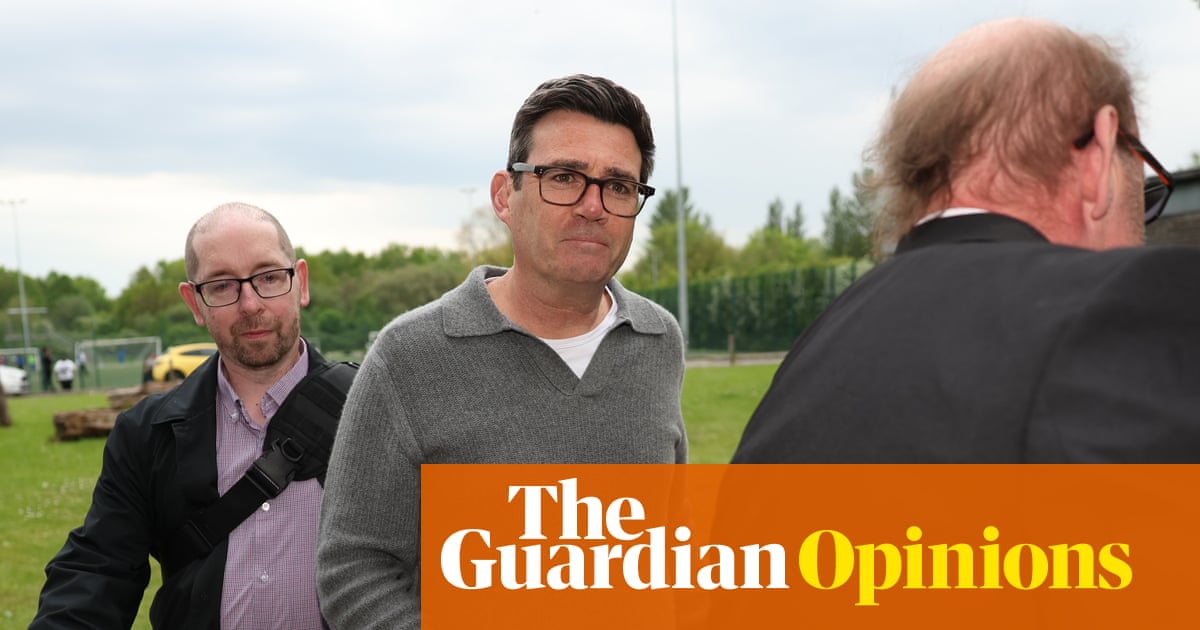
This week also saw Andy Burnham, the mayor of Greater Manchester, re-enter the political fray. His intervention comes as debates rage over devolution and local governance. Burnham’s involvement highlights the growing tensions between national and regional leadership, particularly in areas like Makerfield, where political battles are being waged over identity and policy.
The controversies surrounding Zack Polanski, a Green Party peer, have further complicated the narrative. Accusations and counter-accusations have dominated headlines, shifting focus away from substantive policy discussions. The public’s frustration is palpable, with many questioning whether their representatives are prioritizing personal vendettas over public service.
The political turmoil has also reignited debates about the role of unelected officials in shaping policy. The presence of figures like Farage, who has long been a polarizing force, has raised questions about the balance between democracy and populism. Meanwhile, traditional parties are struggling to regain public trust amid the chaos.
The public reacts: fatigue and division
Voters across the UK are expressing exhaustion with the constant cycle of scandals and leadership changes. Polls indicate a growing disillusionment with politics, with many describing the current environment as toxic. The focus on personalities over policies has left the electorate feeling disconnected from the decision-making process.
The week’s events have also highlighted the challenges facing Kemi Badenoch, a prominent figure in the Conservative Party. Her role in navigating the party through these turbulent times has come under scrutiny, with critics questioning her ability to unify the party amid deep divisions. Badenoch’s responses to the chaos have been closely watched, but so far, they have done little to quell the unrest.
What happens next?
The political landscape remains uncertain, with no clear resolution in sight. The next few weeks will be critical in determining whether the public’s patience wears thin or if the parties can refocus on addressing pressing issues. Until then, the spectacle of leadership clashes and controversies will likely continue to dominate headlines, leaving voters to wonder when, if ever, politics will return to substance over spectacle.
The coming months will test the resilience of both the public and the political establishment. Will the focus shift back to policy, or will the cycle of drama and division persist? Only time will tell.
What You Need to Know
- Source: The Guardian
- Published: May 15, 2026 at 13:04 UTC
- Category: Politics
- Topics: #guardian · #politics · #war · #conflict · #starmer
Read the Full Story
This is a curated summary. For the complete article, original data, quotes and full analysis:
All reporting rights belong to the respective author(s) at The Guardian. GlobalBR News summarizes publicly available content to help readers discover the most relevant global news.
Curated by GlobalBR News · May 15, 2026
Related Articles
- Starmer’s leadership under pressure as Labour MPs question authority
- Thousands gather in London for far-right and pro-Palestine marches
- Reform UK takes Wakefield Council leadership amid local reactions
🇧🇷 Resumo em Português
A semana política britânica deixou a população exausta diante de uma sucessão de mudanças de comando e figuras controversas no centro das atenções, um cenário que não passa despercebido no Brasil, onde a instabilidade institucional também afeta a confiança do público nos rumos do país.
O contexto britânico reflete um fenômeno global de desgaste nas democracias ocidentais, com a alternância acelerada de líderes e escândalos abalando a credibilidade das instituições. Para o Brasil, que acompanha de perto as dinâmicas europeias por sua relação comercial e diplomática, a situação serve como alerta sobre os riscos da polarização e da falta de estabilidade governamental, temas que ecoam em discussões nacionais sobre governança e transparência.
A expectativa agora é como o Reino Unido, tradicional referência de sistema parlamentar, vai se recuperar desse ciclo de instabilidade e quais lições seus erros e acertos podem oferecer ao cenário político brasileiro.
🇪🇸 Resumen en Español
La semana política en el Reino Unido ha dejado a los ciudadanos exhaustos tras una vorágine de cambios en el liderazgo y la irrupción de figuras polémicas que han copado los medios. La inestabilidad institucional y el revuelo mediático han generado un clima de incertidumbre que contrasta con la gravedad de los desafíos que enfrenta el país.
El contexto no puede entenderse sin recordar la crisis de confianza que arrastra la clase política británica, agravada por el desgaste del Brexit y las tensiones internas en los principales partidos. La relevancia de estos movimientos trasciende las fronteras, pues afectan la estabilidad económica y diplomática de Europa, un socio clave para España y el conjunto de la UE. Para los hispanohablantes, estos vaivenes recuerdan la fragilidad de los sistemas democráticos ante la polarización y la necesidad de observar con lupa cómo se gestionan las crisis en nuestros vecinos más próximos.
The Guardian
Read full article at The Guardian →This post is a curated summary. All rights belong to the original author(s) and The Guardian.
Was this article helpful?


Discussion