Purdue grad wired his cap with Rust code and LEDs that flash when the tassel moves—no fire involved.
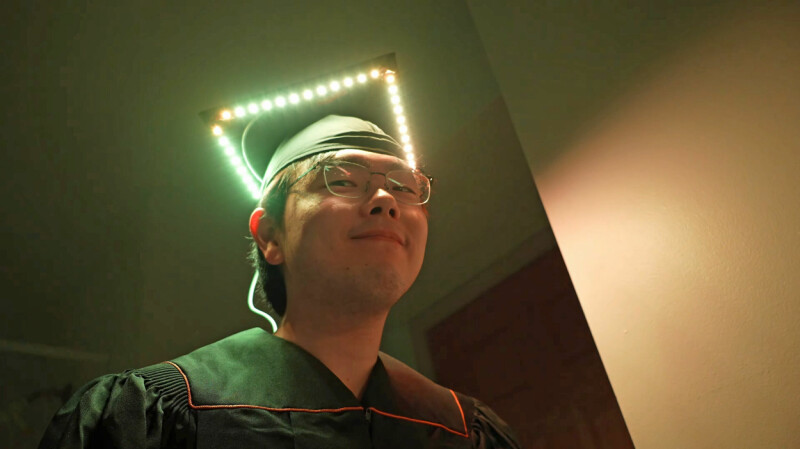
- Eric Park wired his Purdue graduation cap with Rust code and LEDs
- The lights flash when the tassel swings left—no actual fire
- Most universities require rented gowns and caps, blocking flame ideas
Eric Park, a Purdue University computer science student set to graduate this Friday, built a graduation cap that lights up when he swings his tassel to the left. He published a blog post this week explaining the project, which started as a joke about setting his mortarboard on fire if the tassel moved a certain way. Turns out, universities like Purdue rent out gowns and caps for commencement ceremonies, so setting anything ablaze isn’t an option—even if the idea sounds fun in a dorm room brainstorm.
Park’s cap uses a tiny microcontroller, a few LEDs, and Rust—a programming language known for its speed and safety—to detect when the tassel swings left. The code triggers the lights to flash in a pattern, turning a simple graduation accessory into a small, interactive light show. He wired everything under the cap’s stiff brim, hiding the tech so the cap still looks like a traditional mortarboard from a distance.
How it works: Rust, motion sensors, and hidden LEDs
Park chose Rust for its reliability and performance, two things you want when you’re wiring electronics to a cap that’s about to be tossed in the air. The code runs on a microcontroller tucked inside the cap, paired with an accelerometer to detect the tassel’s movement. When the tassel shifts left, the board sends power to the LEDs, lighting them up for a fraction of a second. The whole setup weighs just a few ounces, so it doesn’t sag or feel awkward while walking.
He tested the build over weeks, adjusting the code to make sure the lights flashed reliably without draining the battery too fast. The final version runs off a small rechargeable battery hidden in the cap’s lining, good for hours of use. Park even wrote a simple web interface so friends could watch the lights sync remotely during the ceremony.
The inspiration: flaming mortarboard vs. flashing LEDs
Park admits the idea started as a meme in his group chat. Someone joked about rigging a cap to set itself on fire when the tassel moved, turning graduation into a viral TikTok moment. But after checking Purdue’s rules, Park realized rented caps and gowns come with strict no-alteration policies. That killed the fire idea fast. Instead, he leaned into the tech side—something he’s comfortable with as a CS major.
He posted the build online as an open-source project, sharing the code and wiring diagram so others could try it. So far, reactions have been positive, with classmates asking if they can borrow his build or tweak it for their own caps. Park’s cap might inspire more tech-themed graduation stunts, especially as students look for ways to stand out in photos and videos.
Why this matters beyond the ceremony
Park’s project shows how students are blending tech with tradition in creative, harmless ways. It’s also a real-world example of Rust’s growing role outside big tech—from web servers to tiny embedded systems like this cap. For students, it’s a fun way to showcase skills without breaking rules or risking safety.
Purdue hasn’t commented on the build, but the university’s code of conduct doesn’t prohibit small electronics in caps as long as they’re safe and don’t damage the rented gear. That means Park’s cap is likely to sail through the ceremony without issues.
For now, Park’s just focused on finishing his degree and enjoying commencement. After that? He’s considering open-sourcing more projects or maybe even building a tool to help other grads add tech to their caps. Either way, his mortarboard won’t be set on fire—but it’ll definitely stand out under the stadium lights.
What You Need to Know
- Source: The Register
- Published: May 14, 2026 at 17:30 UTC
- Category: Technology
- Topics: #theregister · #tech · #enterprise · #grad · #rust · #college
Read the Full Story
This is a curated summary. For the complete article, original data, quotes and full analysis:
All reporting rights belong to the respective author(s) at The Register. GlobalBR News summarizes publicly available content to help readers discover the most relevant global news.
Curated by GlobalBR News · May 14, 2026
Related Articles
- Trump Brand’s First Phone Finally Ships After 9-Month Holdup
- NYT Connections Sports Edition Answers & Hints for May 17, #601
- Tesla quietly shelves Solar Roof, bet big on cheap panels
🇧🇷 Resumo em Português
Um estudante brasileiro formado pela Universidade Purdue, nos Estados Unidos, inovou na tradicional cerimônia de formatura ao criar uma beca que se transforma em um espetáculo de luzes controlado por código Rust e LEDs. Eric Park, recém-formado, substituiu a pompa de uma beca em chamas por um sistema seguro e legal, usando tecnologia para marcar o momento com estilo.
A façanha de Park ganhou repercussão não só pela criatividade, mas por mostrar como a programação pode ser integrada ao cotidiano de forma inovadora. No Brasil, onde as formaturas são eventos grandiosos e muitas vezes seguem tradições rígidas, a iniciativa abre espaço para repensar rituais acadêmicos com um toque de modernidade. O uso de Rust, linguagem de programação conhecida por sua eficiência e segurança, reforça a importância de ferramentas robustas até em projetos aparentemente simples, como um acessório de formatura.
Enquanto a beca de Park acende e apaga conforme o movimento da borla, a façanha serve de inspiração para outros formandos que buscam maneiras criativas — e tecnológicas — de celebrar a conquista.
🇪🇸 Resumen en Español
La innovación tecnológica llegó a los momentos más simbólicos de la graduación: Eric Park, un reciente egresado de Purdue, transformó su birrete en un espectáculo de luces LED controlado por el lenguaje de programación Rust, que se activa con el movimiento de la borla.
Este proyecto, más allá de ser un guiño creativo, demuestra cómo el código seguro y eficiente puede reemplazar soluciones arriesgadas —como el clásico birrete en llamas— sin perder el impacto visual. Para los hispanohablantes, especialmente en un contexto educativo donde la tecnología avanza a pasos agigantados, este ejemplo subraya el potencial de lenguajes como Rust en aplicaciones prácticas y accesibles, inspirando a futuros ingenieros a innovar con responsabilidad.
The Register
Read full article at The Register →This post is a curated summary. All rights belong to the original author(s) and The Register.
Was this article helpful?

Discussion