BBC science editor witnessed NASA’s Artemis Moon mission splashdown firsthand after 25 days in space.
- NASA’s Orion splashed down safely after 25 days circling the Moon
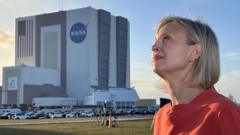
- BBC Science Editor Rebecca Morelle watched from a US Navy recovery ship
- Mission tested Orion’s heat shield and re-entry systems for future crewed flights
The sky over the Pacific was a bruise of purples and oranges when the capsule hit the water. Rebecca Morelle, BBC News’s Science Editor, had just watched a 25-day journey that took Orion farther from Earth than any human-rated spacecraft has ever gone. It wasn’t just a test flight—it was proof that NASA’s plan to return astronauts to the Moon wasn’t science fiction anymore.
Morelle was one of the few journalists on the USS Portland, a Navy amphibious transport dock. From her spot on the deck, she felt the thud of splashdown before she heard it over the radio. The Orion capsule hit the ocean about 50 miles off the coast of Baja California at 9:40 a.m. local time. Recovery teams in small boats reached it within minutes, their rigid-hull inflatables bouncing over the swells. Inside the capsule, the heat shield had faced 5,000-degree temperatures during re-entry—hotter than the surface of most stars—and it survived. That shield is now on its way back to NASA’s Kennedy Space Center in Florida for inspection.
Orion’s record-breaking trip
The capsule traveled 1.3 million miles during its mission, looping around the Moon twice and venturing 40,000 miles beyond it. That’s farther than any spacecraft built for humans has ever flown. Along the way, it sent back stunning images of Earth and the lunar surface, including a haunting shot of our planet hanging over the Moon’s horizon. The mission also carried mannequins fitted with sensors to measure radiation levels—data that will help NASA figure out how to protect astronauts on future flights.
NASA’s Artemis program isn’t just about flags and footprints. It’s a stepping stone to deeper space exploration, including Mars. But before humans climb aboard, every system had to be tested. Orion’s launch on November 16, 2022, was flawless—unlike the early SLS rocket’s first attempt, which got scrubbed twice due to fuel leaks and storms. This time, the Space Launch System roared to life, sending Orion on its journey. The rocket’s 8.8 million pounds of thrust made it the most powerful NASA has ever built, outmuscling even the Saturn V that carried Apollo astronauts.
Why this splashdown matters
The mission’s success means NASA can move forward with Artemis II, currently scheduled for late 2025. That flight will carry four astronauts—three Americans and one Canadian—on a similar trajectory around the Moon, but without landing. The next step after that, Artemis III, aims to land the first woman and the next man on the lunar surface, likely near the Moon’s south pole where water ice might be hiding in permanently shadowed craters.
Morelle says the moment the capsule splashed down, she felt a mix of relief and awe. “It wasn’t just the end of a mission,” she recalls. “It was the beginning of something bigger.” The data from this flight will shape the suits astronauts wear, the habitats they’ll live in, and the landers that will take them to the surface. Every sensor reading, every thermal tile’s performance, feeds into the next mission.
Still, challenges remain. The lunar lander for Artemis III is being built by SpaceX, and its development has faced delays. The spacesuits, designed by Axiom Space, are still in testing. And Congress has to keep funding the program year after year. But for now, the splashdown proved one thing: NASA’s Moon plan is real, and it’s moving forward.
For Morelle, the experience changed how she sees space exploration. “You watch these rockets launch and think, ‘This is just metal and fire,’” she says. “But when you’re standing on that deck, watching a spacecraft come home after proving it can survive a trip to the Moon and back, you realize—this is human ambition in its purest form.”
The next chapter starts soon. Orion is already being prepped for Artemis II. The astronauts training for the flight will spend years preparing, knowing their mission could be the one that finally brings humans back to the lunar surface.
What You Need to Know
- Source: BBC News
- Published: April 11, 2026 at 23:17 UTC
- Category: Environment
- Topics: #bbc · #environment · #climate · #science · #space · #nasa
Read the Full Story
This is a curated summary. For the complete article, original data, quotes and full analysis:
All reporting rights belong to the respective author(s) at BBC News. GlobalBR News summarizes publicly available content to help readers discover the most relevant global news.
Curated by GlobalBR News · April 11, 2026
Related Articles
🇧🇷 Resumo em Português
O Brasil, que sempre olhou para as estrelas com fascínio, agora tem um motivo a mais para se inspirar após o sucesso da missão Artemis da NASA, que levou astronautas de volta à Lua após mais de cinco décadas. A bordo de uma espaçonave moderna e repleta de tecnologia de ponta, a agência espacial americana não só cumpriu seu objetivo, mas também abriu caminho para uma nova era de exploração lunar, com participação internacional e potencial científico sem precedentes. A cobertura ao vivo, transmitida pela BBC, colocou milhões de brasileiros em contato direto com esse marco histórico, mostrando que a ciência e a aventura espacial não são privilégios de poucos países.
A missão Artemis, que culminou com um pouso seguro no oceano após uma viagem de cerca de 25 dias, é mais do que um feito tecnológico: representa uma esperança para o Brasil, que desde 2021 faz parte dos Acordos Artemis, um compromisso global para a exploração pacífica e sustentável da Lua. Com o país investindo cada vez mais em ciência espacial — como no projeto do foguete nacional VLM e na parceria com a Agência Espacial Europeia — a participação brasileira nessas missões pode trazer benefícios não só para a economia, mas também para a pesquisa em áreas como agricultura, clima e telecomunicações. Além disso, o sucesso da missão reforça a importância da cooperação internacional em tempos de incertezas geopolíticas.
Agora, com a Lua novamente ao alcance da humanidade, o Brasil tem a chance de se posicionar como um ator relevante nesse novo capítulo espacial, mas o tempo dirá se o país estará pronto para colher os frutos dessa ambição.
BBC News
Read full article at BBC News →This post is a curated summary. All rights belong to the original author(s) and BBC News.
Was this article helpful?



Discussion