Nature quickly reclaims bomb craters in London and Ukraine, turning scars into thriving ecosystems.
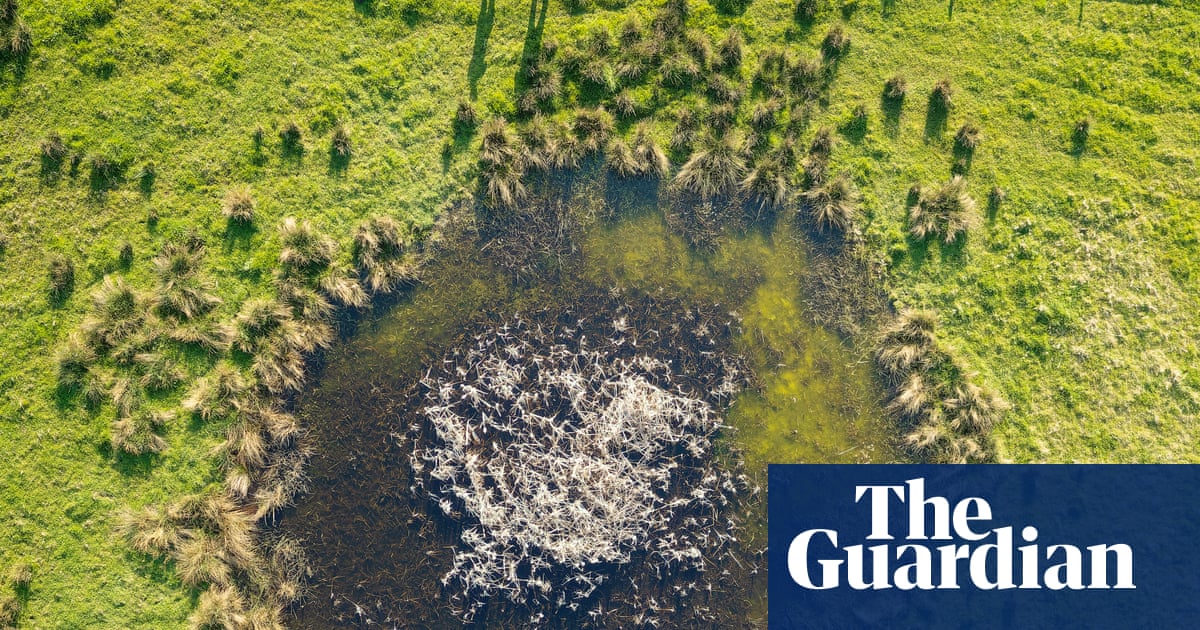
- London’s 1945 V2 rocket crater now hosts a pond teeming with wildlife
- Scientists in Ukraine track rapid natural recovery in war-destroyed land
- Ecosystems in bomb craters support rare plants and aquatic species
Luke Boyle crouches at the edge of Bomb Crater Pond in Walthamstow Marshes, east London, and points to a patch of bright green reeds pushing through the water. “This little spot’s got more life than half the parks in the city,” he says. The pond sits in a quiet corner of Lee Valley Regional Park, a 10,000-acre green space straddling London and Hertfordshire. It’s hard to believe this peaceful scene started as a wound—a German V2 rocket tore through the marshland on February 2, 1945, leaving a gaping hole that slowly filled with rainwater and sediment over decades. Today, it’s a sanctuary for frogs, dragonflies, and even rare aquatic plants that thrive in the nutrient-rich, undisturbed water.
Scientists studying bombed landscapes in Ukraine are seeing the same pattern. In places like Kharkiv and Mykolaiv, where Russian attacks have ripped up fields and forests, researchers from the Ukrainian Nature Conservation Group are documenting how ecosystems bounce back within years. “We expected decades of recovery, but after just three years, some bomb craters already host thriving wetlands,” says Dmytro Kruhlov, a biologist leading the fieldwork. His team tracks plant regrowth, insect populations, and soil health in craters as small as 10 meters wide to those stretching 50 meters across.
War scars turned into wildlife hotspots
Walthamstow Marshes was barely touched after the V2 strike. The crater’s isolation protected it from human interference, allowing nature to do its thing. “Most bomb craters get filled in or built over,” Boyle explains. “But this one’s been left alone, so it’s become a natural experiment in how ecosystems evolve over time.” The pond now supports species like the great crested newt, a protected amphibian in the UK, and acts as a stopover for migratory birds. Nearby, the same marshland hosts rare plants like the marsh stitchwort, which struggles to grow in disturbed soils elsewhere in London.
In Ukraine, the recovery is faster but messier. Kruhlov’s team found that bomb craters in agricultural fields often become temporary wetlands, attracting frogs, dragonflies, and birds like the corn crake. “The soil’s loose and full of nutrients from the explosions,” he says. “Plants grow aggressively, but so do invasive species. It’s a race between native and non-native, and sometimes the invaders win.” The craters also change local hydrology—some fill with rainwater, others dry out quickly, creating a patchwork of microhabitats that support different species.
Lessons from London’s past for Ukraine’s future
What’s happening in Walthamstow Marshes offers a clue for Ukraine. Boyle points out that the pond’s survival depended on two things: minimal human interference and time. “If Ukraine’s craters get left alone, nature will heal them,” he says. “But if they’re bulldozed or drained, that chance is gone.” The Lee Valley rangers don’t actively manage Bomb Crater Pond, letting water levels and plant growth follow their own course. That hands-off approach is rare in modern conservation, where parks are often shaped by human plans.
Kruhlov’s team is already sharing data with Ukrainian authorities about how to protect recovering sites. “We’re telling them, ‘Don’t rush to rebuild or replant. Let nature do its work first,’” he says. The advice isn’t always welcome—farmers want to restore fields quickly, and soldiers need clear ground for operations—but the evidence is stacking up. In some Ukrainian villages, bomb craters have become the only green spaces left, offering rare spots of calm for both wildlife and people.
The bigger picture: war’s hidden ecological cost and gift
The contrasts are stark. War destroys forests, poisons soil, and displaces animals, but it also creates sudden gaps where new life can take hold. In Vietnam, bomb craters from the 1960s and 70s now host rare orchids and birds. In Germany, old WWII craters in the Lüneburg Heath are biodiversity hotspots. Even in cities like Berlin, former bombing sites have become urban wetlands.
Back in London, Boyle walks to another wartime relic—a smaller crater nearby that’s dried into a mudflat. It’s not as picturesque as the pond, but it’s just as important. “This flat’s covered in wildflowers in summer,” he says. “Birds nest here. It’s not glamorous, but it’s alive.” The message is clear: war leaves scars that never fully fade, but nature finds a way to heal—if we let it.
What You Need to Know
- Source: The Guardian
- Published: May 06, 2026 at 10:00 UTC
- Category: Environment
- Topics: #guardian · #climate · #environment · #war · #conflict · #from
Read the Full Story
This is a curated summary. For the complete article, original data, quotes and full analysis:
All reporting rights belong to the respective author(s) at The Guardian. GlobalBR News summarizes publicly available content to help readers discover the most relevant global news.
Curated by GlobalBR News · May 06, 2026
🇧🇷 Resumo em Português
As marcas da Segunda Guerra Mundial revelam um paradoxo da natureza: onde a destruição um dia dominou, a vida floresceu. Em Londres, os enormes buracos deixados pelas bombas na década de 1940 não só foram preenchidos com concreto e esquecidos pela história, como se transformaram em ecossistemas únicos, abrigando espécies raras e vegetação exuberante. Agora, um fenômeno semelhante começa a ser observado em zonas de guerra atuais, como na Ucrânia, onde a devastação provocada pelos conflitos modernos também está dando espaço a uma recuperação surpreendente da biodiversidade. A constatação, feita por cientistas, desafia a ideia de que áreas devastadas pelo homem estão condenadas ao desaparecimento, mostrando que, em muitos casos, a natureza pode não apenas se recuperar, mas também criar ambientes distintos e valiosos.
No Brasil, país que abriga uma das maiores biodiversidades do planeta, essa descoberta ganha contornos ainda mais relevantes. Embora o país não enfrente guerras em seu território, suas florestas e ecossistemas já sofreram — e ainda sofrem — com a degradação causada pela exploração humana, como desmatamento e mineração. O estudo sobre as crateras de guerra oferece uma lição valiosa: mesmo diante de cenários de devastação extrema, a resiliência da natureza pode ser um caminho para a recuperação de áreas degradadas. Além disso, a observação reforça a importância de políticas de preservação e restauração ambiental, pois evidencia que, em certos casos, o abandono temporário pode ser seguido por um renascimento inesperado, mas frágil. Para o Brasil, isso pode inspirar novas estratégias de conservação ou até mesmo a revisão de projetos de recuperação de áreas já impactadas.
À medida que os conflitos na Ucrânia e em outras regiões continuam a modificar paisagens, cientistas e ambientalistas já se preparam para estudar de perto esses novos “laboratórios naturais”, buscando entender como a biodiversidade pode ser preservada mesmo em meio à guerra — um alerta para o futuro do planeta.
The Guardian
Read full article at The Guardian →This post is a curated summary. All rights belong to the original author(s) and The Guardian.
Was this article helpful?


Discussion