Iran became the first enemy to destroy and damage U.S. Air Force tankers and an E-3 Sentry in two weeks using drones and missiles.
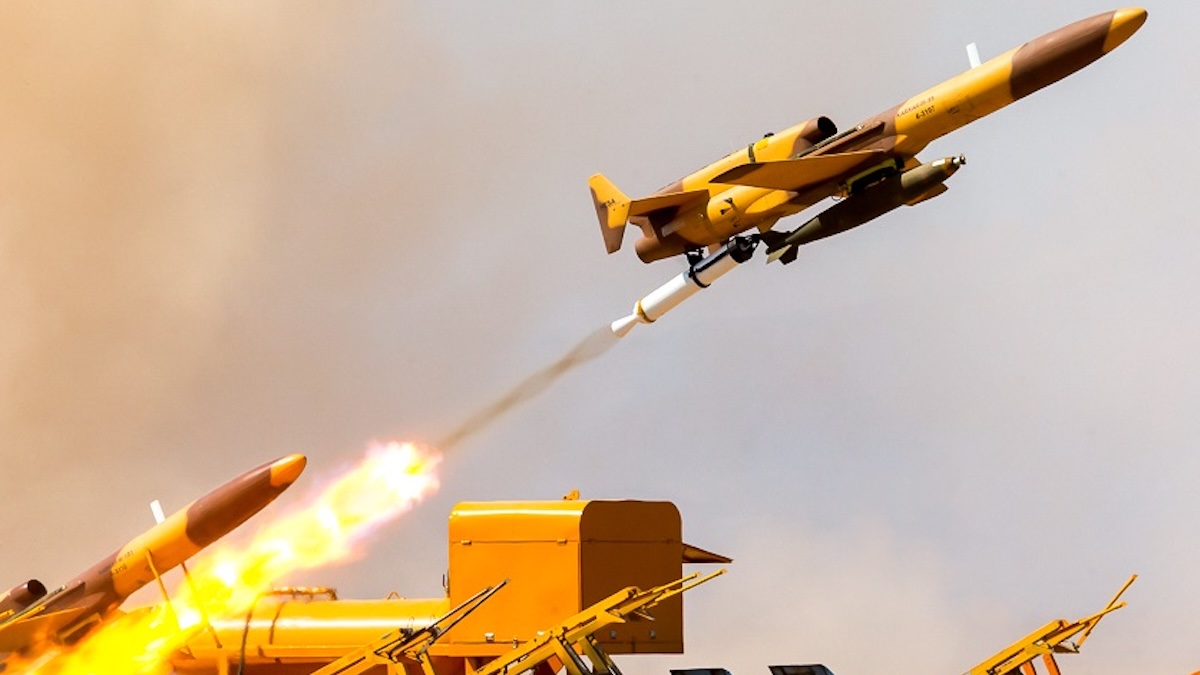
- Iran destroyed U.S. Air Force E-3 Sentry for the first time in history
- Five KC-135 tankers damaged in second strike on Prince Sultan Air Base
- Strikes part of Iran’s asymmetric counterair campaign against U.S. operations
Iran just proved its ability to disrupt U.S. Air Force operations in the Middle East with two precision strikes in March. On March 27, drones and ballistic missiles hit Prince Sultan Air Base in Saudi Arabia, destroying an E-3 Sentry—an airborne early warning and control aircraft—and damaging at least four KC-135 Stratotankers. Just two weeks earlier, Iran launched a similar attack that damaged five KC-135s at the same base. Before these strikes, no enemy had ever successfully targeted these aircraft with such accuracy, according to U.S. military records. The E-3 Sentry is a $368 million platform that serves as a flying command post for U.S. air operations across the region. Its destruction means the U.S. lost a critical node for coordinating airstrikes, surveillance, and communications. The KC-135s, valued at $39 million each, extend the range of fighter jets by refueling them mid-air. Damaging them forces the U.S. to redirect resources or scale back operations until repairs or replacements arrive. Prince Sultan Air Base has been a cornerstone of U.S. military presence in the Gulf for decades, hosting American troops and aircraft since the 1990s. The base plays a key role in counterterrorism efforts and deterring regional adversaries like Iran. These attacks show Iran’s growing confidence in asymmetric warfare, using drones and short-range missiles to exploit gaps in U.S. air defenses. Unlike traditional air campaigns that rely on fighter jets, Iran’s strategy focuses on cheaper, harder-to-intercept weapons. It’s a shift from decades of U.S. air superiority. ## How Iran pulled off these strikes The strikes weren’t random. They followed a pattern Iran has refined over years. In January 2020, Iran launched ballistic missiles at Al Asad Air Base in Iraq, injuring 110 U.S. troops but failing to hit aircraft. By 2024, Iran’s precision improved dramatically. The March attacks used a mix of drones and ballistic missiles, likely launched from Iran or Yemen. The E-3 Sentry was parked on the tarmac when it was struck, suggesting Iran had detailed intelligence on its location and schedule. The KC-135s were also parked, not in the air, making them easier targets. U.S. forces have spent years hardening facilities at Prince Sultan Air Base, adding missile defense systems and reinforced hangars. Yet these measures weren’t enough to stop Iran’s drones and missiles. The attacks exposed vulnerabilities in how the U.S. protects its most critical assets. ## Why these strikes matter beyond the Middle East Iran’s success here sends a message to adversaries worldwide. It shows that even the U.S. Air Force isn’t immune to precision strikes by drones and missiles. For countries like Russia, China, or North Korea, this is a case study in asymmetric warfare. It proves that small, inexpensive weapons can inflict serious damage on high-value targets. The U.S. has spent billions on stealth fighters, bombers, and surveillance aircraft. But if they can’t be protected on the ground, their operational value drops. This could force the Pentagon to rethink how it disperses or defends its aircraft. It might also push allies like Saudi Arabia to invest more in their own air defenses. The strikes also highlight Iran’s evolving tactics. Over the past year, Iran has used drones to attack ships in the Red Sea, oil facilities in Saudi Arabia, and now U.S. military bases. It’s a far cry from the Iran-Iraq War of the 1980s, when the country’s military was outdated and poorly equipped. Today, Iran fields drones like the Shahed-136 and ballistic missiles with ranges up to 2,000 kilometers. These weapons are cheap, hard to track, and can overwhelm traditional air defenses. ## What happens next Iran has made it clear it’s willing to escalate. The U.S. and its allies will likely respond by tightening air defenses at Prince Sultan Air Base and other regional bases. They might deploy more Patriot missiles or deploy fighter jets to patrol the skies. But defenses cost money, and Iran’s drones are getting cheaper by the day. The U.S. could also respond with cyberattacks or covert operations to degrade Iran’s drone and missile programs. However, any direct military action risks further escalation. For now, the focus is on damage control. The E-3 Sentry is a total loss, and the KC-135s will take months to repair. In the meantime, the U.S. Air Force will have to adjust its operations, possibly reducing sorties or relying on longer-range refueling from other bases. The strikes are a wake-up call. If Iran can hit these targets with such precision, others can too. The era of U.S. air superiority is being challenged—not by another superpower, but by a regional player with asymmetric tools.
What You Need to Know
- Source: War on the Rocks
- Published: April 09, 2026 at 07:15 UTC
- Category: War
- Topics: #defense · #military · #geopolitics · #war · #conflict · #iran
Read the Full Story
This is a curated summary. For the complete article, original data, quotes and full analysis:
All reporting rights belong to the respective author(s) at War on the Rocks. GlobalBR News summarizes publicly available content to help readers discover the most relevant global news.
Curated by GlobalBR News · April 09, 2026
Related Articles
- 🎉 250 Articles in War!
- 🎉 100 Articles in War!
- Tunisia protests surge as economy tanks and dissent arrests mount
🇧🇷 Resumo em Português
O Irã mostrou ao mundo, mais uma vez, que suas estratégias assimétricas de guerra estão cada vez mais audaciosos e capazes de desafiar até mesmo as maiores potências militares. Em março, um ataque com drones e mísseis contra a base aérea Prince Sultan, na Arábia Saudita, não só destruiu um E-3 Sentry — a “ave de rapina” dos céus, capaz de detectar ameaças a milhares de quilômetros — como também danificou cinco KC-135, os “abastecedores” que mantêm a frota aérea dos EUA voando. O episódio, primeiro do tipo contra uma base estadunidense no Oriente Médio, expôs vulnerabilidades críticas na estratégia de projeção de poder norte-americana na região.
Para o Brasil e os leitores de língua portuguesa, a notícia ressoa como um alerta sobre os riscos de uma guerra assimétrica — onde o poder não vem necessariamente de tanques ou caças, mas de táticas imprevisíveis e armamentos de baixo custo. O episódio reforça a importância da inteligência e da diplomacia para evitar que conflitos regionais se espalhem, especialmente em um momento em que o Brasil busca ampliar sua presença no Atlântico Sul e na África. Além disso, a dependência brasileira de satélites e sistemas de comunicação — semelhantes aos usados pelos EUA — levanta questões sobre como o país poderia se proteger de ataques cibernéticos ou com drones em um cenário de escalada.
O caso deixa claro que, em um mundo cada vez mais volátil, até mesmo as maiores forças militares podem ser surpreendidas — e o próximo passo, inevitavelmente, será uma reavaliação das estratégias de defesa no Oriente Médio e além.
🇪🇸 Resumen en Español
El primer ataque directo de Irán contra instalaciones militares estadounidenses en décadas ha dejado al descubierto la vulnerabilidad de las bases aéreas en Oriente Medio, donde la sofisticada flota de la USAF se enfrenta a una amenaza asimétrica cada vez más letal. Los recientes bombardeos con drones y misiles contra la base saudí de Prince Sultan, que destruyeron un avión de alerta temprana E-3 Sentry y dañaron cinco cisternas KC-135, demuestran cómo Teherán ha perfeccionado su estrategia de “guerra de nidos y huevos” para neutralizar la superioridad aérea occidental sin necesidad de un enfrentamiento frontal.
Esta táctica, basada en ataques de precisión con sistemas de bajo coste y alta efectividad, refleja la adaptación iraní a un escenario donde su arsenal —desde drones Shahed hasta misiles balísticos— compensa la brecha tecnológica frente a potencias como EE.UU. Para los hispanohablantes, especialmente en regiones con intereses geopolíticos en Oriente Medio —desde España hasta Latinoamérica—, el episodio subraya la fragilidad de las alianzas militares tradicionales y el riesgo de que conflictos regionales escalen de forma imprevista. Más allá de lo militar, la jugada iraní obliga a repensar la seguridad de las bases aliadas y la dependencia de sistemas vulnerables en un tablero donde la disuasión ya no es suficiente.
War on the Rocks
Read full article at War on the Rocks →This post is a curated summary. All rights belong to the original author(s) and War on the Rocks.
Was this article helpful?


Discussion