Trump meets Xi in Beijing focusing on trade and economic ties between the world’s two largest economies.
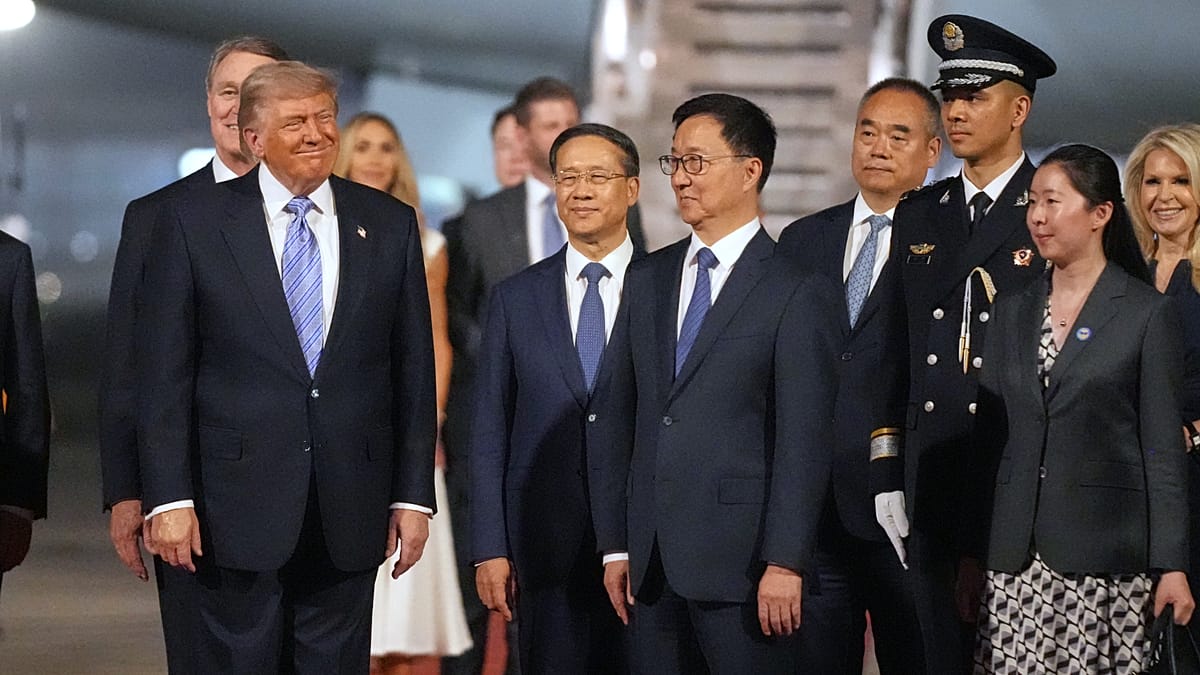
- Trump arrives in Beijing for summit with Chinese leader Xi Jinping
- Trade and economic ties top agenda for discussions
- Trump says he will prioritize trade talks during meetings
U.S. President Donald Trump landed in Beijing on Wednesday for a two-day summit with Chinese counterpart Xi Jinping, with trade and economic tensions expected to dominate the agenda. Trump told reporters he would discuss trade “more than anything else” during the meetings, signaling the importance of the issue to his administration.
The visit comes amid ongoing disputes over tariffs, market access, and intellectual property, which have strained U.S.-China relations in recent months. Both countries have imposed billions in tariffs on each other’s goods, raising concerns about a potential trade war. Trump’s administration has accused China of unfair trade practices, including forced technology transfers and currency manipulation.
Xi Jinping welcomed Trump at the Great Hall of the People, where the two leaders were scheduled to hold formal talks later in the day. The summit follows months of diplomatic exchanges, including phone calls and working-level meetings, as both sides seek to address their differences. Trade has emerged as the most pressing issue, with U.S. officials pushing for structural changes in China’s economic policies.
During a joint press conference, Xi emphasized the importance of cooperation and mutual respect, while Trump reiterated his focus on reducing the U.S. trade deficit with China. Analysts say the summit could set the tone for future negotiations, though significant breakthroughs are not expected immediately. Both leaders are under pressure to deliver tangible results to ease tensions.
Trade disputes dominate agenda
Trade has been a flashpoint in U.S.-China relations, with the U.S. imposing tariffs on $250 billion worth of Chinese goods and China retaliating with tariffs on $110 billion worth of U.S. products. The disputes have hit key industries, including agriculture and manufacturing, and raised concerns about global economic growth. Trump has repeatedly criticized China for its trade practices, calling them unfair and harmful to American workers.
The two leaders are expected to discuss ways to reduce tariffs, improve market access, and protect intellectual property. However, progress may be limited by deep-seated differences in economic systems and geopolitical rivalries. Some analysts suggest the summit could pave the way for future negotiations, even if no major agreements are reached.
Broader implications for global economy
The outcome of the summit could have far-reaching effects on the global economy, given the size and influence of both the U.S. and Chinese economies. A prolonged trade war could disrupt supply chains, raise prices for consumers, and slow economic growth worldwide. Investors are closely watching the talks for any signs of de-escalation.
Beyond trade, the summit is also expected to touch on North Korea, cybersecurity, and regional security issues. Both leaders have expressed hopes for continued dialogue and cooperation, though tensions remain high. The meeting in Beijing follows Trump’s visits to Japan, South Korea, and Vietnam earlier this month as part of his Asia tour.
What happens next will depend on the willingness of both sides to compromise. While neither leader is expected to make major concessions during this visit, the summit could lay the groundwork for future negotiations. Analysts say the key to progress will be finding common ground on issues like intellectual property and market access.
What You Need to Know
- Source: Euronews
- Published: May 13, 2026 at 20:53 UTC
- Category: World
- Topics: #euronews · #europe · #world-news · #politics · #government · #trump
Read the Full Story
This is a curated summary. For the complete article, original data, quotes and full analysis:
All reporting rights belong to the respective author(s) at Euronews. GlobalBR News summarizes publicly available content to help readers discover the most relevant global news.
Curated by GlobalBR News · May 13, 2026
Related Articles
- Eurovision 2024 faces scrutiny over Israel’s participation amid war
- US Justice Department preparing indictment against Raúl Castro
- US planning to criminally indict ex-Cuban leader Raúl Castro
🇧🇷 Resumo em Português
O presidente dos Estados Unidos, Donald Trump, desembarcou em Pequim para um encontro histórico com o líder chinês Xi Jinping, em uma visita repleta de simbolismos e tensões comerciais. A pauta principal do encontro, marcado para esta semana, é a relação econômica entre as duas maiores economias do mundo, com foco nas disputas tarifárias que já afetam setores-chave de ambos os países.
A viagem de Trump ocorre em um momento crítico para o Brasil, que acompanha de perto as negociações entre Washington e Pequim. Com a China como principal parceiro comercial do país, qualquer acordo ou ruptura no comércio global pode impactar diretamente as exportações brasileiras, especialmente de commodities como soja e minério de ferro. Além disso, a rivalidade entre EUA e China na definição de regras para o mercado internacional coloca o Brasil em uma posição delicada, obrigando o governo a diversificar parcerias e reforçar sua estratégia diplomática.
O desfecho das tratativas pode redefinir não só as relações sino-americanas, mas também o futuro das economias emergentes, como a brasileira, que depende de um equilíbrio frágil entre os dois gigantes.
🇪🇸 Resumen en Español
El presidente de Estados Unidos, Donald Trump, ha aterrizado en Pekín para una cumbre crucial con su homólogo chino, Xi Jinping, donde el comercio y las tensiones económicas marcarán el rumbo de las negociaciones. La visita, cargada de simbolismo y protocolos diplomáticos, busca desactivar una guerra comercial que amenaza con escalar y afectar a economías globales, en especial a las de los países hispanohablantes, profundamente interconectados con ambas potencias.
El encuentro llega en un momento de máxima tensión, con aranceles mutuos que ya han encarecido productos clave como el acero, la tecnología y la agricultura, sectores vitales para las exportaciones latinoamericanas. Para los lectores hispanohablantes, el resultado de estas conversaciones podría significar cambios en el acceso a mercados, fluctuaciones en los precios de bienes esenciales y, en el peor de los casos, un frenazo en el crecimiento de economías emergentes que dependen de China y EE.UU. como socios comerciales. La diplomacia en Pekín no solo definirá el futuro de dos gigantes, sino también el de millones de familias que ven en este conflicto una amenaza directa a su bienestar.
Euronews
Read full article at Euronews →This post is a curated summary. All rights belong to the original author(s) and Euronews.
Was this article helpful?


Discussion