Connect your bank to ChatGPT’s new finance tool for tailored advice, but it only sees balances and transactions—never account numbers.
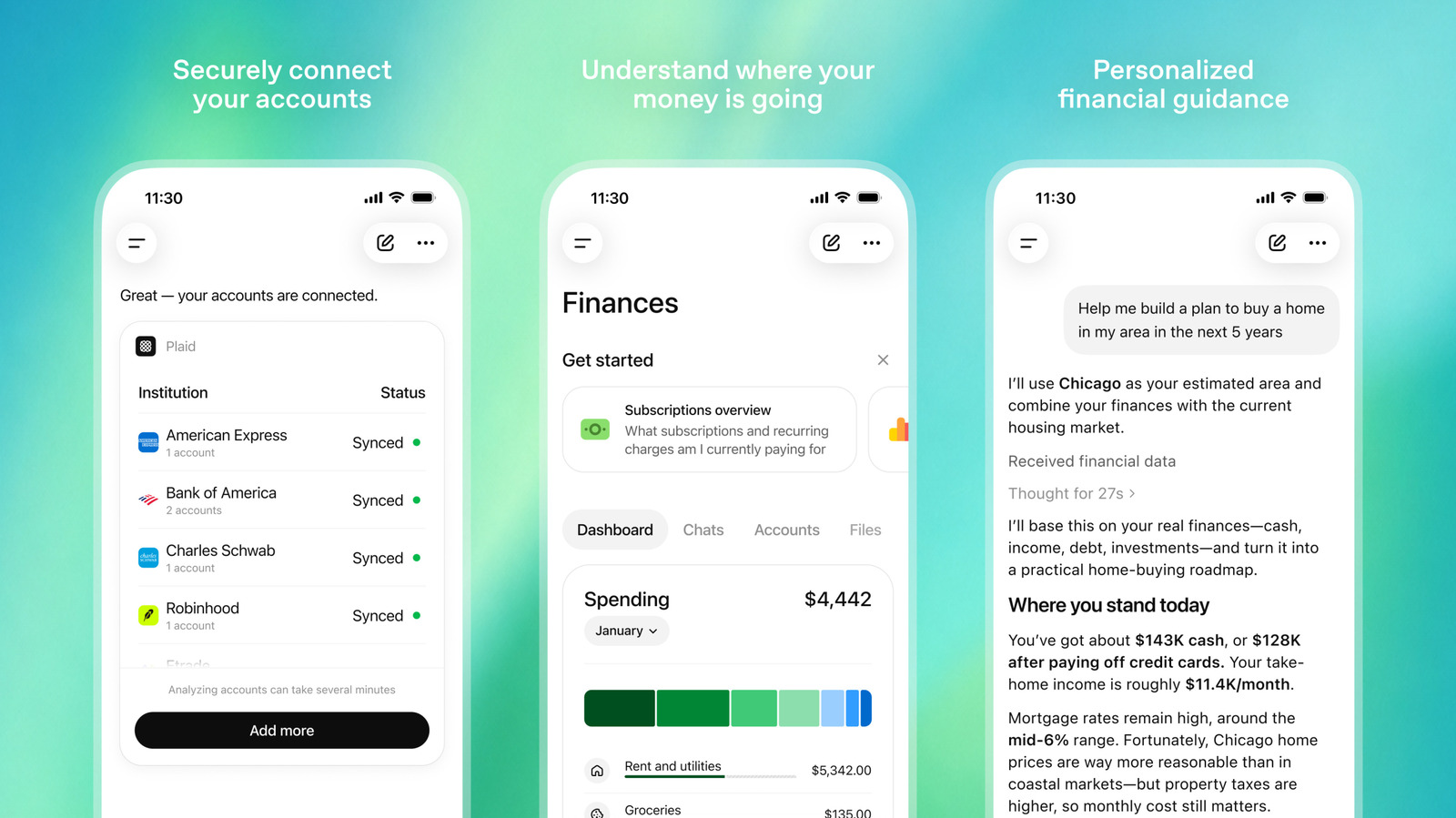
- ChatGPT’s new finance feature links to 12,000+ banks via Plaid for personalized advice
- US Pro users can connect accounts in the ‘Finances’ section or with a simple prompt
- The tool only reads balances and transactions—it can’t see full account numbers or make changes
OpenAI just flipped a switch on a long-awaited feature for ChatGPT users in the US: a way to get genuinely useful financial advice instead of vague tips. Starting today, subscribers to ChatGPT’s Pro plan can link their bank, credit card, or investment accounts directly to the chatbot through a new integration with Plaid. That means ChatGPT can finally see your real numbers—not just what you tell it in a prompt—so it can tailor suggestions to your actual spending, savings, and debt. OpenAI says over 200 million people already ask ChatGPT for money advice every month. Until now, those answers were generic. This changes that. The feature is in preview, so it’s not perfect yet, but it’s a clear step toward turning a chatbot into something that can actually help with your bills, budget, and investments. Plaid’s network already connects to more than 12,000 financial institutions, from big banks like Citigroup and JPMorgan Chase to newer players like Affirm and Robinhood. If you’re a Pro user in the US, you’ll see a new ‘Finances’ tab in the sidebar or can type prompts like ‘@Finances, connect my accounts’ to start. The process uses Plaid’s secure flow, which most people will recognize from apps like Venmo or QuickBooks. You’ll see a list of your accounts, pick which ones to share, and confirm with your bank’s login or two-factor code. Within a few minutes, ChatGPT builds a simple dashboard showing your balances, recent transactions, and debt. It’s not a full budgeting app like Mint or YNAB, but it gives you a quick snapshot without leaving the chat interface. You can ask follow-ups like ‘Show me my spending trends’ or ‘What’s my credit card utilization?’ and ChatGPT will pull the latest data. OpenAI says it’s designed to respect privacy: the bot only reads what you explicitly allow, and it can’t see full account numbers or make any changes to your accounts. But that hasn’t stopped some users from worrying. After years of headlines about data breaches and bank fraud, it’s smart to be cautious. OpenAI’s privacy page says the feature is opt-in and encrypted, but there’s always a chance someone could misuse access. If you’re hesitant, start with a low-risk account like a credit card instead of your primary checking. The company also says it won’t sell your data or use it for ads, but that promise could change as the feature scales. For now, the preview is limited to US Pro users, so international users and free-tier customers will have to wait. OpenAI hasn’t said when—or if—it will expand the feature globally or to all subscribers. That’s frustrating for anyone outside the US who wants the same convenience, but it gives OpenAI time to work out bugs and pushback. In the meantime, early users say the tool is surprisingly good at spotting odd spending patterns or suggesting ways to cut costs. One tester found it flagged a forgotten $120 subscription and proposed canceling it through a partner service. Another got a breakdown of their investment fees that matched what their actual brokerage charged. The results aren’t magic—ChatGPT still makes mistakes—but they’re more grounded than the usual ‘save more money’ advice you get from a chatbot. The bigger question is whether people will actually trust it enough to share their financial lives. OpenAI is betting that the convenience outweighs the risk, especially as AI tools get better at explaining complex topics in plain language. If this preview goes well, expect more banks and services to join Plaid’s network just to stay competitive. But if a single breach happens, the backlash could kill the feature before it ever leaves the US.
What You Need to Know
- Source: Engadget
- Published: May 15, 2026 at 16:01 UTC
- Category: Gadgets
- Topics: #engadget · #gadgets · #reviews · #chatgpt · #openai
Read the Full Story
This is a curated summary. For the complete article, original data, quotes and full analysis:
All reporting rights belong to the respective author(s) at Engadget. GlobalBR News summarizes publicly available content to help readers discover the most relevant global news.
Curated by GlobalBR News · May 15, 2026
🇧🇷 Resumo em Português
O futuro das finanças pessoais chegou com a ajuda da inteligência artificial: o ChatGPT, que já revolucionou a forma como buscamos informações, agora promete transformar a maneira como gerenciamos nosso dinheiro. Com a nova integração com o Plaid, usuários da versão Pro nos Estados Unidos poderão conectar suas contas bancárias para receber conselhos financeiros personalizados, uma inovação que deve agitar o mercado e despertar a atenção de quem busca otimizar seus gastos.
No Brasil, onde a educação financeira ainda engatinha e a população enfrenta desafios como a alta taxa de endividamento, a chegada de uma ferramenta desse tipo poderia ser um divisor de águas. Embora ainda não esteja disponível por aqui, a iniciativa do ChatGPT levanta questões sobre o acesso a serviços financeiros inteligentes e como a IA pode ajudar — ou, em caso de erros, prejudicar — os brasileiros. A dependência de dados bancários sensíveis também exige atenção redobrada com a privacidade, um tema sempre delicado no país, onde fraudes e vazamentos são recorrentes.
O lançamento nos EUA é apenas o começo, e a expansão para outros mercados, incluindo o Brasil, pode redefinir a relação dos consumidores com suas finanças — desde que os riscos sejam devidamente gerenciados.
Engadget
Read full article at Engadget →This post is a curated summary. All rights belong to the original author(s) and Engadget.
Was this article helpful?



Discussion