Russia schedules Sarmat ICBM operational deployment for late 2024 after today’s test launch.
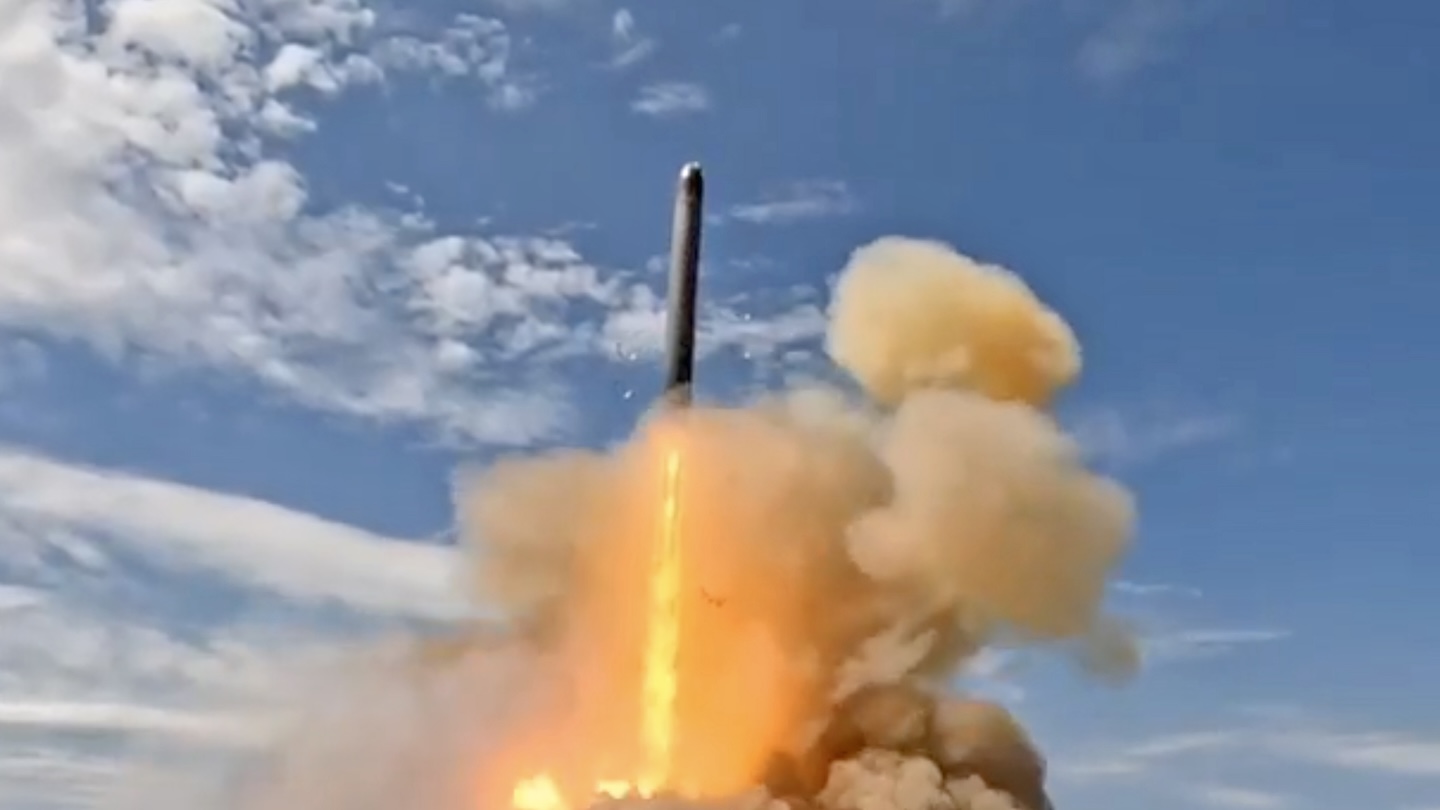
- Russia confirms Sarmat ICBM test launch from Plesetsk Cosmodrome
- Missile hit target at Kura test range in Kamchatka 30 minutes later
- Kremlin says Sarmat will deploy operationally later in 2024
MOSCOW — Russia has carried out a successful test of its long-delayed Sarmat intercontinental ballistic missile (ICBM), Russian President Vladimir Putin announced Tuesday, with plans to deploy the weapon operationally by the end of the year.
The test launch from the Plesetsk Cosmodrome in the Arkhangelsk region occurred at 11:15 a.m. Moscow time, according to the Kremlin. Russian officials said the missile traveled thousands of kilometers and struck its designated target at the Kura Missile Test Range on the Kamchatka Peninsula in Russia’s Far East roughly 30 minutes later.
Background on the Sarmat ICBM
The Sarmat is a liquid-fueled, heavy ICBM developed by the Makeyev Rocket Design Bureau, a state-run defense contractor. It is designed to carry multiple independently targetable nuclear warheads, enabling it to strike targets across continents with high precision. The missile is intended to replace the aging R-36M Voevoda ICBMs that have been in service since the Soviet era.
Russia first announced the Sarmat’s development in 2016, with plans to begin operational deployment by 2020. However, repeated delays pushed the timeline back several times due to technical challenges, including engine issues and guidance system refinements. The missile has faced scrutiny over its reliability, with some Western analysts questioning its readiness for combat.
Strategic implications of Sarmat deployment
The Sarmat is part of Russia’s broader nuclear modernization program aimed at ensuring its strategic deterrent remains credible amid rising tensions with NATO and the United States. With a reported range of up to 18,000 kilometers (11,185 miles) and the ability to carry up to 10 heavy warheads or 15 lighter ones, the missile is one of Russia’s most advanced nuclear delivery systems.
Its deployment comes as Russia continues to emphasize its nuclear capabilities in response to perceived threats from Western military alliances. Last year, Putin reaffirmed Russia’s nuclear doctrine, warning that Moscow would use nuclear weapons if its territorial integrity were threatened. The Sarmat’s operational status would further strengthen Russia’s nuclear triad, which includes land-based ICBMs, submarine-launched ballistic missiles, and strategic bombers.
International reactions and verification concerns
The announcement of the test has drawn attention from Western governments and defense analysts. The U.S. and NATO have not yet publicly commented on the Sarmat’s operational readiness, but previous tests have been monitored closely by intelligence agencies. Independent verification of the test’s success remains pending, as Russia has not provided third-party observers or detailed telemetry data.
Analysts note that while the Sarmat’s deployment would mark a significant step in Russia’s military modernization, its operational effectiveness will depend on reliability during real-world conditions. Past ICBM tests by Russia have occasionally resulted in failures or partial successes, raising questions about the system’s long-term dependability.
Russia’s announcement signals a major milestone in its nuclear arms program, but the lack of independent confirmation means details about the Sarmat’s capabilities and deployment timeline remain provisional. Further tests and inspections will likely be required before the missile is fully integrated into Russia’s strategic forces.
The Kremlin has framed the Sarmat as a key component of its national security strategy, emphasizing its role in deterring potential adversaries. However, the missile’s deployment also raises concerns about escalating nuclear tensions and the risk of a new arms race in Europe and beyond.
What You Need to Know
- Source: The Drive
- Published: May 12, 2026 at 21:57 UTC
- Category: War
- Topics: #military · #weapons · #conflict · #war · #russia-plans · #deploy-sarmat
Read the Full Story
This is a curated summary. For the complete article, original data, quotes and full analysis:
All reporting rights belong to the respective author(s) at The Drive. GlobalBR News summarizes publicly available content to help readers discover the most relevant global news.
Curated by GlobalBR News · May 12, 2026
Related Articles
- Wembanyama’s Spurs reach Western finals, Pistons stay alive in NBA playoffs
- 🎉 100 Articles in War!
- Man killed in great white shark attack in western Australia
🇧🇷 Resumo em Português
O mundo assiste com apreensão enquanto a Rússia acelera seu arsenal nuclear, e o anúncio do lançamento operacional do míssil balístico intercontinental Sarmat ainda este ano coloca em xeque a estabilidade global. Moscou confirmou que a arma, apelidada de “Satan 2” por sua capacidade devastadora, será oficialmente incorporada às forças estratégicas russas após um teste bem-sucedido no Cosmódromo de Plesetsk, demonstrando alcance suficiente para atingir alvos nos EUA e na Europa com ogivas múltiplas.
O Sarmat representa um salto qualitativo no poder de dissuasão russa, capaz de transportar até 10 ogivas nucleares ou cargas hipersônicas, tornando-se praticamente impossível de interceptar pelos sistemas atuais de defesa antimísseis. Para o Brasil, ainda que não esteja diretamente envolvido no conflito na Ucrânia, a escalada armamentista russa reacende discussões sobre o papel do país na não-proliferação nuclear e na manutenção do equilíbrio estratégico, especialmente em um cenário onde potências emergentes também investem em tecnologias similares. A notícia chega em um momento crucial, quando o governo brasileiro revisita sua política externa de neutralidade, agora pressionado a se posicionar diante de um tabuleiro geopolítico cada vez mais volátil.
Enquanto Moscou comemora mais um avanço em sua doutrina de “defesa assimétrica”, a comunidade internacional aguarda os próximos movimentos da Otan e possíveis reações dos EUA, que já haviam classificado o Sarmat como uma “ameaça existencial”. A corrida armamentista, agora com ogivas de nova geração, pode redefinir as regras da dissuasão nuclear nas próximas décadas.
🇪🇸 Resumen en Español
Rusia avanza en su arsenal nuclear con el despliegue inminente del misil balístico intercontinental Sarmat, una amenaza estratégica que redefine el equilibrio de poder en Europa y más allá. Tras un exitoso lanzamiento de prueba desde el cosmódromo de Plesetsk, el Kremlin confirma que el sistema entrará en servicio este mismo año, marcando un nuevo hito en la escalada armamentística global.
El Sarmat, conocido como Satan 2 por su capacidad para transportar hasta 15 cabezas nucleares, refuerza la disuasión rusa frente a la OTAN y Estados Unidos, especialmente tras la expansión de la alianza militar en Europa del Este. Para los lectores hispanohablantes, este movimiento subraya los riesgos de una nueva carrera armamentística en un contexto de tensiones geopolíticas crecientes, donde países como España podrían verse arrastrados a debates sobre seguridad colectiva y gasto militar en la UE.
The Drive
Read full article at The Drive →This post is a curated summary. All rights belong to the original author(s) and The Drive.
Was this article helpful?


Discussion