NASA’s Psyche spacecraft will use Mars’ gravity in 2026 to speed toward a metal asteroid.
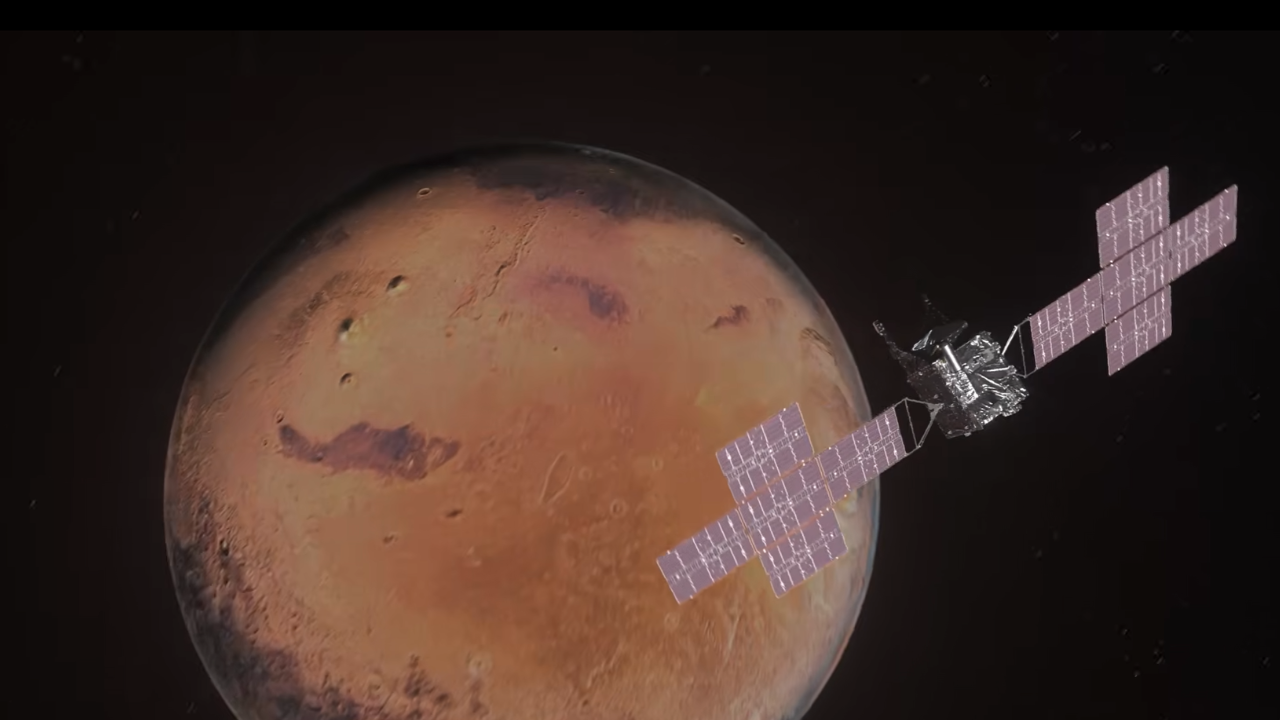
- NASA’s Psyche probe will fly by Mars in May 2026
- Gravity assist will boost spacecraft toward metal asteroid Psyche
- Mars flyby will conserve fuel and shorten travel time
NASA’s Psyche spacecraft will make a key pit stop next year—gravity assisting past Mars on May 15, 2026. The flyby is not just a detour but a calculated move to accelerate the probe toward its ultimate destination: 16 Psyche, a metallic asteroid orbiting the sun between Mars and Jupiter. This maneuver will save fuel and shave years off the journey, a standard but essential tactic for deep-space exploration.
The Mars flyby is the latest step in a mission designed to study 16 Psyche, an asteroid unlike any other in the solar system. Unlike rocky or icy asteroids, Psyche is thought to be the exposed nickel-iron core of a failed planet, offering scientists a rare glimpse into the violent collisions that shaped the early solar system. The spacecraft launched in October 2023 and has since been traveling through interplanetary space, relying on the sun’s power alone.
Gravity assists work by using a planet’s gravitational pull to speed up or redirect a spacecraft without burning extra fuel. In Psyche’s case, the Mars flyby will bend its trajectory toward the asteroid while also increasing its velocity. This technique has been used in missions like Voyager, Cassini, and New Horizons, proving its reliability in navigating the solar system’s vast distances. The approach is especially critical for Psyche, which must conserve fuel to operate in the asteroid belt for an extended study period.
After the Mars flyby, Psyche will continue its trek toward 16 Psyche, with arrival expected in August 2029. Once there, the spacecraft will orbit the asteroid for at least 26 months, using a suite of instruments to map its surface, analyze its composition, and probe its magnetic field. Scientists hope the data will reveal clues about the formation of planets, including Earth, and the violent history of the early solar system.
The mission also serves as a testbed for future deep-space technologies. Psyche is equipped with a next-generation solar electric propulsion system, which uses solar power to generate thrust. This system is more efficient than traditional chemical rockets, making it ideal for long-duration missions. NASA’s Jet Propulsion Laboratory NASA’s Jet Propulsion Laboratory, which manages the mission, has emphasized the importance of such innovations for upcoming missions to Mars and beyond.
NASA’s decision to include a Mars flyby reflects broader trends in mission planning. As spacecraft become more sophisticated, planners must balance speed, fuel efficiency, and scientific objectives. Gravity assists allow missions to achieve multiple goals with limited resources, a strategy that will likely become even more important as humanity pushes deeper into the solar system. The Psyche mission is a test case for how such maneuvers can be executed with precision, paving the way for future explorations.
For now, the mission’s team at JPL NASA’s Jet Propulsion Laboratory is focused on preparing for the Mars flyby. Navigation teams will fine-tune the spacecraft’s trajectory in the months leading up to the encounter, ensuring it passes at the optimal distance for maximum speed boost. The flyby will also provide an opportunity to test instruments and systems, ensuring Psyche is ready for its historic rendezvous with the metal world.
If successful, the Psyche mission could rewrite the textbooks on planetary formation and asteroid science. Its findings may reshape our understanding of how planets like Earth evolved from collisions of smaller bodies. For now, NASA’s team and space enthusiasts worldwide will watch closely as Psyche prepares to harness Mars’ gravity for a speed boost toward history.
What You Need to Know
- Source: Space.com
- Published: May 16, 2026 at 12:00 UTC
- Category: Science
- Topics: #space · #astronomy · #nasa · #science · #psyche · #mars
Read the Full Story
This is a curated summary. For the complete article, original data, quotes and full analysis:
All reporting rights belong to the respective author(s) at Space.com. GlobalBR News summarizes publicly available content to help readers discover the most relevant global news.
Curated by GlobalBR News · May 16, 2026
Related Articles
- 5 Ways to Vet Social Media Health Advice Before Trying It
- PCOS renamed to PMOS after decades of misdiagnosis confusion
🇧🇷 Resumo em Português
A sonda Psyche, da NASA, que tem como missão explorar um asteroide metálico rico em ferro e níquel, acaba de fazer um desvio estratégico pela órbita de Marte — um passo crucial para acelerar sua jornada pelo sistema solar. O sobrevoo pelo Planeta Vermelho, previsto para 2026, não é apenas uma manobra de rotina, mas uma demonstração de como a gravidade pode ser usada como uma espécie de “estilingue cósmico” para poupar combustível e ganhar velocidade em viagens espaciais de longa distância.
Essa técnica, conhecida como gravity assist, aproveita a força gravitacional de um planeta para impulsionar uma sonda sem gastar energia adicional, uma estratégia que tem sido fundamental para missões como a Voyager e a New Horizons. Para o Brasil e os países lusófonos, que acompanham o avanço da exploração espacial com crescente interesse, o sucesso desse procedimento reforça a importância da colaboração internacional em ciência e tecnologia. Além disso, a Psyche, cujo alvo é um asteroide do tipo M — um corpo celeste jamais estudado de perto —, pode oferecer pistas sobre a formação de núcleos planetários, um tema que fascina tanto cientistas quanto entusiastas da astronomia em todo o mundo.
Se a manobra for bem-sucedida, a sonda chegará ao seu destino final em 2029, abrindo caminho para descobertas sem precedentes sobre a composição dos asteroides metálicos e, quem sabe, até mesmo sobre os segredos mais profundos do nosso próprio planeta.
🇪🇸 Resumen en Español
La NASA aprovecha el tirón gravitatorio de Marte para impulsar su sonda Psyche en ruta hacia un asteroide metálico, demostrando una vez más cómo la física orbital puede ser clave en la exploración espacial.
El sobrevuelo programado para 2026 no solo acelera la nave, sino que también sirve como prueba crítica de su sistema de propulsión eléctrica, un avance con implicaciones directas para futuras misiones de largo alcance. Para el público hispanohablante, este tipo de maniobras subraya el papel creciente de la ciencia espacial en la tecnología cotidiana, desde comunicaciones hasta materiales innovadores, y recuerda que, más allá de las fronteras terrestres, la cooperación internacional sigue siendo esencial para descifrar los misterios del cosmos.
Space.com
Read full article at Space.com →This post is a curated summary. All rights belong to the original author(s) and Space.com.
Was this article helpful?


Discussion