NASA-backed 3D printing tech now builds stronger, faster buildings on Earth using lunar habitat research.
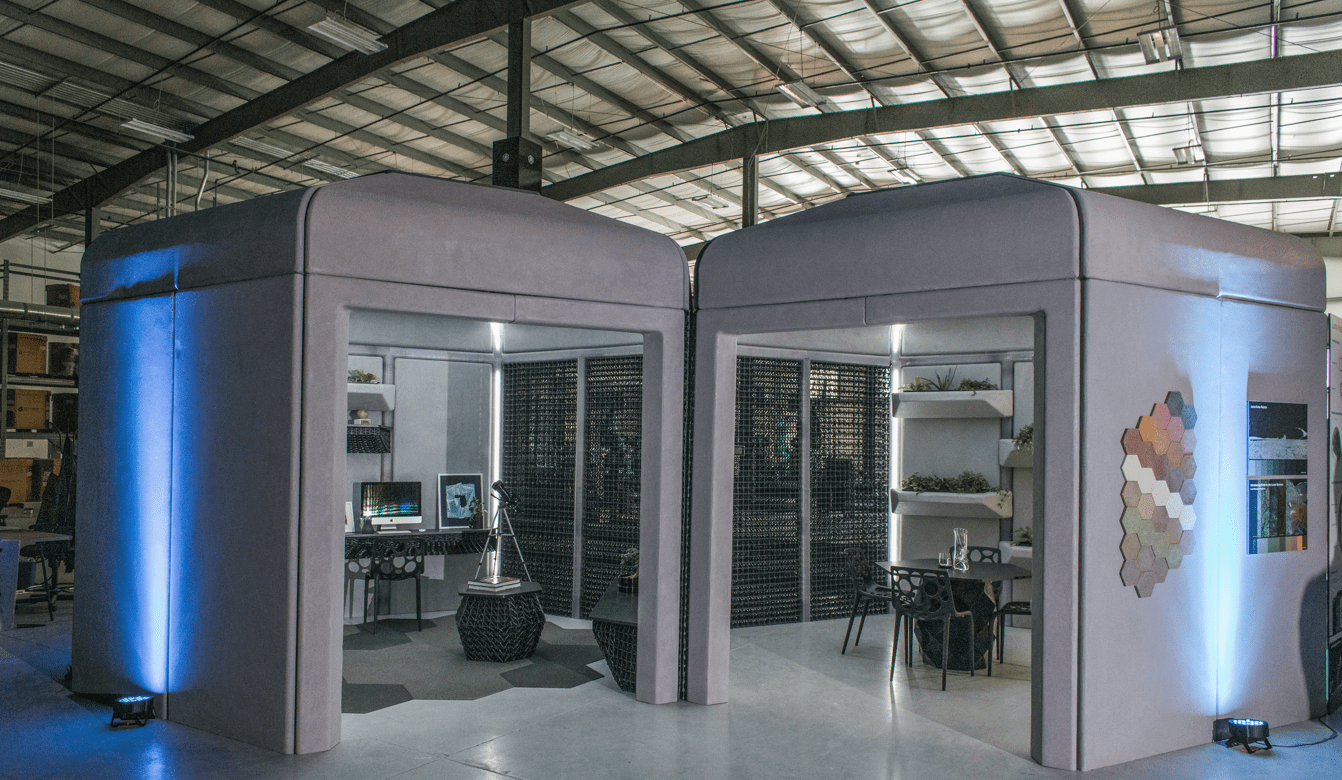
- NASA-funded tech now builds Earth buildings faster and stronger
- Branch Technology’s Freeform 3D Printing uses lightweight lattice structures
- Process originated for lunar habitat construction now improves Earth construction
A NASA-supported innovation originally designed to outfit lunar habitats is now reshaping construction on Earth. Branch Technology Inc. of Chattanooga, Tennessee, has adapted its Freeform 3D Printing process to produce buildings that are structurally sound, visually striking and resource-efficient. The company’s approach builds walls and frameworks using intricate lattice structures instead of traditional solid layers, a technique first explored for potential moon bases under a cooperative agreement with NASA’s Marshall Space Flight Center in Alabama.
The shift from lunar prototypes to commercial construction began when Branch Technology recognized parallels between the challenges of building on the moon and modern architectural demands. Lunar habitats require maximum strength with minimal material due to the high cost of transporting supplies from Earth. This constraint led to the development of a printing method that uses less material while maintaining structural integrity—principles that translate directly to sustainable building practices on Earth.
How Freeform 3D Printing works
Unlike conventional 3D printers that deposit material in stacked layers, Branch Technology’s process creates open frameworks that resemble organic structures such as coral or bone. These lattices are then filled or clad with insulation, drywall or other finishes, resulting in walls that are up to 70 percent lighter than traditional concrete blocks but just as strong. The automated system can print entire wall panels in hours and assemble them on site, reducing construction time and labor costs.
The company reports that its first commercial building, a 6,000-square-foot office in Chattanooga completed in 2022, used 50 percent less material than a conventionally built structure of similar size. Energy modeling showed a 30 percent improvement in thermal performance, cutting heating and cooling costs. The project demonstrated that complex, customized architectural designs could be produced at scale without sacrificing durability.
From moon to market
The technology’s journey began in 2016 when NASA awarded Branch Technology a Small Business Innovation Research grant to develop structural components for lunar habitats. Under the program, engineers explored ways to build with regolith—moon soil—using robotic fabrication. Branch Technology pivoted that research into Freeform 3D Printing, replacing regolith with carbon-fiber-reinforced polymers and other sustainable materials.
Today, the company operates a 40,000-square-foot factory in Chattanooga where it prints wall systems for commercial, industrial and residential projects across the U.S. Clients include architects and developers seeking faster construction timelines and lower carbon footprints. The technology has also attracted interest from disaster relief agencies due to its speed and ability to be deployed in remote or difficult-to-access areas.
Industry impact and future outlook
Architects and engineers say the process is challenging traditional construction methods by enabling complex geometries that were previously too expensive or time-consuming. The lattices can be designed to optimize airflow, daylight or structural load distribution, allowing for energy-efficient, resilient buildings tailored to specific climates. Industry analysts note that this approach aligns with growing demand for sustainable construction and circular economy principles in building design.
Regional developers in the Southeast have already adopted the technology for warehouses, retail spaces and even a new public library branch. The company is now scaling production and expanding its network of licensed fabricators to meet demand. With building codes catching up to the innovation, Branch Technology expects broader adoption in residential markets within three to five years.
The NASA connection remains a key selling point. Marketing materials for Branch’s latest projects emphasize that each structure is built using technology tested in the harsh environment of space. That pedigree helps differentiate the company in a crowded field of modular and prefabricated construction providers.
While still a fraction of the overall construction market, Freeform 3D Printing is gaining traction as a solution to housing shortages, rising material costs and climate change pressures. As the building industry faces pressure to reduce emissions, technologies that cut material waste and construction time are moving from niche to mainstream. Branch Technology’s story shows how space research can return to Earth with tangible benefits.
What You Need to Know
- Source: NASA
- Published: May 13, 2026 at 19:47 UTC
- Category: Science
- Topics: #nasa · #space · #science · #supported space-tech · #advances earthly construction · #preparations
Read the Full Story
This is a curated summary. For the complete article, original data, quotes and full analysis:
All reporting rights belong to the respective author(s) at NASA. GlobalBR News summarizes publicly available content to help readers discover the most relevant global news.
Curated by GlobalBR News · May 13, 2026
🇧🇷 Resumo em Português
Uma revolução na construção civil está prestes a chegar com tecnologia de impressão 3D que promete transformar o modo como casas e edifícios são erguidos, com potencial para resolver parte da crise habitacional brasileira. Desenvolvida pela Branch Technology com apoio da NASA, a inovação utiliza uma técnica de impressão 3D livre de formas — conhecida como Freeform — para criar estruturas mais resistentes, leves e eficientes do que os métodos convencionais, tudo isso em um ritmo acelerado. Inspirada em técnicas originalmente criadas para habitats lunares, a tecnologia já está sendo testada em projetos piloto nos Estados Unidos e chega ao Brasil em um momento crítico, quando o déficit de moradias no país supera 8 milhões de unidades.
O contexto brasileiro torna a chegada dessa tecnologia ainda mais relevante, especialmente diante da necessidade de soluções rápidas e sustentáveis para a habitação popular. Enquanto o país enfrenta desafios como a falta de moradias dignas e o alto custo da construção civil tradicional, a impressão 3D em larga escala poderia reduzir desperdícios de materiais, encurtar prazos de obra e até mesmo viabilizar projetos em áreas de difícil acesso. Além disso, a técnica permite designs complexos e personalizados, o que abre caminho para arquiteturas adaptadas ao clima tropical e às condições locais, como ventilação natural e resistência a chuvas intensas. Especialistas já destacam que, se implementada em larga escala, a tecnologia poderia ser uma aliada na meta de reduzir a desigualdade habitacional no país.
Com o primeiro laboratório de impressão 3D para construção já em fase de instalação no Brasil, a expectativa é que, em até dois anos, a tecnologia comece a ser aplicada em projetos-piloto, com possíveis parcerias entre startups, universidades e governos estaduais para viabilizar moradias de baixo custo.
🇪🇸 Resumen en Español
La NASA apuesta por una revolucionaria tecnología de impresión 3D que promete construir edificios más resistentes y en menos tiempo en la Tierra, inspirada en los avances diseñados para habitar la Luna.
Desarrollada por la empresa Branch Technology con apoyo de la agencia espacial estadounidense, esta técnica, conocida como Freeform 3D printing, utiliza estructuras de celosía avanzadas —similares a las ideadas para bases lunares— para crear muros y estructuras con menos material, pero mayor resistencia. La innovación no solo acelera el proceso constructivo y reduce costes, sino que también abre la puerta a soluciones habitacionales más sostenibles y adaptables a terrenos complejos, un desafío creciente en ciudades con alta densidad poblacional y en regiones afectadas por desastres naturales. Para el público hispanohablante, especialmente en Latinoamérica y España, donde la escasez de vivienda y la necesidad de infraestructuras resilientes son prioridades, esta tecnología podría suponer una herramienta clave para el futuro de la construcción.
NASA
Read full article at NASA →This post is a curated summary. All rights belong to the original author(s) and NASA.
Was this article helpful?

Discussion