King Charles announces five new bills including stricter tobacco controls and a renters' rights overhaul in today's King's Speech.
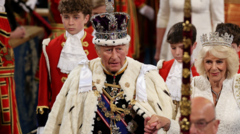
- King Charles delivered his first King's Speech to Parliament today
- Government proposed five new bills for the next session
- Biggest changes include tobacco ban and renters' rights law
King Charles stood in the House of Lords this afternoon and set out the government’s priorities for the year ahead. His speech, written by the government, is the first since the general election and signals the biggest legislative push since Labour took power in July. The King confirmed five bills will go before Parliament, each targeting a major policy area the government wants to reshape before the next election. These aren’t just routine updates—they’re the foundation of Labour’s first big legislative push since winning the election. The speech lasted just over ten minutes, delivered in the traditional ceremonial robes, but the policies inside will affect millions of people across the country. The government now has until the next election to get these laws through Parliament, which means some of these bills could become reality within months rather than years. It’s the kind of agenda that usually only happens when a new government has a clear mandate and a majority to deliver on its promises, and that’s exactly what Labour has right now after winning a decisive victory in July. But delivering these promises won’t be easy. The House of Lords will scrutinise each bill closely, and opposition parties will push back hard on anything they disagree with. That means some of these proposals could change significantly before they become law—or even get dropped entirely if they can’t secure enough support. Still, the government’s decision to prioritise these five bills shows they’re serious about delivering on their manifesto commitments quickly rather than letting them gather dust. That’s a strategy designed to build momentum early in this parliament rather than waiting for a second term that might never come. The five bills cover some of the most contentious issues on the government’s agenda, from public health to housing and the economy. The most eye-catching is the Tobacco and Vapes Bill, which would make it illegal for anyone born after January 1 2009 to buy cigarettes. That’s not just a ban on sales to minors—it’s a total generational cut-off, meaning today’s 15-year-olds would never legally be able to buy tobacco. The government argues this is the most effective way to create a smoke-free generation by 2040, but critics say it’s an overreach that could push people toward unregulated black markets. ## The five bills at a glance The Tobacco and Vapes Bill would create the first smoke-free generation in UK history. The Renters’ Rights Bill would scrap no-fault evictions and cap rent increases, giving tenants far more security. The Border Security Command Bill would create a new agency to crack down on small boat crossings, replacing the current patchwork of agencies. The Planning and Infrastructure Bill would fast-track major infrastructure projects like wind farms and new hospitals, aiming to cut years off delivery times. The Employment Rights Bill would give workers more protection against unfair dismissal, including making parental leave day-one rights. Each of these bills has been carefully chosen to address issues where the government believes the current system is broken or outdated. Take the Renters’ Rights Bill. No-fault evictions have been a flashpoint for years, with tenants facing sudden eviction even when they’ve paid rent on time. The bill would scrap Section 21, the legal tool landlords use to evict tenants without giving a reason. Instead, landlords would only be able to evict tenants for specific legal grounds, like selling the property or moving in themselves. The government says this will give 11 million renters more stability, but landlord groups warn it could discourage investment in rental properties and drive up rents further. The Border Security Command Bill is another one that’s likely to spark fierce debate. The government wants to replace the current Border Force and immigration enforcement teams with a single new agency, Border Security Command, giving it more powers and resources to tackle small boat crossings. The Home Office says this will make the system more efficient, but critics argue it’s just rebranding existing efforts without addressing the root causes of migration or the UK’s broken asylum system. The Planning and Infrastructure Bill is the government’s answer to the country’s chronic shortage of new homes and critical infrastructure. It would speed up approvals for major projects by cutting red tape, but environmental campaigners worry it could lead to rushed decisions that harm nature or local communities. The Employment Rights Bill is perhaps the least controversial of the five, but it’s still significant. It would make parental leave a day-one right, meaning new parents wouldn’t have to wait two years to qualify for shared parental leave. It would also strengthen protections against unfair dismissal, making it harder for employers to fire workers without good reason. The government says this is about fairness, but business groups warn it could make hiring riskier and discourage investment. ## What happens next? The bills will now be introduced in Parliament over the coming weeks, starting with the Tobacco and Vapes Bill. Each will go through the usual scrutiny process, with MPs debating the details and proposing amendments. The government has a majority, so most of these bills are likely to pass in some form—but that doesn’t mean they’ll emerge unchanged. The House of Lords will also have its say, and if peers make significant changes, the government might have to decide whether to accept them or risk the bill getting stuck. The biggest risk for the government is that these bills take too long to pass, giving opponents time to mobilise against them. The Renters’ Rights Bill, for example, has already drawn protests from landlord groups, and the Tobacco Bill is facing legal challenges from tobacco companies. If the government can’t push these bills through quickly, it risks looking weak on its manifesto promises—and that’s exactly what it’s trying to avoid. For now, though, the King’s Speech has set the tone for what’s to come. This parliament is only just getting started, but the government is already staking its reputation on delivering these five bills. Whether they succeed will shape not just this government’s legacy, but the lives of millions of people across the UK.
What You Need to Know
- Source: BBC News
- Published: May 13, 2026 at 11:13 UTC
- Category: Politics
- Topics: #bbc · #politics · #government · #king · #parliament
Read the Full Story
This is a curated summary. For the complete article, original data, quotes and full analysis:
All reporting rights belong to the respective author(s) at BBC News. GlobalBR News summarizes publicly available content to help readers discover the most relevant global news.
Curated by GlobalBR News · May 13, 2026
Related Articles
- Starmer’s leadership under pressure as Labour MPs question authority
- UK Labour’s Wes Streeting confirms leadership bid if race starts
🇧🇷 Resumo em Português
O novo governo britânico acendeu um alerta para o Brasil ao apresentar, nesta quarta-feira, os cinco projetos legislativos mais ambiciosos de sua agenda, com impactos que vão desde a economia global até a soberania digital. Em seu primeiro discurso ao Parlamento, o rei Charles III delineou propostas que prometem redefinir não apenas o futuro do Reino Unido, mas também as relações comerciais e tecnológicas com países como o Brasil, que há anos negocia acordos bilaterais.
O contexto é crítico: o Reino Unido, ainda em processo de adaptação pós-Brexit, busca reafirmar sua posição no cenário internacional com medidas que incluem regulações para inteligência artificial, reformas no sistema de saúde e novas regras para migração. Para o Brasil, as implicações são diretas, especialmente em setores como agronegócio e tecnologia, onde o país pode ser tanto um parceiro quanto um competidor. Analistas brasileiros já alertam para a necessidade de ajustar estratégias comerciais, pois as mudanças britânicas podem criar barreiras ou oportunidades inéditas, dependendo de como o governo Lula responder.
A próxima semana será decisiva: enquanto o Congresso britânico debate a tramitação dos projetos, o Itamaraty deve acelerar análises de impacto para evitar surpresas desagradáveis nas relações bilaterais.
🇪🇸 Resumen en Español
El monarca británico, Carlos III, ha marcado el inicio de una nueva legislatura con un discurso histórico en el Parlamento de Londres, donde ha desgranado las cinco grandes leyes con las que el gobierno conservador busca redefinir el país en áreas clave como la economía, la vivienda y la seguridad.
En un contexto de creciente polarización política y tensiones sociales en el Reino Unido, este paquete legislativo —que incluye reformas laborales, medidas para impulsar la construcción de viviendas asequibles y endurecer las políticas migratorias— refleja la apuesta del Ejecutivo por priorizar la recuperación económica y el control fronterizo, aunque deja en segundo plano temas como la sanidad pública o la transición ecológica, generando críticas desde la oposición laborista. Para los hispanohablantes, especialmente para los más de 700.000 españoles residentes en el país, las decisiones en vivienda y empleo podrían tener un impacto directo, mientras que las restricciones migratorias podrían afectar a las comunidades latinoamericanas, tradicionalmente atractivas para la migración cualificada.
BBC News
Read full article at BBC News →This post is a curated summary. All rights belong to the original author(s) and BBC News.
Was this article helpful?

Discussion