NHS reports hospitals running smoothly during England’s 15th junior doctors’ strike over pay.
- NHS boss reports hospitals coping well during strike
- England’s resident doctors stage 15th walkout over pay dispute
- Emergency services remain fully operational during strike
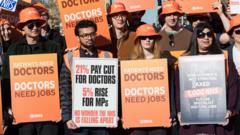
England’s resident doctors—formerly known as junior doctors—began their 15th strike on Tuesday as part of a prolonged dispute over pay. NHS England confirmed that hospitals are managing the disruption, with emergency care fully operational despite the walkout. The strike, which lasts 24 hours, is the latest in a series of industrial actions dating back to early 2023 over demands for a substantial pay rise to match inflation and rising living costs.
NHS England’s chief executive, Amanda Pritchard, stated that trusts are handling the strike effectively, with alternative staffing arrangements in place to ensure patient safety. “We have detailed plans to keep services running smoothly, and we urge patients to attend appointments unless told otherwise,” Pritchard said. The NHS has emphasized that urgent and emergency care will not be affected, though routine appointments may face delays.
Why doctors are striking
The dispute centers on resident doctors’ pay, which they argue has not kept pace with inflation since 2008. The British Medical Association (BMA), the doctors’ trade union, is demanding a 26% pay increase to restore the value of their salaries. The government has offered a 6% rise over two years, which doctors and the BMA have rejected as insufficient. Talks between the BMA and the government collapsed last month, leading to the latest strike.
Resident doctors in England work long hours under intense pressure, often in high-stakes environments such as emergency departments and operating theaters. The BMA argues that the current pay structure fails to reflect the demands of the role, contributing to burnout and staff shortages. Over 40,000 doctors are expected to participate in Tuesday’s strike, which follows previous walkouts in March, April, and June of this year.
Impact on patients and services
While emergency services remain fully staffed, patients with non-urgent appointments or procedures may experience delays. NHS England has urged the public to use services responsibly, emphasizing that A&E departments and urgent care should still be accessed in emergencies. Hospitals have activated contingency plans, including rerouting patients to other facilities where necessary and redeploying senior staff to cover essential roles.
The strike comes at a time when the NHS is already under severe strain, with record waiting lists and staff shortages across multiple specialties. The government has warned that further strikes could worsen the situation, while the BMA has accused ministers of failing to address the root causes of the dispute. Health Secretary Steve Barclay has reiterated the government’s commitment to resolving the issue through negotiation but has ruled out the 26% pay rise demanded by doctors.
Broader implications for the NHS
The ongoing dispute highlights deeper challenges within the NHS, including workforce retention, morale, and the sustainability of the health service amid funding constraints. Analysts warn that repeated strikes could further destabilize the system, leading to longer-term service disruptions and increased costs. The BMA has threatened additional industrial action if no agreement is reached, raising concerns about the potential for further disruption in the coming months.
NHS leaders are calling for urgent government intervention to break the deadlock, emphasizing the need for a fair and sustainable pay settlement. Meanwhile, patient groups have expressed frustration over the repeated strikes, urging both sides to find a resolution that minimizes disruption to care. The outcome of the current dispute could set a precedent for future negotiations with other NHS staff groups, including nurses and consultants, who are also facing pay disputes.
Looking ahead, the BMA has indicated that further strikes may be planned if negotiations do not progress. The government has reiterated its offer and called on doctors to return to negotiations, but both sides remain far apart on the key issue of pay. The next few weeks will be critical in determining whether a resolution can be reached or if the dispute will escalate further.
What You Need to Know
- Source: BBC News
- Published: April 08, 2026 at 10:56 UTC
- Category: Health
- Topics: #bbc · #health · #medicine · #hospitals · #resident · #england
Read the Full Story
This is a curated summary. For the complete article, original data, quotes and full analysis:
All reporting rights belong to the respective author(s) at BBC News. GlobalBR News summarizes publicly available content to help readers discover the most relevant global news.
Curated by GlobalBR News · April 08, 2026
Related Articles
- Why ‘Ballmaxxing’ May Be More Dangerous Than You Think
- Weight Loss Surgeries Decline as GLP-1 Use Skyrockets. Why This Matters
- Olympian Allyson Felix on Why Rest and Recovery Beat Hustle Culture
🇧🇷 Resumo em Português
Os médicos ingleses entram em greve pela 15ª vez em meio a uma disputa salarial que já se arrasta há meses, colocando em xeque a estabilidade do sistema de saúde britânico. Enquanto isso, o diretor do NHS, o serviço nacional de saúde do Reino Unido, garante que os hospitais conseguem manter as operações apesar do movimento paredista, que afeta principalmente os plantões e atendimentos eletivos.
No Brasil, onde o Sistema Único de Saúde (SUS) enfrenta desafios semelhantes, como falta de recursos e sobrecarga nos hospitais, a notícia serve como alerta sobre os riscos de desvalorização profissional e greves prolongadas. A discussão sobre remuneração justa e condições de trabalho se torna ainda mais relevante em um país onde a saúde pública atende milhões diariamente. Especialistas brasileiros já sinalizam que, sem investimentos adequados e diálogos efetivos, o cenário pode se repetir aqui.
A próxima rodada de negociações entre médicos e governo inglês está marcada para breve, e o desfecho pode influenciar não só o NHS, mas também as discussões salariais em outros sistemas de saúde pelo mundo.
🇪🇸 Resumen en Español
Los médicos ingleses protagonizan su decimoquinta huelga por salarios, un récord que tensiona aún más un sistema sanitario ya de por sí frágil. En medio de la protesta, los hospitales aseguran mantener la atención de urgencias, aunque el desgaste acumulado por los paros amenaza con agravar las listas de espera y la calidad asistencial.
La escalada salarial en la sanidad pública británica, que arrastra años de congelación y inflación disparada, refleja un malestar creciente entre los profesionales, cuya remuneración ha perdido poder adquisitivo. Para los hispanohablantes, el conflicto subraya los riesgos de desinvertir en sanidad pública: la huelga, aunque legítima, expone las grietas de un modelo que prioriza el ahorro sobre la sostenibilidad. Mientras, en España, donde la sanidad también sufre recortes y protestas puntuales por condiciones laborales, el caso inglés sirve de advertencia sobre los costes a largo plazo de ignorar las demandas de quienes sostienen el sistema.
BBC News
Read full article at BBC News →This post is a curated summary. All rights belong to the original author(s) and BBC News.
Was this article helpful?


Discussion