Absence of U.S. and 19 nations at COP30 raises questions about the summit’s impact on climate action.
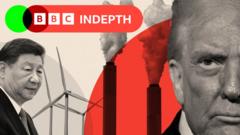
- U.S. president and 19 other leaders skip COP30 climate summit
- 24,000 delegates attend despite key absences
- Brazil hosts summit amid Amazon deforestation concerns
The UN climate summit COP30 is underway in Belém, Brazil, but the absence of the U.S. president and 19 other world leaders has overshadowed the event. Among the missing are leaders from Canada, France, and the UK, raising concerns about the summit’s ability to drive meaningful climate action.
Delegates from nearly 200 countries are attending the two-week talks, where they will negotiate funding for poorer nations and set new emissions targets. Brazil’s President Luiz Inácio Lula da Silva Luiz Inácio Lula da Silva opened the summit, emphasizing the need to protect the Amazon rainforest, a critical carbon sink.
Climate pledges face scrutiny
Experts say the summit’s impact is already weakened by the absence of major emitters. The U.S., the world’s second-largest carbon emitter, and other key nations are not sending their top leaders, sending a mixed signal about their commitment to climate goals. The UN warned last week that current pledges are insufficient to limit global warming to 1.5°C.
Brazil, hosting COP30, has faced criticism over rising deforestation in the Amazon despite recent declines. The country’s environment minister, Marina Silva Marina Silva, defended Brazil’s progress, citing a 50% drop in deforestation this year compared to 2023.
Funding and equity remain key issues
Negotiators are also grappling with disputes over climate finance. Wealthy nations have yet to deliver on a 2009 pledge to provide $100 billion annually to help developing countries adapt to climate change. The issue is expected to dominate closed-door talks this week.
The summit’s host, Belém, was chosen for its proximity to the Amazon, but logistical challenges and protests have marred preparations. Indigenous groups, who play a vital role in protecting the rainforest, are demanding greater representation in the talks.
What happens next?
The summit concludes on November 22, with a final agreement expected to include new emissions targets and funding commitments. Whether these measures will be enough to address the climate crisis remains uncertain as key leaders stay away.
What You Need to Know
- Source: BBC News
- Published: November 10, 2025 at 00:09 UTC
- Category: Environment
- Topics: #bbc · #environment · #climate · #politics · #government · #trump
Read the Full Story
This is a curated summary. For the complete article, original data, quotes and full analysis:
All reporting rights belong to the respective author(s) at BBC News. GlobalBR News summarizes publicly available content to help readers discover the most relevant global news.
Curated by GlobalBR News · November 10, 2025
🇧🇷 Resumo em Português
O mundo se prepara para a COP30, a conferência climática da ONU que começa em Belém, mas com um sinal amarelo preocupante: os EUA e outras 19 nações não enviarão seus líderes, colocando em xeque a capacidade global de agir contra a crise ambiental. A ausência de presidentes e primeiros-ministros de potências como os Estados Unidos, China e Índia — responsáveis por mais de 40% das emissões globais — levanta dúvidas sobre o compromisso real dos países com as metas climáticas, justamente quando a Amazônia, pulmão verde do planeta, enfrenta recorde de desmatamento e queimadas.
O Brasil, anfitrião do evento, está no centro das atenções, mas a decisão de líderes internacionais de não comparecerem reflete um ceticismo crescente em relação à eficácia das cúpulas climáticas. Especialistas alertam que, sem presença de alto nível, as negociações perdem força política, dificultando avanços nos financiamentos para países em desenvolvimento e nas metas de redução de emissões. Para o público brasileiro, a COP30 representa uma chance de pressionar por soluções reais para a Amazônia e o cerrado, mas também expõe a fragilidade dos acordos internacionais quando interesses econômicos se sobrepõem à urgência climática.
Agora, resta saber se os representantes de nível ministerial conseguirão selar acordos significativos ou se a cúpula será mais um palco de discursos vazios, enquanto o planeta continua a aquecer.
BBC News
Read full article at BBC News →This post is a curated summary. All rights belong to the original author(s) and BBC News.
Was this article helpful?


Discussion