Trump threatens Iran with destruction unless a deal is signed by June as stalled talks raise fears of escalation.

- Trump set a June deadline for Iran to agree to a deal or face destruction
- Stalled peace talks have dragged on for weeks with no breakthrough
- A drone strike ignited a fire near Abu Dhabi’s Barakah nuclear plant
Washington, D.C. — President Donald Trump Donald Trump delivered a blunt warning to Iran on Friday, saying the country had weeks left to accept a US-backed agreement to end the war in the Middle East. ‘For Iran, the clock is ticking, and they better get moving, fast,’ Trump said in a late-night statement. ‘If they don’t sign by June, there won’t be anything left of them.’ The threat came as negotiations to make an April ceasefire permanent collapsed, leaving both sides locked in a dangerous standoff.
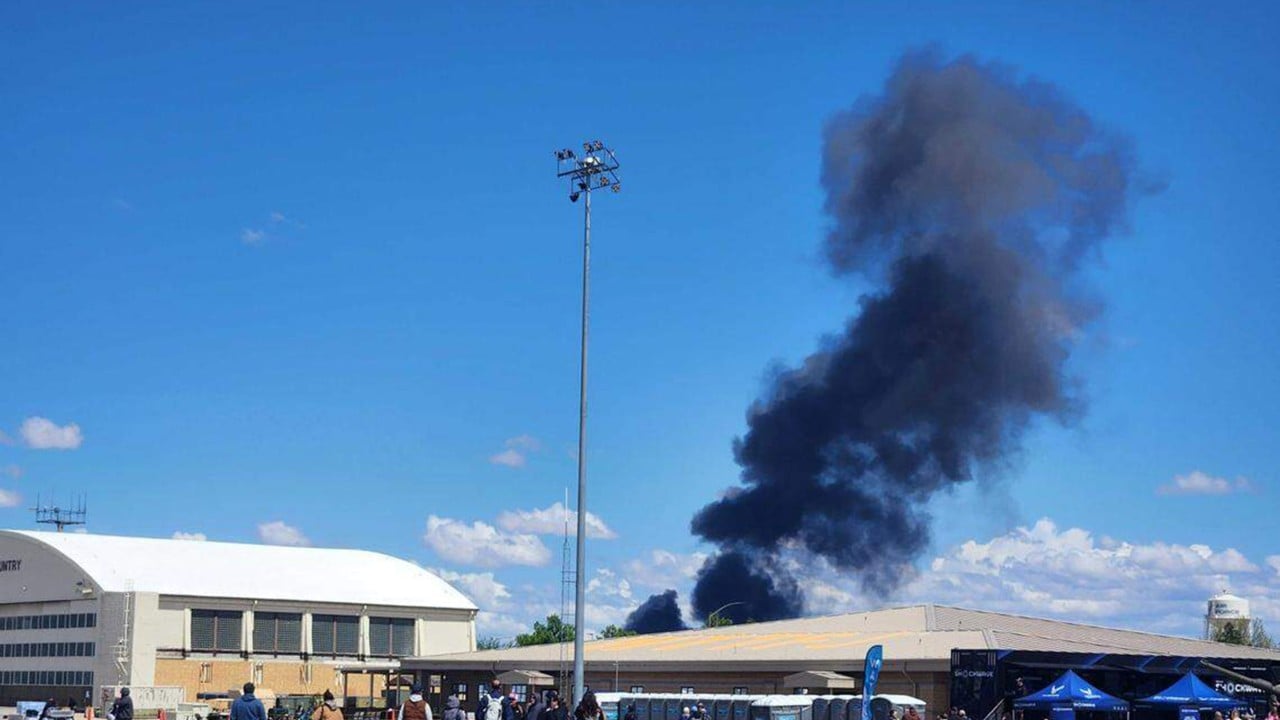
The warning followed a fresh regional crisis. On Thursday, a drone strike sparked a fire at Abu Dhabi’s Barakah nuclear power plant in the United Arab Emirates. No radiation was released, but the incident raised fears of a deliberate attack on critical infrastructure. The UAE blamed Iran-backed militias, though Tehran denied involvement. The strike came just days after Iran test-fired ballistic missiles near the Strait of Hormuz, a key shipping route, in a show of force.
Protests and threats in Europe and the Gulf
On Friday, tens of thousands of Palestinians and their supporters gathered in London to mark Nakba Day, an annual remembrance of the mass displacement of Palestinians during Israel’s 1948 founding. The protests turned tense at points, with clashes reported between demonstrators and police near the Israeli embassy. In Brussels, European Union foreign ministers held emergency talks with Iranian officials over the Hormuz Strait, where Iran has repeatedly threatened to block shipments in retaliation for sanctions. ‘Iran is playing a dangerous game with global oil supplies,’ said a senior EU diplomat who asked not to be named.
Inside Iran, Supreme Leader Ali Khamenei Ali Khamenei dismissed Trump’s threats as ‘empty bluster.’ ‘We’ve survived worse,’ state TV quoted him as saying. ‘The only thing that will be left of America is its shame.’ Iran’s foreign minister, Hossein Amir-Abdollahian Hossein Amir-Abdollahian, accused the US of trying to ‘bully’ Tehran into submission. ‘We’re not signing any deal under threat,’ he told reporters in Tehran. ‘Our people will not be intimidated.’
The deal on the table — and why it matters
The deal under discussion would require Iran to halt uranium enrichment beyond 3.67% purity, freeze its nuclear program, and end support for regional militias like Hezbollah and the Houthis. In exchange, the US would lift sanctions and provide $20 billion in frozen assets. But the deal has stalled over two key sticking points. First, Iran wants guarantees that sanctions will be lifted permanently, not just suspended. Second, the US insists on inspections of military sites, which Iran calls a ‘red line.’
The collapse of talks isn’t just a diplomatic failure — it’s accelerating a dangerous arms race. Saudi Arabia has doubled its missile defense purchases from the US, while Iran has accelerated its drone and missile programs. ‘This isn’t just about Iran,’ said Annalena Baerbock, Germany’s foreign minister. ‘It’s about whether the world can still enforce treaties or if brute force becomes the new rule.’
What happens next depends on whether cooler heads prevail. Iran’s next move is expected within days, as its parliament considers a new law that would allow it to withdraw from the Non-Proliferation Treaty if the US doesn’t soften its stance. Meanwhile, the US has moved an aircraft carrier strike group into the Persian Gulf, a clear signal that Trump isn’t bluffing about military options. The June deadline isn’t just a talking point — it’s a countdown to a possible escalation that could drag the entire region into war.
What You Need to Know
- Source: Deutsche Welle
- Published: May 17, 2026 at 20:53 UTC
- Category: World
- Topics: #europe · #world-news · #war · #conflict · #middle-east
Read the Full Story
This is a curated summary. For the complete article, original data, quotes and full analysis:
All reporting rights belong to the respective author(s) at Deutsche Welle. GlobalBR News summarizes publicly available content to help readers discover the most relevant global news.
Curated by GlobalBR News · May 17, 2026
Related Articles
- Czech beer consumption drops sharply as young drink less
- 🎉 500 Articles in World!
- 🎉 250 Articles in World!
🇧🇷 Resumo em Português
O presidente dos Estados Unidos, Donald Trump, acendeu o alerta global ao ameaçar que, se o Irã não fechar um acordo nuclear até junho, “não sobrará nada” para os iranianos — uma declaração que reacendeu tensões no Oriente Médio e levantou dúvidas sobre os rumos da diplomacia internacional. A postura de Trump, combinada à escalada de retórica agressiva, coloca em xeque não apenas os esforços de negociação em curso, mas também a estabilidade de uma região já marcada por conflitos e disputas geopolíticas. Enquanto Washington intensifica a pressão, Teerã responde com um tom de desafio, mantendo sua posição de que não cederá a pressões unilaterais, o que aprofunda o impasse e ameaça reverter anos de tentativas de contenção da crise nuclear.
Para o Brasil e os falantes de língua portuguesa, o desdobramento dessa crise tem implicações diretas, especialmente em um cenário de inflação global e dependência de energia. O país, que historicamente busca diversificar suas fontes de petróleo e manter relações equilibradas no Oriente Médio, pode ser afetado tanto pelo aumento dos preços do combustível quanto por possíveis reflexos no comércio internacional. Além disso, a situação reforça a importância de o Brasil reforçar sua diplomacia multilateral, evitando alinhamentos automáticos e buscando atuar como mediador em crises que transcendem suas fronteiras. A escalada de ameaças, se concretizada, poderia redesenhar não só o mapa energético global, mas também as alianças políticas no século XXI.
O próximo passo deve ser monitorado de perto pelos líderes mundiais, pois o prazo de junho se aproxima e a margem para negociações parece cada vez mais estreita.
🇪🇸 Resumen en Español
El presidente estadounidense, Donald Trump, ha lanzado una advertencia contundente a Irán: si no acepta un acuerdo antes de junio, advierte que “no quedará nada”, intensificando la presión sobre unas negociaciones estancadas que amenazan con desencadenar un conflicto de consecuencias impredecibles en Oriente Medio. La escalada retórica del mandatario, que vincula el futuro de Teherán a un ultimátum temporal, sitúa la crisis nuclear en un punto crítico, justo cuando los diálogos parecen abocados al fracaso.
El pulso entre Washington y Teherán no solo redefine el tablero geopolítico de la región, sino que expone a los países hispanohablantes —especialmente a aquellos con intereses energéticos o migratorios en el Golfo— a riesgos tangibles. Una posible escalada militar podría disparar los precios del petróleo, desestabilizar rutas comerciales clave y reavivar crisis humanitarias como la de los refugiados sirios, que ya afectan a naciones como España o México. Además, la retórica belicosa de Trump, unida a la respuesta desafiante de Irán, obliga a los gobiernos hispanos a replantearse su papel en un conflicto que, aunque lejano, podría tener repercusiones globales inmediatas.
Deutsche Welle
Read full article at Deutsche Welle →This post is a curated summary. All rights belong to the original author(s) and Deutsche Welle.
Was this article helpful?

Discussion