Nazis hijacked the term ‘Aryan’ to push a racial hierarchy based on looks, but the word started in ancient India and Iran.
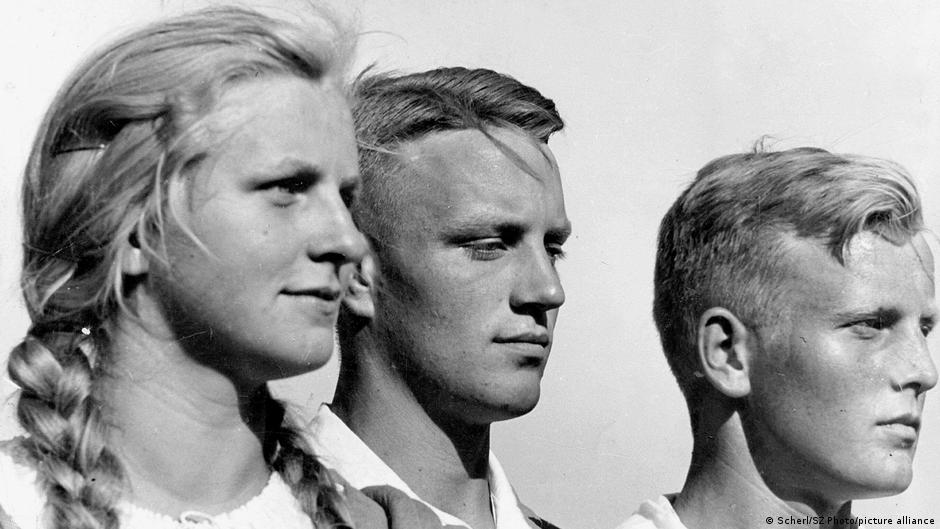
- Nazis claimed Aryans were tall, blond and blue-eyed masters
- Hitler demanded papers to ‘prove’ German ancestry back to 1800
- The word ‘Aryan’ actually comes from Sanskrit and ancient Iranian languages
Hitler’s image of an ‘Aryan’—tall, blond, and blue-eyed—was pure fiction. He and his party spent years forcing Germans to prove they weren’t Jewish or Romani by digging up birth records. But the word didn’t start with Hitler. It came from an ancient label for a language family, not a race at all. The Nazis just stole it and twisted its meaning to justify their racism. In 1935, Germany’s Nuremberg Laws made everyone carry an ‘Ariernachweis’—an Aryan certificate—just to work in certain jobs. Researchers had to dig through church records and family trees for months to dig up proof. The Reich Office for Genealogical Research in Berlin spent years verifying these claims, often rejecting people based on flimsy or falsified evidence. The obsession started after Hitler became chancellor in 1933. Within two years, the Nazi regime turned ancestry into a national obsession. Civil servants, lawyers, and doctors were the first to need the certificate. Soon, it spread to teachers, nurses, and even shopkeepers. The paperwork became so heavy that some families hired professional genealogists just to navigate the bureaucracy. When people couldn’t prove their ‘Aryan’ status, they lost their jobs, their pensions, and sometimes their lives. The Nazis weren’t just picky about paperwork—they were rewriting history. They claimed the ‘Aryan race’ came from Northern Europe, but the word ‘Aryan’ originally referred to a group of people who spoke an ancient language. That language, called Proto-Indo-European, split into branches like Sanskrit in India and Avestan in Iran. The Nazis ignored all that. Instead, they latched onto a 19th-century idea that Aryans were a ‘pure’ race from the north. Scholars like Max Müller, a German-born philologist, had used the term to describe language families, not people. But by the 1800s, racists twisted it into a racial category. The Nazis ran with it. They claimed Aryans built ancient civilizations, while Jews and others were ‘inferior.’ The propaganda machine churned out posters, films, and even children’s books pushing the myth. The word ‘Aryan’ itself comes from the Sanskrit ‘ārya,’ meaning ‘noble’ or ‘honorable.’ It showed up in ancient Indian texts like the Rigveda, written around 1500 BCE. Over in Persia, the Avesta—the holy book of Zoroastrianism—also used a version of the word. These texts didn’t describe a race. They described a cultural or linguistic group. The Nazis didn’t care. For them, ‘Aryan’ became a badge of superiority. Anyone who didn’t fit their narrow ideal—Jews, Romani people, Slavs, or even blond Germans with Jewish ancestors—was marked for persecution.
What You Need to Know
- Source: Deutsche Welle
- Published: May 05, 2026 at 08:56 UTC
- Category: World
- Topics: #europe · #world-news · #from-india · #iran · #nazis-according
Read the Full Story
This is a curated summary. For the complete article, original data, quotes and full analysis:
All reporting rights belong to the respective author(s) at Deutsche Welle. GlobalBR News summarizes publicly available content to help readers discover the most relevant global news.
Curated by GlobalBR News · May 05, 2026
Related Articles
- Czech beer consumption drops sharply as young drink less
- UN warns of global housing gap as ministers meet in Baku
- 🎉 500 Articles in World!
🇧🇷 Resumo em Português
A ideia de uma suposta “raça ariana” pura, com cabelos loiros e olhos azuis, que inspirou a ideologia nazista, teve suas origens não na Alemanha, mas sim nos antigos textos sagrados da Índia e do Irã. Essa reviravolta histórica desvenda como um conceito linguístico e cultural milenar foi distorcido pela máquina de propaganda de Hitler para justificar sua obsessão por uma suposta superioridade racial.
A conexão entre os “arianos” e a Alemanha nazista remonta ao século XIX, quando estudiosos europeus, fascinados pela civilização védica da Índia, passaram a associar erroneamente a palavra “arya” (nobre em sânscrito) a uma suposta origem racial comum. Essa tese, embora já contestada pela ciência moderna, foi apropriada pelo regime nazista para criar uma narrativa de pureza étnica que serviu de base para o Holocausto. Para o Brasil, país de extrema diversidade étnica e vítima histórica de preconceitos raciais, a revelação reforça a importância de combater distorções históricas que alimentam o ódio e a intolerância.
À luz dessa descoberta, estudiosos e ativistas brasileiros já começam a debater como essa narrativa distorcida continua a influenciar discursos de ódio no país, exigindo uma reflexão urgente sobre os perigos de manipular a história em prol de ideologias racistas.
🇪🇸 Resumen en Español
El término “ario” que los nazis convirtieron en sinónimo de superioridad racial tiene sus raíces en los antiguos textos védicos de la India y en las lenguas iraníes, no en los rasgos físicos de los pueblos germánicos. Esta distorsión histórica, lejos de ser una casualidad, revela cómo el mito de la pureza racial se nutrió de conceptos malinterpretados y adaptados para justificar la ideología del Tercer Reich.
La obsesión nazi por la “raza aria” encuentra su origen en las teorías orientalistas del siglo XIX, cuando eruditos europeos, fascinados por los textos sagrados hindúes como los Vedas, asociaron erróneamente el término con una supuesta élite nórdica. Para los hispanohablantes, este episodio sirve como advertencia sobre los peligros de manipular el lenguaje y la historia para fines políticos: el racismo, en cualquier forma, es una construcción artificial que ha demostrado repetidamente su capacidad para sembrar destrucción. Además, subraya la importancia de cuestionar los discursos hegemónicos y de buscar el conocimiento en fuentes diversas, más allá de los relatos impuestos por el poder.
Deutsche Welle
Read full article at Deutsche Welle →This post is a curated summary. All rights belong to the original author(s) and Deutsche Welle.
Was this article helpful?



Discussion