Italian PM meets Modena car attack victims after far-right falsely ties the incident to immigration.
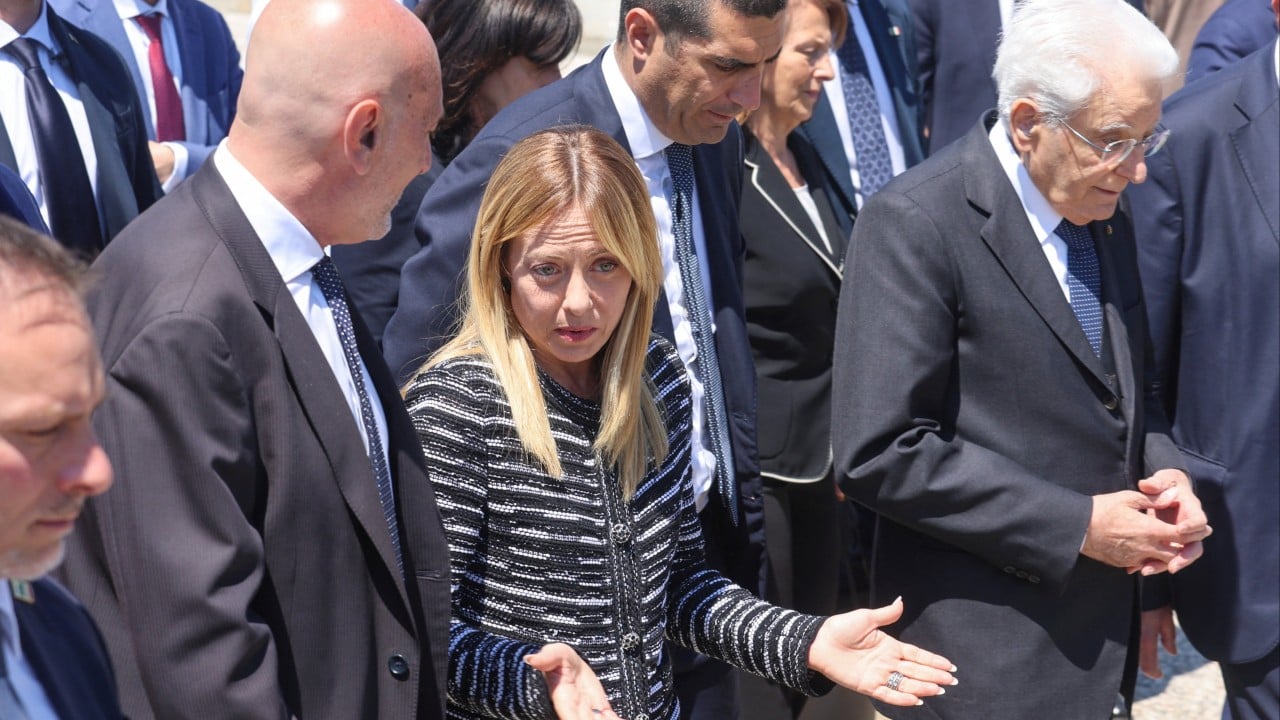
- PM Meloni visits victims of Modena car attack on Sunday
- Driver had history of mental health issues, not immigration ties
- Hundreds rally in Modena to reject hate and division
Italian Prime Minister Giorgia Meloni spent Sunday visiting victims of a car attack in Modena, a northern Italian city. A 31-year-old man with Moroccan heritage ran over multiple pedestrians in the city center Saturday before crashing his car. Police confirm the driver has a documented history of mental health problems and was known to authorities. None of the victims have life-threatening injuries, though several remain hospitalized with serious but stable conditions. Meloni met with the wounded and their families, offering support during what she called a moment of national reflection. She did not publicly address the political fallout during her visit, which focused on the victims’ recovery ahead of a planned rally against hate in the evening.\n\n## Far-right politicians blame immigration — and the city fights back Hundreds of Modenese residents gathered Sunday evening at the call of the city’s mayor, Massimo Calzolari. The crowd, waving anti-racism banners and chanting slogans against division, aimed to counter far-right politicians who quickly tried to link the attack to immigration. One regional leader from Lega party, Matteo Salvini, suggested without evidence that the driver’s Moroccan background might explain the violence. Local officials and residents rejected the claim, pointing out the driver’s documented mental health struggles as the established motive.\n\n## Mental health system under scrutiny after repeated failures This isn’t the first time Italy’s mental health system has been criticized after a violent incident. The driver, identified only as Younes B., had been treated for schizophrenia but was released from a psychiatric ward just months before the attack. Reports show he stopped taking medication months ago, leaving him in a fragile state when he borrowed a friend’s car Saturday afternoon. His family told investigators he had shown erratic behavior for weeks, including paranoid delusions. Critics say Italy’s mental health services are underfunded and overstretched, with many patients falling through cracks after initial treatment.\n\n## Meloni’s balancing act: support victims without escalating politics Meloni’s visit to the hospital mirrored her broader challenge: showing compassion for victims while avoiding the political trap set by far-right factions. Her government has faced criticism for tightening immigration policies, creating an opening for opponents to frame the attack as immigration-related—even though police state the motive is unrelated. At the hospital, Meloni avoided direct comments on immigration, focusing instead on the victims’ needs. The prime minister also met with local authorities to discuss long-term support for Modena’s recovery, including mental health funding and community safety measures.\n\nThe Modena attack follows a pattern of violence in Italy where mental health crises escalate into public tragedies. In 2021, a man with a history of psychiatric issues drove into a crowd in Turin, killing one and injuring several others. That case also sparked debates about mental health care access. Unlike previous incidents, however, this attack became a political flashpoint almost immediately, with far-right figures seizing on the driver’s heritage to push their agenda.\n\nWhat happens next? Police are reviewing security footage and interviewing witnesses to determine if the driver targeted specific victims. The city plans to host more anti-hate events this week, while national politicians continue debating whether to overhaul mental health policies or tighten immigration laws. For now, Modena’s residents are focusing on healing—not politics.
What You Need to Know
- Source: SCMP
- Published: May 17, 2026 at 21:03 UTC
- Category: World
- Topics: #scmp · #asia · #china · #world-news · #politics · #government
Read the Full Story
This is a curated summary. For the complete article, original data, quotes and full analysis:
All reporting rights belong to the respective author(s) at SCMP. GlobalBR News summarizes publicly available content to help readers discover the most relevant global news.
Curated by GlobalBR News · May 17, 2026
Related Articles
- Czech beer consumption drops sharply as young drink less
- UN warns of global housing gap as ministers meet in Baku
- 🎉 500 Articles in World!
🇧🇷 Resumo em Português
A Itália chacoalha mais uma vez com a repercussão de um ataque a pedestres na cidade de Modena, onde um homem atropelou deliberadamente uma multidão, deixando dezenas de feridos. Em um gesto simbólico, a primeira-ministra Giorgia Meloni visitou pessoalmente as vítimas, reforçando que o ato não teve motivação imigratória, mas sim questões relacionadas à saúde mental do agressor — uma distinção crucial que desmente tentativas de vincular o episódio a pressões xenófobas.
O caso reacendeu debates na Europa sobre segurança pública e a necessidade de políticas eficazes de saúde mental, especialmente após polêmicas envolvendo declarações de figuras de extrema-direita que tentaram explorar o incidente para justificar discursos anti-imigração. Na Itália, onde o governo de Meloni tem se alinhado a posições conservadoras, a postura da premier de visitar as vítimas e descartar a motivação política do crime foi vista como uma tentativa de conter a polarização. Para o Brasil, o episódio serve como alerta sobre como tragédias semelhantes podem ser manipuladas politicamente, exigindo cautela na cobertura midiática e na reflexão sobre o tema.
Até quando a Europa — e o mundo — continuarão a conviver com a instrumentalização de crises sociais para fins políticos?
🇪🇸 Resumen en Español
La primera ministra italiana, Giorgia Meloni, se reunió con las víctimas del incidente en Modena, un ataque con coche que, lejos de estar vinculado a la inmigración, respondió a problemas de salud mental, lo que reabrió el debate sobre la estigmatización de los trastornos psiquiátricos en Europa. La líder de Fratelli d’Italia acudió al hospital donde fueron atendidos los heridos tras el suceso, ocurrido el pasado fin de semana, para transmitir un mensaje de unidad y condena a la violencia.
El caso ha generado una ola de movilizaciones en Italia, donde cientos de personas se han concentrado en las principales ciudades para protestar contra el discurso de odio y exigir políticas que aborden la salud mental con rigor, evitando su instrumentalización política. Expertos y asociaciones advierten que este tipo de incidentes, cuando se asocian erróneamente a colectivos vulnerables como los migrantes, alimentan la polarización y desvían la atención de soluciones estructurales, algo que preocupa especialmente en países con gobiernos de corte conservador en los que el debate migratorio suele monopolizar la agenda pública.
SCMP
Read full article at SCMP →This post is a curated summary. All rights belong to the original author(s) and SCMP.
Was this article helpful?

Discussion