UK car makers met EV sales targets every year but still claim demand is weak.
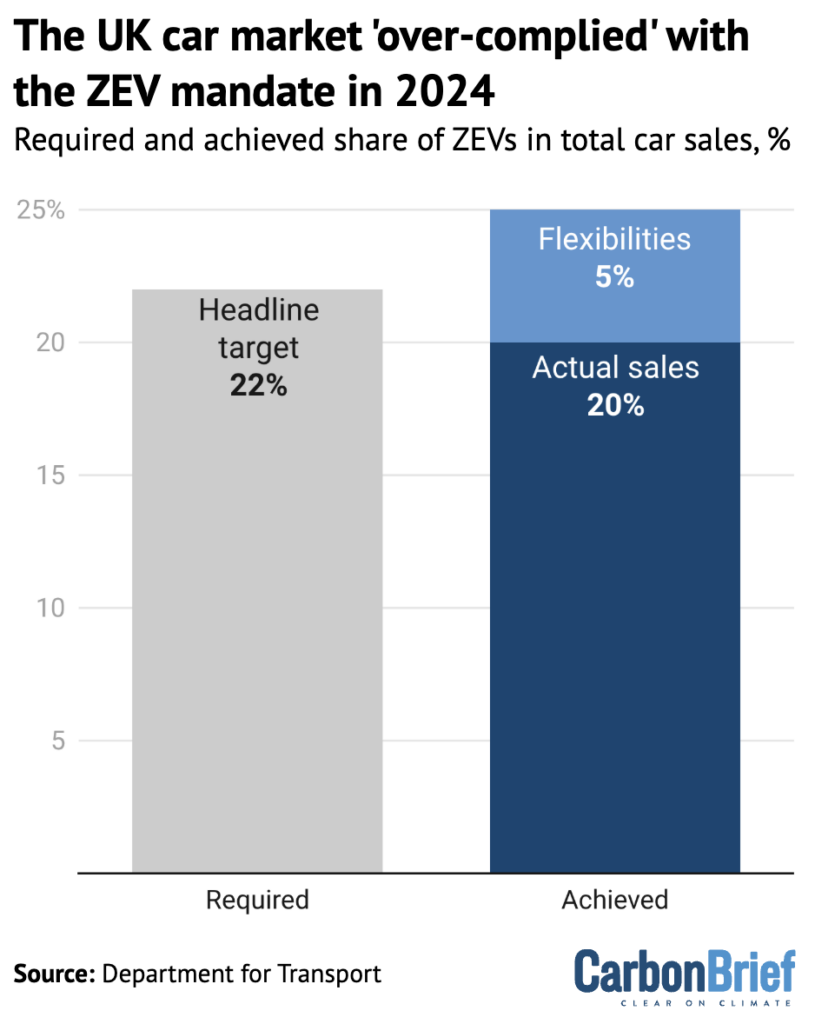
- UK car industry has hit ZEV mandate targets every year since launch
- Media repeats industry claims demand is too low for EV sales
- Industry lobbies for weaker targets despite beating current ones
The UK car industry has been telling anyone who’ll listen that electric vehicle sales aren’t strong enough to meet government targets. There’s just one problem: they’ve actually beaten those targets every year since the rules began. The latest figures from the Society of Motor Manufacturers and Traders (SMMT) show British carmakers met their 2024 zero-emission vehicle (ZEV) mandate requirement with months to spare. Yet each month, industry groups and parts of the media still claim the sector is falling short, repeating a cycle that’s been going on since the targets were first introduced in 2021. The mismatch between reality and rhetoric matters because the car industry is using these repeated claims to push for an “urgent review” of the targets, arguing that “natural demand is still well below” what’s required. Last month, the SMMT warned that without changes, Britain risks falling behind Europe on EV adoption. But the numbers tell a different story. Government data shows the UK hit 22.3% ZEV sales in 2023, beating the 22% mandate for that year. For 2024, the target was 28%, and provisional SMMT figures show 28.4% of new cars sold so far this year have been fully electric or hydrogen-powered. That’s despite a slowdown in overall car sales and the ongoing cost-of-living squeeze hitting consumer spending. So why do industry leaders keep saying demand is weak? The answer lies in how the targets work. The ZEV mandate sets yearly sales requirements that rise gradually, starting at 22% in 2024 and reaching 100% by 2035. Carmakers must either sell a certain percentage of ZEVs or buy credits from others who exceed their targets, creating a flexible system. But the industry argues the pace is too fast, pointing to falling EV registrations in recent months as proof demand is stalling. The problem is those registrations are still higher than the mandate requires. In August 2024, 23.3% of new cars sold were electric—lower than July’s 28.4% but still above the annual target. The industry’s own monthly sales reports consistently show ZEV sales outpacing the required percentage, yet the messaging hasn’t changed. ## Industry lobbying intensifies despite meeting targets The car industry’s trade body, the SMMT, has been the most vocal critic of the targets, calling for a delay or reduction in the speed of change. In September, it warned that EV registrations fell 19.4% in August compared to 2023, a drop it blamed on consumer uncertainty over charging infrastructure and upfront costs. Yet even with that drop, the industry is still selling more EVs than the government requires. The lobbying push comes as the UK prepares to review its 2030 ban on new petrol and diesel cars, originally set for 2035 but brought forward to 2030 in 2020. The car industry argues the tighter timeline is unrealistic without stronger incentives, cheaper models, and faster charging rollouts. But the targets they’re fighting aren’t the same as the 2030 ban. The ZEV mandate is a sales requirement, not an outright sales ban, designed to push the market toward zero-emission vehicles without forcing an immediate switch. That distinction seems lost in much of the public debate. ## Why the media keeps repeating the wrong claim Every month, when the SMMT releases its new car registration data, headlines repeat the same line: carmakers are missing their EV targets. The pattern is predictable. A BBC report from August claimed “UK carmakers miss EV sales targets for first time,” citing provisional figures that later showed the industry actually exceeded the target. Similar stories appeared in the Guardian, Telegraph, and Financial Times, all repeating the same incorrect claim. The issue isn’t that the media is being misled—it’s that the industry’s messaging is so consistent that journalists often take the claims at face value without checking the actual numbers. The SMMT’s own press releases regularly state that EV uptake is “below what’s needed,” even when the data contradicts that. This creates a feedback loop where incorrect headlines feed into political and public perceptions, making it harder to have an honest conversation about the real barriers to EV adoption. ## What actually needs to change The car industry isn’t wrong about everything. EV sales are slowing in some segments, particularly among private buyers who are more sensitive to upfront costs. The used EV market is still tiny compared to petrol and diesel cars, and charging infrastructure still lags in rural areas. But the targets they’re fighting aren’t the problem—they’re meeting them. The real issues are affordability, charging access, and consumer confidence. The government’s plan to extend the plug-in car grant for two more years and boost public charging points is a start, but it’s not enough to fix the broader market dynamics. Meanwhile, the industry’s push for weaker targets risks delaying the transition just when it needs to speed up. The next few years will show whether the UK can meet its 2030 phase-out date without stronger action—or whether the car industry’s repeated claims about demand will become a self-fulfilling prophecy.
What You Need to Know
- Source: Carbon Brief
- Published: May 08, 2026 at 13:18 UTC
- Category: Environment
- Topics: #climate · #environment · #carbon · #factcheck · #society · #motor-manufacturers
Read the Full Story
This is a curated summary. For the complete article, original data, quotes and full analysis:
All reporting rights belong to the respective author(s) at Carbon Brief. GlobalBR News summarizes publicly available content to help readers discover the most relevant global news.
Curated by GlobalBR News · May 08, 2026
Related Articles
🇧🇷 Resumo em Português
O Reino Unido superou as metas de adesão a veículos elétricos (EVs) impostas pelo governo todos os anos, mas insiste em afirmar que a demanda por esses carros ainda é baixa, um paradoxo que revela interesses ocultos da indústria automobilística. Segundo dados oficiais, as vendas de EVs no país já representam mais de 20% do mercado, um avanço significativo em comparação a anos atrás, quando mal chegavam a 5%. No entanto, fabricantes e montadoras insistem em pressionar por adiamentos em políticas de transição energética, usando como argumento uma suposta falta de interesse dos consumidores — uma estratégia que, para especialistas, pode estar mais ligada a resistências estruturais do que a realidade do mercado.
No Brasil, onde a discussão sobre mobilidade sustentável ainda engatinha, mas ganha força com iniciativas como o programa RenovaBio e projetos de eletromobilidade em cidades como São Paulo e Rio de Janeiro, o caso britânico serve como alerta. Enquanto o Reino Unido avança — mesmo com suas contradições —, o Brasil precisa urgentemente definir políticas públicas claras para evitar ficar para trás na corrida global por veículos limpos. A demora em regulamentar incentivos e infraestrutura de recarga pode atrasar a transição energética brasileira, que já sofre com a dependência de combustíveis fósseis e uma matriz energética ainda majoritariamente não renovável.
A próxima batalha será travada não apenas nos corredores do poder, mas também nas ruas, onde a pressão por um futuro sustentável — com ou sem a ajuda da indústria — só tende a crescer.
Carbon Brief
Read full article at Carbon Brief →This post is a curated summary. All rights belong to the original author(s) and Carbon Brief.
Was this article helpful?



Discussion