Wind and solar saved the UK £1.7bn in gas imports since the Iran war began.
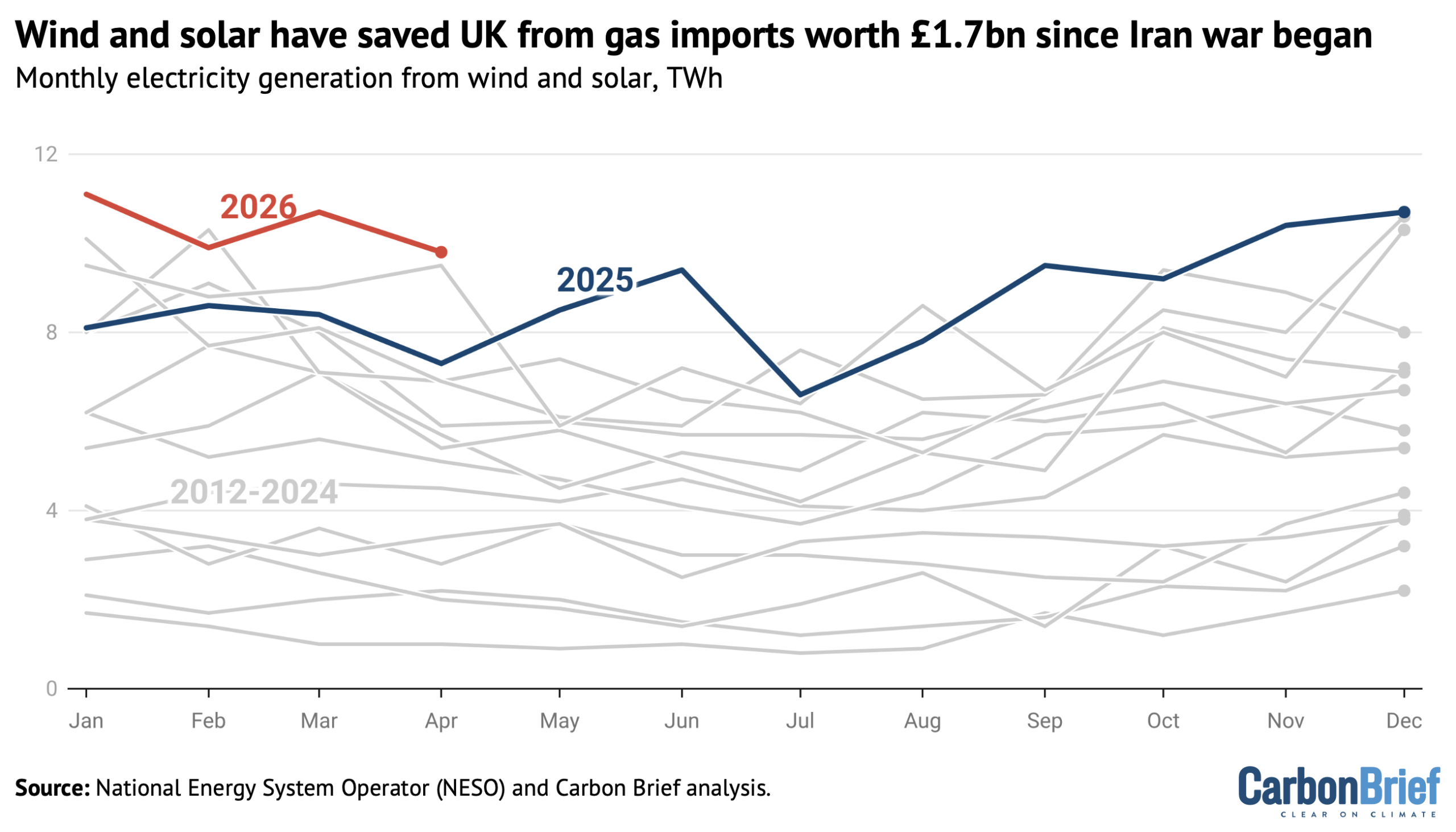
- Wind and solar generated 21TWh since February 2026
- Gas use fell by nearly a third from last year
- UK avoided £1.7bn in gas import costs
Since the US and Israel attacked Iran in late February 2026, the UK’s electricity mix has shifted dramatically in favor of renewables. Analysis by Carbon Brief shows wind and solar farms generated a record 21 terawatt hours (TWh) on Great Britain’s grid in the months since. That surge slashed the country’s dependence on gas-fired power, cutting imports by the equivalent of £1.7bn. For context, that’s more than the annual budget of some UK energy assistance programs. The numbers aren’t small either: gas generation dropped to nearly a third below last year’s levels and hit all-time lows in both March and April 2026. Grid operators confirm the shift wasn’t a fluke—it’s the result of more wind farms, smarter battery storage, and sunnier weather than the previous year. The UK’s renewable capacity has grown steadily for years, but the timing of this uptick aligns almost perfectly with the start of the conflict in the Middle East. Before the attacks, gas prices were already volatile. Since then, they’ve swung wildly, making every extra kilowatt hour of wind and solar power worth more than just the electricity it produces. The country’s energy security has improved overnight, at least temporarily. Gas still plays a big role in the grid, especially when wind and solar output dips. But for now, the numbers show a clear trend: the UK is burning less gas and importing less of it. That’s a win for bills, for climate targets, and for geopolitical risk management. ## Why gas use fell so fast Since the war began, global gas markets have been in turmoil. Prices spiked after sanctions on Iranian energy exports tightened, and Europe’s scramble for alternatives began. The UK, which imports about half its gas, was particularly exposed. Enter wind and solar. Offshore wind farms in the North Sea, like those in Dogger Bank, have been producing record output. Onshore wind and solar farms, especially in Scotland and Wales, have also chipped in. The grid’s flexibility has improved too. Batteries, like those at Hornsea Project One, store excess wind power for when demand peaks. That means less need to fire up gas plants during high-demand hours. The result? Gas generation dropped from around 35% of the mix in early 2025 to under 20% in April 2026. National Grid ESO, which runs the UK’s electricity system, says the numbers back up the shift. Weather played a role too. Wind speeds were higher than average in the first quarter of 2026, and sunshine hours increased in southern England. But the bigger story is the rapid build-out of renewables. The UK added over 3 gigawatts of new wind and solar capacity in 2025 alone. That’s enough to power about 2 million homes. The timing couldn’t have been better. ## What this means for energy bills and the climate For households, the immediate impact is lower wholesale gas costs. Energy suppliers have started passing some savings to customers, though bills are still higher than pre-pandemic levels. The £1.7bn figure is an estimate based on avoided imports at current prices. If gas prices stay high, the savings will grow. The climate benefits are clear too. Burning gas releases CO₂, so less of it means fewer emissions. The UK’s grid carbon intensity dropped to around 200 grams of CO₂ per kilowatt hour in April 2026, down from 300g earlier in the year. That’s progress, but the country still has a long way to go to meet its net-zero targets. The bigger picture is energy security. The UK imports most of its gas, mostly from Norway, Qatar, and the US. The Iran war showed how quickly those supplies can tighten. Renewables, on the other hand, are homegrown. They don’t rely on tankers crossing oceans or pipelines crossing continents. That resilience is why the government has pledged to quadruple offshore wind capacity by 2030. ## What’s next for the UK grid? The next few months will test whether this shift is temporary or permanent. If wind and solar output stays high through the summer, it’ll confirm the trend. If gas prices drop sharply, some might argue the savings aren’t sustainable. But the data so far suggests renewables are here to stay as a major part of the grid. The government’s energy strategy still leans heavily on gas for backup power. But the numbers show that strategy is getting a real-world stress test—and so far, it’s passing. The UK’s energy mix is changing faster than anyone expected. For now, at least, it’s working in the country’s favor.
What You Need to Know
- Source: Carbon Brief
- Published: May 07, 2026 at 13:02 UTC
- Category: Environment
- Topics: #climate · #environment · #carbon · #war · #conflict · #analysis
Read the Full Story
This is a curated summary. For the complete article, original data, quotes and full analysis:
All reporting rights belong to the respective author(s) at Carbon Brief. GlobalBR News summarizes publicly available content to help readers discover the most relevant global news.
Curated by GlobalBR News · May 07, 2026
Related Articles
🇧🇷 Resumo em Português
O Reino Unido economizou impressionantes £1,7 bilhão em importações de gás desde o início da guerra no Irã, graças ao avanço acelerado de suas fontes renováveis, como eólica e solar. Enquanto nações ainda debatem a transição energética, o caso britânico mostra como a dependência de combustíveis fósseis pode ser reduzida drasticamente em poucos anos — um exemplo que ganha peso em um mundo assolado por crises geopolíticas e mudanças climáticas.
No Brasil, onde a matriz energética já é majoritariamente limpa, com mais de 80% de sua eletricidade vinda de hidrelétricas, o caso britânico reforça o argumento de que diversificar a geração de energia é uma estratégia inteligente. Especialistas brasileiros destacam que, além de reduzir custos e aumentar a segurança energética, investir em fontes como eólica e solar pode evitar crises futuras, como a vivida em 2021, quando a falta de chuvas levou ao racionamento de energia. Para o país, que ainda enfrenta desafios como a necessidade de modernizar sua infraestrutura e atrair investimentos para renováveis, a lição é clara: o futuro da energia está nas mãos daqueles que apostam em inovação e sustentabilidade. Agora, o desafio é traduzir esse modelo em políticas públicas eficazes e incentivar a população a abraçar essa transição.
Carbon Brief
Read full article at Carbon Brief →This post is a curated summary. All rights belong to the original author(s) and Carbon Brief.
Was this article helpful?



Discussion