White House-backed Christian rally draws huge crowd on National Mall with cross, founder panels and worship music.
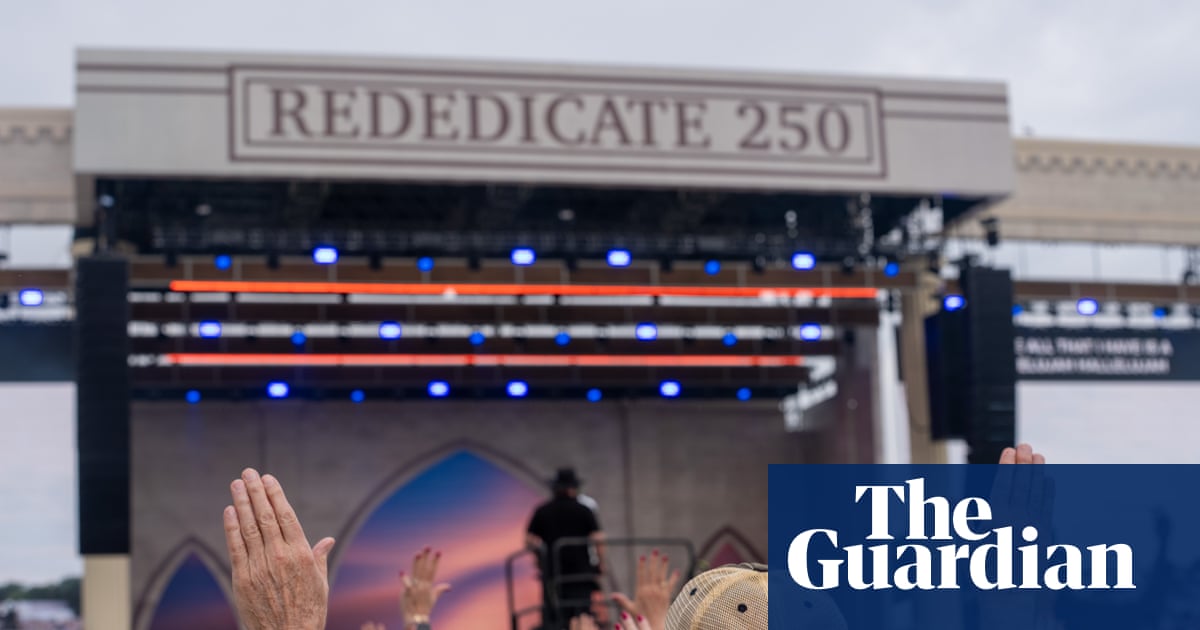
- White House gave official support to Christian prayer rally in Washington DC
- Event drew thousands to National Mall with worship music and giant cross backdrop
- Critics say rally blurred separation of church and state with religious symbols
Thousands of people packed the National Mall on Sunday for a White House-backed prayer rally that critics say crossed the line between church and state. Organizers billed the event as a “rededication of our country as One Nation Under God,” and the stage was designed to look like a cathedral. A giant cross loomed above the Washington Monument as Christian bands performed hymns for the crowd. Below the stage, stained-glass-style windows featured portraits of the nation’s founders alongside biblical phrases in gold lettering. The event’s name—“One Nation Under God”—echoed the phrase added to the Pledge of Allegiance in 1954 during the Cold War, a time when U.S. leaders often framed the country’s identity in explicitly religious terms. The White House confirmed it had provided logistical support, including security coordination, but said it played no role in organizing the rally itself. A spokeswoman for President Joe Biden said the administration respects the First Amendment right to free exercise of religion while also upholding the separation of church and state. The rally was led by a coalition of conservative Christian groups, including The Family Research Council and Focus on the Family, both of which have been vocal in opposing LGBTQ+ rights and abortion access. Speakers included prominent evangelical pastors and politicians who framed the event as a spiritual call to return to what they described as America’s “Christian foundations.” One organizer, Pastor Jack Graham of Prestonwood Baptist Church, told the crowd that the rally was about “praying for our nation’s leaders, for revival, and for God’s mercy.” Graham added that the event was not political but emphasized that “God’s truth is under attack” in American culture. The Department of Justice and the National Park Service, which manages the National Mall, confirmed they provided standard event support such as crowd control and trash pickup. But they stressed that the federal government does not endorse any religion and that the stage setup was the responsibility of the event organizers. Legal watchdogs like the Freedom From Religion Foundation have already filed complaints, arguing that the presence of a giant cross and Christian iconography on public land violates the Establishment Clause of the First Amendment. The foundation’s executive director, Anne Nicol Gaylor, called the rally “a taxpayer-funded Christian revival show.” Organizers said more than 50,000 people attended at its peak, though police did not release an official count. The event included breakout sessions on topics like “pro-life advocacy” and “parenting in a post-Christian culture,” reflecting the conservative Christian priorities of the organizers. Some attendees told reporters they came for the music and the chance to pray with fellow believers, while others said they wanted to send a message about the role of faith in public life. The rally ended with a closing prayer led by a prominent televangelist who urged the crowd to “stand firm” against what he called “the forces of secularism.” The event highlighted growing tensions in America over the place of religion in public life, especially as the country becomes more religiously diverse. While Christian nationalists see such rallies as a renewal of America’s spiritual identity, critics argue they threaten the pluralism that has long defined the nation. The White House’s involvement—even if limited to logistics—has fueled debate about the boundaries of government support for religious expression. What happens next will likely include more legal challenges, political commentary, and possibly even copycat events from other faith groups seeking similar visibility on public land.
What You Need to Know
- Source: The Guardian
- Published: May 17, 2026 at 19:47 UTC
- Category: World
- Topics: #guardian · #world-news · #international · #politics · #usa · #white-house
Read the Full Story
This is a curated summary. For the complete article, original data, quotes and full analysis:
All reporting rights belong to the respective author(s) at The Guardian. GlobalBR News summarizes publicly available content to help readers discover the most relevant global news.
Curated by GlobalBR News · May 17, 2026
Related Articles
- Czech beer consumption drops sharply as young drink less
- UN warns of global housing gap as ministers meet in Baku
- 🎉 500 Articles in World!
🇧🇷 Resumo em Português
Dezenas de milhares de pessoas lotaram o icônico National Mall, em Washington, nesta semana, para um megaevento de oração e adoração que transformou a capital americana em um palco de fé e simbolismo religioso. Com apoio oficial da Casa Branca, o “One Nation Under God” reuniu evangélicos, líderes religiosos e políticos em um dia inteiro de cânticos, pregações e manifestações de devoção, marcando um dos maiores encontros de oração já realizados nos EUA.
O evento, que contou com a presença de figuras conservadoras e até menções à “América cristã”, reacendeu o debate sobre a separação entre Igreja e Estado nos Estados Unidos, um dos pilares da Constituição do país. No Brasil, onde a laicidade do Estado também é garantida pela Constituição, mas onde a religião — especialmente o cristianismo — desempenha um papel cultural e político cada vez mais influente, a notícia serve como um espelho: levanta questões sobre até que ponto símbolos religiosos podem ser usados em eventos públicos sem violar princípios democráticos. Além disso, o apoio da Casa Branca a um ato com clara carga cristã contrasta com as tensões recentes nos EUA sobre secularismo e diversidade religiosa, tema que ressoa fortemente em um país como o Brasil, de forte tradição católica e evangélica.
A polêmica deve ganhar novos capítulos nos próximos meses, à medida que organizações de defesa dos direitos civis e setores do Judiciário americano avaliam a legalidade do evento e seus desdobramentos.
🇪🇸 Resumen en Español
Decenas de miles de personas se congregaron ayer en el National Mall de Washington D.C. para participar en un multitudinario acto de oración y reflexión bajo el lema “Una nación bajo Dios”, impulsado desde la Casa Blanca y con fuerte simbolismo cristiano. El evento, que contó con intervenciones de líderes evangélicos y figuras políticas, se convirtió en uno de los mayores actos de este tipo en la capital estadounidense en los últimos años.
El encuentro, organizado bajo el paraguas de la administración Trump, generó controversia al mezclar discursos religiosos con mensajes políticos en un espacio público, algo que para sus detractores supuso una vulneración del principio de separación entre Iglesia y Estado. Para los hispanohablantes en EE.UU., especialmente para las comunidades cristianas, el acto refuerza un discurso de unidad nacional bajo valores tradicionales, pero también reaviva el debate sobre el papel de la religión en la esfera pública en un país cada vez más diverso. La polarización generada invita a reflexionar sobre cómo estos eventos influyen en la convivencia y en los derechos de las minorías religiosas.
The Guardian
Read full article at The Guardian →This post is a curated summary. All rights belong to the original author(s) and The Guardian.
Was this article helpful?
Discussion